Transcript
Peter Jackson (00:02): When was the last time you had a 3:00 a.m. conversation? I’m talking about those times when you’ve doubted yourself in the middle of the night. And if you’ve ever run a business, a team, or any organisation, then you’ll definitely know the feeling.
(00:17): I’m Peter Jackson and in my time as the former CEO of International law firm Hill Dickinson, I’ve had a fair few of those moments myself.
(00:27): Now, in this episode, you’re going to hear from the former CEO of Liverpool Football Club, Peter Moore. Peter grew up in North Liverpool and later moved out to Wrexham where his dad was a pub landlord. Peter began his own career as a PE teacher and then went on to become a director at some of the world’s largest sportswear companies. He then changed careers completely, becoming a tech titan at Sega, Microsoft, and EA Sports. But then came an offer he simply couldn’t refuse, to return to his hometown and run Liverpool Football Club. And when it comes to 3:00 AM Conversations, Peter doesn’t shy away from some of the biggest issues we all face in life.
Peter Moore (01:11): I’ve led an imperfect life, like a lot of us, and you want all of those loose ends to be tied up. The quality of life is something you think about as well. What will those final years look like?
Peter Jackson (01:21): We spoke to Peter just a few days after that terrible incident at Liverpool’s Victory Parade, and you’ll hear us touch on that in just a moment. But, first, let’s hear from my co-host, Lizzie Jones.
(01:34): Lizzie, welcome back to 3:00 AM Conversations.
Elizabeth Jones (01:37): Thanks, Peter. Great to be back.
Peter Jackson (01:39): Last time we heard from you, I think, was when we spoke to Steve Parry. So remind us what is it you do at Hill Dickinson?
Elizabeth Jones (01:47): Yes. So, Peter, since then I’ve actually been promoted to legal director, so just more of the same, really. Still here in the corporate team in Liverpool, buying, selling businesses, advising shareholders and the like.
Peter Jackson (02:00): [inaudible 00:02:01] it’s becoming something of a thing for my co-host to get promoted. So congratulations to you.
Elizabeth Jones (02:06): Thanks, Peter.
Peter Jackson (02:07): So what were you most looking forward to hearing from when we spoke to Peter?
Elizabeth Jones (02:12): Well, where do you start with Peter Moore and his resume? I think beforehand the standout for me was hearing about his tenure at Liverpool FC. Obviously, my generation known him as the Xbox guy. But, obviously, when we spoke to him the emotional aspects of dealing, mixing his love with business for Liverpool FC and how deeply, deeply integrated he got into the community was just so interesting.
Peter Jackson (02:36): Right. Well, let’s go to the conversation then.
(02:45): Peter Moore, welcome back to Liverpool, your hometown.
Peter Moore (02:48): Yes.
Peter Jackson (02:49): Good to see you. Thank you very much for coming in.
Peter Moore (02:50): Delighted to be back on this wonderful week.
Peter Jackson (02:53): Indeed, indeed. You gave us two very rich 3:00 AM Conversations and I want to get to those as quickly as we can, but a little bit of context first. Obviously, as you say, this wonderful week we’re recording this today on the Thursday, after our beloved Liverpool were crowned Champions of England.
Peter Moore (03:11): Yeah.
Peter Jackson (03:11): But, of course, things went a little bit wrong the following day. You were in town, I think, on Monday night?
Peter Moore (03:16): Yeah. I mean, it was a chilling moment and it was so sad that pretty quickly the entire town turned sombre from apparently 1.5 million of us just having this euphoric moment. And let’s not forget, and I was on the bus last time for winning the Champions League, but then we win the Premier League and we couldn’t have a parade. So this was a two-for-one deal, so it was twice the joy, if you will. I’m amazed and so happy that there were no fatalities. Because when you looked at the aftermath in the first few minutes and you watched the video, which is chilling, so tragic, but let’s not forget why we were there and let’s let that overwhelm the tragedy that has occurred.
Peter Jackson (04:04): Indeed. And of course, our city has pulled together in the fantastic show of support since Monday.
Peter Moore (04:11): Yeah, I was watching Twitter in those first few hours of Dave from [inaudible 00:04:17] saying, “I’m coming into town now to pick up my sister. I can grab a couple of you and head you back that way.” Somebody’s going to Manchester said, “I’ve got a van. You can all pile in the back if you’re stuck.” My brother was here with his son. It took him 12 hours to get back to Wrexham.
Peter Jackson (04:32): Right.
Peter Moore (04:32): The railway stations were overwhelmed and the police were closing off the streets, obviously. So it became a little chaotic. But Scousers being Scousers, we all somehow got home in one piece. It was a sad ending, but when you think about it in retrospect, it shouldn’t dampen why we were there.
Peter Jackson (04:53): No, definitely, definitely not.
Peter Moore (04:55): Yeah.
Peter Jackson (04:55): Let’s move on.
Peter Moore (04:56): Yeah.
Peter Jackson (04:57): So before we get to your 3:00 AM Conversations, let’s put again a bit of context about you. So give us the potted history. How does a lad born in Sefton General off Smithdown Road, born in Toxteth, end up leading a sportswear brand, several gaming companies? You were a tech titan before anyone was called a tech titan these days.
Peter Moore (05:18): Tech titan.
Peter Jackson (05:18): And then you end up being CEO of one of the most iconic sporting institutions on the globe.
Peter Moore (05:24): The most iconic.
Peter Jackson (05:25): The most iconic sporting institution on the globe. And I’m sure there’s more to come. I don’t think we’re lying down yet. So go on, give us the potted history.
Peter Moore (05:31): Yeah. Born March 1955, Sefton General. Like most of my generation here in Liverpool, my dad, docker, freight clerk on the docks. My mom was a nurse at Alder Hey Hospital. My dad always wanted his own pub, so our first pub was the Dryden Arms, which sits between Scotty Road and Great Homer Street. Actually, Dryden Street’s still there, on the corner of Dryden Street and Great Homer Street. We then moved down south to Garston, Speke Road, the Gay Cavalier, a Ben’s Pub right next to the Speke Road Gardens, the tennies.
(06:08): That was a tough place. My dad was the manager then for Ben’s, but always wanted his own pub. As folklore tells us, he goes to Bangor-on-Dee, point-to-point steeplechases and comes back through between Wrexham and Chester to a little village called Marford. Stops in at the Red Lion in Marford, loves it, and somebody whispers in his ear, “This place is up for grabs if you guys looking. Burtonwood Breweries is looking for a new licensee.” My dad always wanted his name over the door and throws his hat in the ring and gets granted the licence for the Red Lion in Marford. We moved from Liverpool when I’m 10, 1965. We moved to Marford, which is on the A483, between Wrexham and Chester. That’s kind of where I grew up.
(06:51): Somehow the next year, which is a crossroads in my life that I’ve always thought about, I passed the 11 Plus. That allowed me to go to Grove Park Grammar School for Boys. I did my O-Levels. I was a decent footballer and football was already becoming my life. I idolised my physical education teacher, so I became a PE teacher. I went to Madeley College of Physical Education, got my degree there. Got a job in Llangollen. Llangollen, as many people know, has the Eisteddfod, this international music festival, which still runs to this day and is a superb showcase for North Wales and its roots in music. That allowed me to go to America.
(07:31): I met an American who came over from Ohio and he said, “Come to North Olmsted, Ohio and coach kids and I’ll give you $100 a week and somewhere to live.” Again, that moment in time I go to America, first time is probably 1978, and I fall in love with America, the optimism. So every summer I would go back and one snowy day in Llangollen, December 1980, my college professor, who had moved to Long Beach, California, said, “Could you come join me as director of soccer?” I said, “Give me a week to think about this.” I didn’t really need much thinking about it. Quit my teaching job, took a huge risk, cashed in my pension, and my girlfriend who then became my wife, we headed off to America. Needed a real job.
(08:18): This is where my life starts to change. And Patrick, well-known to people of a certain generation, Michel Platini, Kevin Keegan, needed a salesman, commission only, Southern California. Here’s a Toyota Camry, here’s a bag of samples, here’s some order forms. Eleven years later, I’m president of Patrick, worked my way through the ranks, moved up to Northern California. Reebok spots me. Nine years later, I am head of Global Sports Market at Reebok. I’d come back to Liverpool to do the Reebok deal with Peter Robinson and Liverpool FC, which I thought would be the closest I would ever get to my football club. And an executive recruiter calls me and says, “What do you know about video games?”
(08:58): As it turned out, Sega was looking for a head of marketing, Sega America. The idea was if I could sell sneakers, as we call them there, to teenage boys, I could sell video games. Within four months, I’m president of Sega. I’m mired in imposter syndrome for about three months because I have no idea about this industry, but being a Scouser, osmotically, I absorb, and then within 90 days I’m leading press conferences, pretending I know what I’m talking about, learned the buzzwords, and then pretty quickly I was deep into what the video game industry was about.
(09:36): Five years at Sega, Bill Gates and Steve Balmer spot me again. Steve Balmer calls, “Can you come in up to Seattle, Microsoft? We’re looking for somebody to head up marketing for Xbox.” I always remember he said, “We’re looking for somebody that can punch Sony in the nose.” He said, “We’re a bunch of nerds here and we don’t have people like you.” For five years I’m running an Xbox and I had an amazing time. I loved Microsoft. I was a misfit there. I’m not an engineer. I’m pseudo technical and that’s about it. But I’m the guy they put on stage, on television, and we absolutely kick PlayStation’s ass.
(10:18): And then I get an email. I always remember this. This is 2007. Time to come home. I can see the email now and it’s an executive recruiter, a head hunter. Says, “EA is rebuilding its strategy. They are building label systems and they need a president of EA Sports and your background is perfect, sports, video games.” And so I become president of EA Sports. We’re building the FIFA franchise, NHL, Major League baseball, and we’re building what is now one of the biggest sports brands in the world. 2011, I become chief operating officer of EA, $7 billion company. And again, I’m a Scouse physical education teacher, but I’m now COO of Electronic Arts, publicly traded company. And we’re flying. We’re going from this amazing evolution of selling discs to retailers or cartridges to the digital transformation of the company, 8,000 employees.
(11:20): Anyway, get a call from an executive recruiter once more, Spencer Stewart in London. This was summer of 2016. She says, “Would you ever consider moving back to the UK?” It’s a glorious San Francisco Bay Area day. We’re flying at EA in my own office suite. I look out and I said, “Absolutely not.” And she said, “What if it’s to be the CEO of Liverpool Football Club?” All right, pause for thought. By this time I was going through divorce and so my life was a little bit in turmoil. Look, my dad took me to Anfield in 1959, Liverpool 4, Leyton Orient 3, Ronnie Moran, Jimmy Melia, Johnny Wheeler, captain, and I bled red ever since. It was that moment in life where I’d made my money, I was comfortable and I could do whatever I wanted to do that I felt would fulfil the satisfaction of what I needed to do in my career.
(12:24): I was leaving a lot of money on the table at EA, vested shares and what-have-you. But my partner then, Debbie, my wife now, American girl, never lived in Liverpool, never lived in England, promised the weather was great, going to live by the beach, and off we go to Liverpool. End up on the Wirral. My wife, Debbie, gets very involved in chair yoga. We formed the Peter Moore Foundation. Because the people of this city have put me on their shoulders when I was a kid, we focused on giving back to Alder Hey Children’s Hospital, Clatterbridge Cancer Hospital and food banks, importantly, and a bunch of other stuff, Liverpool Philharmonic. Just whatever I could do.
(13:03): I’d been lucky in life and whatever I could do to give back to the city that had given me the start in my life. We were fortunate on the pitch, as you well know during that period as well. But then it was time to go back. Headed back after the COVID season, which was traumatic. Instantly, my old boss at EA got me involved at Unity, started writing my autobiography, and then somehow got roped into founding a football club in Santa Barbara.
Peter Jackson (13:32): Well, let’s pause there…
Peter Moore (13:34): Oh, boy.
Peter Jackson (13:34): … because we’ll talk about-
Peter Moore (13:34): And that’s kind of where we’re at.
Peter Jackson (13:35): Right, okay. We’re up-to-date.
Peter Moore (13:36): Yeah.
Peter Jackson (13:37): Let’s move on to one of those times that calls you to have a number of 3:00 AM Conversations. And I’ll use your words, if I may…
Peter Moore (13:45): You may.
Peter Jackson (13:46): … in terms of how you introduced it to us. And you said as follows, you enter your 70s with a machine in your chest, literally keeping you alive from heartbeat to heartbeat. You take stock of the past and prepare for the final whistle, whenever it comes, with a clear focus on sorting your life out to make sure that those you leave behind are taken care of, and you leave no untidy loose ends. So what happened?
Peter Moore (14:17): Woke up one morning in July of last year. Debbie, my wife, had gone off somewhere. My daughter, my eldest daughter, Tara, is flying in and I promised to pick her up, she’s going to stay with us for a few days, at Santa Barbara Airport. I felt just a little lightheaded and a little out of breath, and I’m used to running up. And look, I go to the gym every day, I’m on the Peloton, I work out, treadmill. I mean, I’m as healthy as I can be of a man in his 70s. I pinged Debbie. I said, “Yeah, I’m going to head to the airport and I’ll pick up Tara. We’ll be back.” As I’m driving, I’m still a little just off. And so like a typical man, I said, “I’ll go to Starbucks because that’ll fix it.” Go get my nonfat latte with an extra shot. Go to Starbucks, drive to what they call in America, the cell phone lot, where you wait, the mobile phone, and then go to the airport.
(15:13): I can see a plane coming in and I kept getting beep from my Apple Watch, something I hadn’t seen before, low heart rate. And I kept looking at it. Yeah, I’m all right. And so I take a screenshot because my wife used to work for Fitbit. So Fitbit, the health watches. The screenshot was BPM, your heart rate is at 32 beats per minute, low heart rate. I’d never seen that before. And I’m going. And this is how [inaudible 00:15:40] you got 32. Well, that’s beep, beep. And that can’t be right. And so she says, “Do not move. I’ll be right there.” I was in Tara’s car. “Leave her car there.” Tell her where it is. “I’m coming to get you.” And so Debbie arrives, pile into the car, straight to Santa Barbara Cottage Hospital, which is only seven or eight minutes away, and you go in urgent care.
(16:08): In American hospital there’s a triage nurse that assesses what’s going on with you at the door. She says, “So what’s up?” I tell her, and she, “Sit down.” She radios this code ahead and then 15 seconds later, she’s got a wheelchair. “Do you mind getting in the wheelchair?” “Sure.” And still, I’m wandering around. She pushes me down the corridor to an exam room and the curtains open. There’s a crash team in there, and they go, “Get on the bed.” Open the shirt, ready with defibrillator pads. They put pads on your chest. Straight in with an IV, EKG, 13 sensors. And I’m going, “What is going on?” I can hear the EKG printing out in the back. The emergency room doctor, Dr. Richmond, who is hilarious, runs in with a paper like Neville Chamberlain going, “This is not good.” I’m thinking, your bedside manner needs improvement a little bit. He said, “This is not good.” He says, “You’re in complete heart block.”
(17:08): First of all, I go, “What is that?” He says, “Your electrical system’s failed and so your atria and your ventricles aren’t talking to each other. Your ventricles are packed in and your atria are doing all the work, but they can’t do it.” And then the monitor that I see here is at 27 BPM, and he said, “We’re going to have to put a pacemaker in the next two hours.” Classic American hospitals, a cardiologist appears out of nowhere. I think they had him in the cupboard. Dr. Yousefian comes out of nowhere and says, “I’m an electrocardiologist.” He said, “As soon as we get the operating room ready, we’ll get you going. We’ll keep you stable and we’ll sort you out.” I’m still a little confused because I felt okay, until I flatlined. And I look at Debbie, said, “It must be a bad connection.”
(17:56): So I flatlined twice on there where the heart just couldn’t keep up. And I felt it. So then I thought, well, it’s pretty serious now. So in I go. And I was fascinated. Again, I’m stupidly naive, I’m fascinated with the process. I go into the operating room and it’s like a command centre with six plasma screens that’s angled towards the bed, lidocaine on my chest. But I quickly realised the guy to my right, Ben, from Abott Tech, was my best friend, because he’s not a surgeon, but he’s the technician sorting out and calibrating the pacemaker.
(18:29): I’m saying, “What are you doing?” He said, “I’m pacing.” I said, “What does that mean, Ben?” He goes, “I’m about to take control of your heart with the machine. We’re going to let your heart go and I’ll tell the surgeon when it’s ready to go, when you’ve got the wires in.” So the wires connect to your heart. He’s pushing the wires in. And then he goes, “Now.” And then I watch everything kick in on the screens and he says, “I’m calibrating you at 60 BPM at the low end, it’s where you’ll be, and we’ll put you about 130 and that’s what the machine will do for you.” It’s always on and I rely on it to beat my heart.
Elizabeth Jones (19:06): Peter, what goes through your mind? Obviously, it all happened in such a rush, but when something like that happens, do you sit there and have this life moment where you think about all your successes? Or actually do you think, oh, could I have done things differently? Is there more I could have done? Do you think that deeply in a moment like that?
Peter Moore (19:23): It didn’t feel like I’m walking towards the light moment, no. And again, in my stupid naivety of the eternal optimist, I thought, well, they’ll fix me and I’ll be good to go, which they did. But I wasn’t scared, which is weird, and I should have been. Because if this had been 60 years ago, I’m dead. There’s no pacemakers in those days and there’s nothing they can do to fix your electrics. Subsequent to that, as you start mulling over in the weeks afterwards, my wife is 12 years younger than me. We have six kids between us that I have a responsibility for. You start thinking, and again, my wife, Debbie, hates this, but I start looking at actuary tables and say, “I think I’ve got 11 years left.” Right. You do. And here’s how much money we got. Here’s what we’ve got here. Here’s my estate plan. All of that you start thinking, and what you don’t want to do is leave a mess.
(20:22): What I want to do, I’ve said to my wife, “You’re probably going to live 20 years after I’m gone, and I need to make sure that you’re going to be comfortable, you can maintain a lifestyle. Our kids are all adults now and I want to make sure that we leave money for them and for their grandkids and what have you.” This also prompted me to talk about, while I can remember, is to finish my autobiography. The one thing I do worry about fundamentally and bluntly is dementia. When I was here at Liverpool, my heroes, the team of the ’60s, the Tommy Smiths, the Ron Yeats, the Ian St johns, the Roger Hunts, the Tommy Lawrences, to a person [inaudible 00:21:11] dementia.
(21:13): I’ve headed a lot of footballs in my life. I mean, not only as a player, but ironically more than probably a professional footballer, because I was a PE teacher. For eight hours a day I’m either teaching football or rugby. And if I’m teaching football, I am literally teaching kids how to head a football. So 150 times a day, I’m heading a football. And these weren’t the lightweight footballs you have today. So I worry intensely about dementia. I worry how I’d react, the horror stories you hear of slowly slipping away, forgetting who are people, God forbid becoming aggressive with your loved ones because you’re confused.
(21:52): So you start in your mind, Lizzie, start putting your life together and tidying up all of the loose ends. I’ve led an imperfect life, like a lot of us, and you want all of those loose ends to be tied up. The quality of life is something you think about as well. Yeah, I’m in my 70s and [inaudible 00:22:10]. What will those final years look like? You start to talk to people or watch people. The generation ahead of you is passing away rapidly and you look at the quality of life of those last few years. People say, “I want to live long.” I say you want to live well as well.
Elizabeth Jones (22:25): Yeah, absolutely.
Peter Moore (22:26): My dad had a stroke. My dad, for the last few years, didn’t know who I was. I’d be with him and he’d say, “Where’s Peter?” And, “Dad it’s me.” So you think about that. I’ve lived it firsthand and I want a tidy ending. Do I want a lot of time added on by the ref? Yes, but that final whistle’s going to come.
Elizabeth Jones (22:51): The last chapter’s going to be a good one then.
Peter Moore (22:52): Yeah, and you think about quality. And look, and people don’t like to think about death, but as you have a moment like I had, the reality is it’s actually not about you, it’s about who’s left behind.
Elizabeth Jones (23:05): This must resonate with you, Peter, as well, of course.
Peter Moore (23:07): Yeah.
Peter Jackson (23:07): Very.
Elizabeth Jones (23:07): Because you had a similar…
Peter Jackson (23:07): Very much so.
Peter Moore (23:07): Yeah?
Peter Jackson (23:08): I mean, was diagnosed what, November, December 22, with severe angina. We didn’t know how severe at the time. And then I’ve got to tell the story. Now you talk about bedside manner. So I’m with Rod Stables at Broadgreen, [inaudible 00:23:23], the man who saved Gerard Hulier. The first thing they do with me is an angiogram to see whether they can stick the [inaudible 00:23:30] angioplasty.
Peter Moore (23:31): Right.
Peter Jackson (23:31): So I’m in the cath lab with six plasma screens everywhere, loud rock music blasting out for his team. At one point I’ve had the adrenaline bump. I recommend that. That’s first-rate. He’s trying to get the camera to have a look and he says to his assistant, “Can you just move the camera slightly?” So the camera moves. And then he says, “Oh, Christ, that’s game over.”
Peter Moore (23:54): You’re kidding?
Peter Jackson (23:55): “What? What?” He said, “Oh, sorry, sorry. It means you’ll have to have a bypass. Don’t worry. I’m sorry about that.” And we moved on and we’re still friends.
Peter Moore (24:03): I thought you were going to say he couldn’t find your heart, it was a piece of stone.
Peter Jackson (24:05): No, no. Well, what he couldn’t find, what we discovered then was that the main artery was gone.
Peter Moore (24:09): Wow.
Peter Jackson (24:10): It was completely blocked. The secondary artery to the heart was 98%, which is pretty precise, but they could tell me it was 98%, and I was being kept alive on the pulmonary arteries, which aren’t supposed to do that. Basically, you’re having a quadruple bypass and that’s it.
(24:27): Like you, I was running around, filling forms in and doing codicils to wills and powers of attorney and whatever. But I also found that I became the grownup in the family very quickly. Because, like you, eternal Scouse optimism, 98% success rate at Broadgreen, no problem at all. I’m going to come through. Well, if I die, I die. There’s nothing I can do about it now. I was very phlegmatic and focused, but my two lads fell apart. They’re big lads and been through things, but they were no use to me. My partner is a theatre nurse, so she’s following me around in case I dropped dead every five minutes. It was only two weeks between diagnostic and operation.
(25:09): Another aspect of that that you talked about when we were preparing for today was legacy. You’d thought long and hard whether the reputation, the status, whatever you want to call it, that you’d worked so hard to develop would stand the test of time if you weren’t there to represent it, was the way you put it. Was that a serious issue for you then as you thought about it?
Peter Moore (25:34): Well, I think, look, you get to a point in your life, and a long time ago at this point, where it’s time to give back. So many people have helped me along the way. You start giving back mentoring, advising, giving people opportunities, putting people together, networking. LinkedIn is both a great tool and a pain in the ass, because it’s like, “Oh, I need 30 minutes. I don’t know who you are, but I need 30 minutes of your time.” I try to help as many people as I can. I can’t ignore them in the message that I get. But your legacy, for me, I think that I give people from around here that opportunity to say, “Well, he was a Scouser and he was able to do this.” People ask me, “How did you?” There’s no easy answer from a lad from Scotty Road. And I take them through. Passing my 11 Plus was the first thing. So I think my legacy would be one of my roots.
(26:30): I did a Ted Talk here in Liverpool, not far away, at the M&S Bank Arena, in 2019, The Power of Scouseness. I love Ted Talks. Ted Talk had asked me to do something. They had seen me do… I addressed the Oxford Union. I think the last Scouser to address the Oxford Union was William Gladstone. These are pinch me moments. The Oxford Union invited me to talk about the socialisation of football and its impact on a city like Liverpool. So you get into this where this part of your life where you can give back, you’ve got little pearls of wisdom you can give. I’m always being asked to do stuff like this.
(27:14): The legacy would be, I didn’t grow up… A lot of people say, “Oh, we were piss poor.” No. My mom and dad worked hard. Not educated themselves, but worked hard and gave me a platform and, I hate to say this sat here in Liverpool, but got us out of Liverpool, only 25 miles away. But that was a different lifestyle. That allowed me to progress through an all boys’ grammar school and then on this path, and each step of the way you could see more opportunity and kept going there.
(27:45): But I relate, as I do in my Ted talk, the power of being Scouse, that eternal optimism. We’re a little cocky. We will talk ourselves into things that we shouldn’t be and we’ll talk ourselves out of things that we… And I’ve always held that as part of my character. People say, “Look, here’s the deal.” I say, “I’m a Scouser. I grew up in a pub.” My dad put me behind the bar at 11 years of age, serving pints, because my dad needed to stay upstairs. I opened the bar, I opened the Red Lion at 5:30 and he’d come down at eight o’clock and I’d go upstairs to do my homework. But it made me grow up.
(28:22): I was having adult conversations. I was talking to Wilf about working down Gresford Colliery, and I can see his hands now scarred with blue from the coal dust and his face is one of somebody that’s worked in a pit for 35 years. So you grow up quickly. And then I said, “I’m a PE teacher,” which fundamentally is convincing 35 boys eight times a day to do something they really don’t want to do, which is get out there in the snow in t-shirts and shorts and play football or play rugby, and this persuasiveness you have to have to be a teacher as well. So that concoction, that recipe is who I became. And then I took that to America.
Peter Jackson (29:09): Well, you came home.
Peter Moore (29:14): Yeah.
Peter Jackson (29:14): Let’s move on to the second 3:00 AM Conversation. Of course, you come back to your beloved, our beloved, Liverpool Football Club.
Peter Moore (29:21): Yeah.
Peter Jackson (29:22): And again, I’ll use your words, if I may.
Peter Moore (29:24): Okay.
Peter Jackson (29:24): “Another thing that keeps me up at night is Liverpool. For three years, I had the privilege of leading one of the greatest football clubs in the world, Liverpool Football Club. And we had success, real success, trophies, progress, stability. But still, I lie awake sometimes thinking, what more could I have done?” So what more could you have done, do you think?
Peter Moore (29:48): For two, three years after I came back from here, I would relive incidents, my relationship with owners, my relationship with the staff, my relationship with the fans, which was controversial. My owners weren’t completely thrilled with the fact that I would engage with fans, that I would be on social media and try to help people, and that I was out every night here, whether it was at charity events or speaking with the Chamber of Commerce and visit Liverpool. I felt that my role, which was very ill-defined, we were going through this movement away from the [inaudible 00:30:27] CEO to Michael Edwards sporting director, Jürgen Klopp team manager, Billy Hogan chief commercial officer, and then there’s me. I think about this a lot at 3:00 a.m.
(30:39): I figured out that my job was the four Cs by [inaudible 00:30:43]. Community. It’s a football club. Community comes first. Civic relationships. Andy Cooke, Chief of Police, Steve Rotherham. I immediately commissioned an economic impact report with Deloitte. Because I talked to people and I went to my staff. I said, “We bring a lot of money into this city. How much?” “Oh, a lot.” I’m Silicon Valley guy. A lot doesn’t [inaudible 00:31:09]. So I had Deloitte try to figure out exactly what the gross value add, the GVA of Liverpool Football Club was, the city of Liverpool, greater Merseyside in the UK. They came back three months later with a figure of about half a billion pounds that this club, whether it’s hotels, whether it’s restaurants, whether it’s Uber and taxi drivers, whether it’s Liverpool Airport and planes arriving on Saturday mornings, supply chain operations of running a billion-dollar stadium and two-and-a-half thousand people, casual workers each game day, all of that. So I figured out that those civic relationships were very important, because we were important to this city, as is evident, but we were very important to this city.
(31:55): The third one was obviously commercial. We were up against teams that had a different source of funding than we did. My owners were very clear, this is going to be a self-sustaining football club and we’re going to do things right and we’re not going to trip up over financial fair play, now profit and sustainability rules, and we, the owners are not taking any money out of this, but we’re going to build this club the right way. The same way that they had done with the Boston Red Sox and more recently the Pittsburgh Penguins of the NHL, which they also own.
(32:26): So you have all of that. And then you think about culture. That’s the fourth C for me. We’re here in the Baltic. First meeting I had in June of 2017, all hands, about 700 people. I said to my staff, “Do you do all hands?” “Well, every now and again.” I said, “Where’d you do them?” “Well, we go to the Hilton.” I said, “I don’t like that. Let’s go somewhere where it feels Liverpool. Where is there in the Baltic?” Somebody said, “There’s a place called Camp Furnace, but it’s a little rugged and rustic.” I said, “Perfect.” As I’m wont to do, I’d only been there 90 days, laid out what I felt our key objectives were and how we were going to proceed and how we’re going to build the culture and how we’re going to represent this football club, both on a global basis, on a local basis.
(33:16): I coined this phrase in my head one night after two glasses of Pinot Noir. I realised who we were in four words, local heart, global pulse. It just came to me. That’s who Liverpool Football Club is. We leverage, you’ll never walk alone. Bill Shankly, Bob Paisley, Kenny Dalglish, Anfield, everything about the tragedies that we’ve been through, right? The tragedies that we’ve been through, the joys and the triumphs and everything we’ve done. You put all that together, fundamentally, in a marketing platform of this is who we are.
(33:51): And then that first year, New Balance and our marketing agency came up with this line, “This means more.” I heard that and I thought about it. I thought, that’s what it is. It does mean more to us. Other football clubs can get off. Well, it means a lot. Not what it means to Liverpool. You see who we were, what we’ve been through all the way back, 1920s, 1930s, what we have done, it means more. So when we win, it means more to us. I don’t care what you think about your football club. And you’re great football clubs. But to us it means more. And that has stuck.
(34:28): So long answer to your question of legacy, but to my kids, it is your dad grew up in different circumstances as you do. They’re American and they’ve had the benefit. My ex-wife was and is a brilliant mother for them. They’ve had the benefit of nurturing and going to great universities in America that I was fortunate enough to be able to afford. My kids have gone to Berkeley, they’ve gone to Syracuse, they’ve gone University of San Francisco. Next week, Brodie graduates University of California, Santa Barbara. That’s the last one out the door. All done. Six of them.
Peter Jackson (35:07): Off the books.
Peter Moore (35:08): Off the books. Well, they’re never off the books.
Elizabeth Jones (35:12): So, Peter, how was being at Liverpool different to any other roles you’ve been in before? Obviously, they say don’t mix business with pleasure. I guess you’ve always been on the other side of the consumer, but here you were the consumer, you were the supporter, the fan. Did your emotions mix with the business side of things?
Peter Moore (35:32): Yeah, it was complex, because you’re exactly right, I’m a fan. I knew the club backwards, I knew every player. I grew up on the cop. Actually, I grew up in the Boys’ Pen, way before your time. But if you’ve ever read the book Lord of the Flies, that’s what the Boys’ Pen was, where it’s like, and this sounds bizarre, a cage at the corner of the kop where dads would throw their eleven-year-olds in and hopefully collect them at the end of the game. And then our only goal when we got into the Boys’ Pen was to get out of the Boys’ Pen into the kop.
(36:04): So all of a sudden, I’m CEO of my football. I’d never run a football. I’m CEO of the biggest club in the world. Have I ever been involved in a football club? No. But it’s business is business, human interaction, building relationships, understanding the business, understanding what you need, what is the North Star, what is the vision, what are the strategies, objectives and tactics that inform that? That’s where you go. It’s no different. In fact, in video games, I used a lot of the lessons I learned of community engagement.
(36:40): At EA, we had about 300 million fans that played our games and we knew who they were. So what we did at Liverpool was also, we may have more than that on a global basis. A lot of my time was spent in year two and year three of building infrastructure, mobile apps, web applications that we can engage with our fans. The one thing I learned, and I was exhibit A, is it seems the further you are away, the deeper in love you are with the club and the more you want to absorb what’s going on, creating content, interviews with players, fun things that your sponsors can do.
Elizabeth Jones (37:18): It’s the global pulse point that you mentioned.
Peter Moore (37:18): Global pulse. Fundamentally, and I never used these words when I was there, in video games, we talk about an inverted funnel. We open that funnel wide and we acquire, then we engage, then we monetize. That’s what video games are all about. Now I would never dream, I can say it now, when I was there of talking about monetizing our fans, but acquire. AEM, acquire, engage, monetize. The engage was content and going to the training ground and getting Andy Robertson and Trent and Virgil and Bobby and Mo, Sadio involved in stuff that showed the human side of them, and making sure they went to Alder Hey every Christmas, and media crews going out inside Anfield, which is that behind the scenes thing, which was huge. It still is, where Sky Sports lets us have cameras in certain places, but we can’t do it elsewhere. But I’m sat in Santa Barbara lapping that stuff up.
Elizabeth Jones (38:22): Yeah, I imagine.
Peter Moore (38:23): Then all of a sudden you’re not the CEO anymore and you’re just a fan again. There was a detox period. It took me a long time to ease out of that and be watching at 4:30 a.m. for those 12:30 kickoffs and going, “I know exactly what’s going on right now and I wish I was in the boardroom right now.” But I’m there in my, always put a Liverpool shirt on and my jammies and watching the game as a fan again. One of the things I used to do, which I know is controversial, in the boardroom I would get on the microphone before kickoff and welcome everybody. I don’t know whether you were-
Peter Jackson (39:00): Yes, you did. I was there.
Peter Moore (39:03): I went to Premier League games around the country and thought, why doesn’t anybody say anything? I’ll tell you one anecdote. Game day is tense for me because it’s not only the game, but I’ve got to make sure everybody’s happy, sponsors. We bring a lot of kids in that are going through tough times and our sponsors at Standard Chartered would often give their box to families with kids having a really rough time. So I would do the round, say hi, shake hands, kiss babies, do the whole thing that you need to do.
(39:32): Debbie, my American wife, was very adept and very gregarious and could handle the boardroom and work with everybody. We’re playing Manchester United, a little tense that day, and come back. I said, “Everything okay?” She said, “Oh, yeah. Just had great conversation to a man about red wine.” Because my wife is a junior sommelier, amongst other things.
Peter Jackson (39:53): All right.
Peter Moore (39:53): And I go,” Wine?” Said, “Yeah, a lovely Scottish man over there.” And I go, “Alex.” And I go, “Do you know who that is?” She said, “Alex?” No idea. The naivety was wonderful and he was so gracious because they talk red wine straight away. He then, unfortunately, has this brain aneurysm on the next year and we don’t see him. He comes back the next year and one of his first games is to come back to Anfield. So I get on the microphone and I say, “Welcome, David Gill. Welcome, Sir Bobby Charlton. And a huge welcome back to Sir Alex Ferguson. On behalf of all of us,” I said, “I hope there’s many more Fergie times here at Anfield.” Well, he starts crying.
Elizabeth Jones (40:45): Wow.
Peter Moore (40:46): So he sends me a handwritten letter, which I got framed after we won the league. I didn’t put it in the book because it’s a personal thing, but the first line is, “A letter I never wanted to write.” Handwritten. “You have knocked us off our perch.” And I have it. And he said, “You and Debbie always made me feel so welcome. And I love coming to Anfield and I love the hospitality.” So, to me, it validated the fact I would get on the microphone and welcome everybody.
Elizabeth Jones (41:16): Again, it’s engagement, isn’t it? Like you mentioned earlier.
Peter Moore (41:16): We’re Scousers.
Elizabeth Jones (41:19): Exactly.
Peter Moore (41:20): Some people would think I’m putting myself on a pedestal or I’m showing off, I do whatever. No, it just felt weird to me that if you don’t do that, it’s just a restaurant attached to a football pitch.
Peter Jackson (41:33): Final question, if I may, and it’s a leadership question in a way, but I was privileged to get to know you a little while you were in Liverpool and was a big fan of how you ran the club. What struck me was you proudly told anyone who’d listened that you would respond to any DM or any email, long as it wasn’t abusive or destructive.
Peter Moore (41:54): Yeah.
Peter Jackson (41:55): You were very in the face of the city in terms of how you would interact with people. You then described it as your civic duty, almost, to be the CEO of Liverpool. At the end of the day, is it really all about the people for you?
Peter Moore (42:11): In this city, it definitely is. So this was the dichotomy. Is being a fan a plus or a negative? I felt it was a plus. I understood the people. I engaged in ways that other Premier League CEOs, it was controversial within the club, that it was deemed, and I quote, “Unstatesman-like to talk to the fans.” But I’m living here. I’m walking from Chapel Street to exchange flags, to fill pots, to get my Caesar salad at lunchtime, and I’m going to get six people along the way stop me and give me their peace of mind, and I’ll stop and talk to them and depending what’s going on that week, and great moments most of the time. The first week, this would be January, and I’m about to drop an F-bomb, but it’s a quote, I’m walking to Starbucks where I just went this morning on Old Hall Street, you know it well, I’m cutting up the back by the passport office, and we’d just gone through the Van Dijk controversy where we were accused by Southampton of tapping up, and we apologise.
(43:17): So I’m walking back with, again, my Starbucks, because that’ll keep me alive. And walking back to Chapel Street and a Scouser coming the other way. It’s one of those little cobblestone side streets. I don’t know what called. He looks at me and he goes, “Oi, ballsy, should have bought f-(beep)-ing Van Dijk instead of buying f-(beep) Starbucks, you wanker. Soft-ass.” It’s like, this is a classic Liverpool moment. And I kept walking. I smiled. I have nothing to do with tapping up Virgil Van Dijk, but I thought, I’m home, I’m back. But I realised that the fans, we had absentee owners, and they needed to engage. They needed people to talk to them. Football is evolving rapidly. And Jürgen’s coming in. But Jürgen’s, his job is to stay at Melwood at that time and win games. Great. My job is the business of it.
(44:12): So I would talk to people and then I engage on Twitter and I would do things that my owners didn’t feel was appropriate. But they didn’t live here. They didn’t live here. So the one thing I will appreciate, and it happened to me this morning, and it happens to me a lot, right outside your offices, there’s a guy that sweeps up. I’ve seen him three mornings in a row, and I don’t know if you know who I mean here. He comes up to me this morning and he says the words that I’ve heard so many times that literally make me tear up. He said, “You’re Peter Moore, aren’t you?” I said, “Yeah.” He said, “You’re the big cheese. You were the big cheese.” I said, “Well, okay.” And he said, “You made me feel closer to the club.” Those are the words I hear all the time.
(44:58): Not you won the Champions League, because I didn’t. Not because you won the Premier League. We were champions of everything, of everywhere. The words I hear and that resonate with me and I’ll keep to the day I die is, “You made me feel closer to the club.” Our club is everything. Sometimes I remember being on the bus and I’m looking at people and I can see their faces now. They don’t have a lot going on in their lives. Their lives are tough and they’re hard-working people. But they got football. And when Jürgen Klopp leans over and shows them the Champions League trophy and looks them in the eye, it’s the highlight of their life.
Peter Jackson (45:31): We could talk all day, quite frankly, and I could listen to you all day, but unfortunately time’s against us. And we never got near the next chapter, which is Santa Barbara, so you’re going to have to come back.
Peter Moore (45:40): Oh, my gosh.
Peter Jackson (45:41): You’ve got to come back next time [inaudible 00:45:43] over here.
Peter Moore (45:43): Part two. Part two.
Peter Jackson (45:43): We’ll do it all again.
Peter Moore (45:45): I’ll be over for the book launch, which is on September 29th. How about that? Got my plug in.
Peter Jackson (45:46): Right. We’re booking you in now for part two.
Elizabeth Jones (45:46): Okay.
Peter Moore (45:47): Perfect. Thank you.
Peter Jackson (45:50): Peter, thank you so much for coming…
Peter Moore (45:53): Thank you, Peter. Thank you, Lizzie.
Peter Jackson (45:53): … and for being so open.
Peter Moore (45:53): Thank you for having me.
Peter Jackson (45:54): It’s been an absolute pleasure.
(46:01): So, Lizzie, we’ve just finished with Peter Moore. Wow. What a conversation.
Elizabeth Jones (46:06): Emotional one.
Peter Jackson (46:07): Very emotional one towards the end, wasn’t it? Insofar as you can, what was your initial takeaway?
Elizabeth Jones (46:14): Just he touched upon regrets and he mentioned what kept him up at night and it was his role at Liverpool. And then he went on to talk about and this civic duty he had and in my opinion, he achieved what he set out to achieve, which was a connection with the people, engaging with the fans. He mentioned he had people stopping him on the street. I can’t see how he’s got any regrets at all, not just his career, but as a person.
Peter Jackson (46:44): I think he may have, and he didn’t say so, but he may have regrets that it didn’t last longer. I mean, obviously I’m in a similar position that I stood down as a CEO 15 months ago now, 14 months ago. And I really get his comment about detox. Because during the first 12 months, I think I’m getting better now. There’s times where you have to sit on your hands and that’s not being critical of my successor and his team. Far from it. They’re doing a great job. But there’s always that, well, I wouldn’t have done it quite that way. I would’ve done that. If you’re going to stay in the business or you’re going to stay a fan and stay connected with the club or the business, you’ve got to just sit back and take it. And that is difficult. I understand where that might lead in his mind to a bit of regret.
Elizabeth Jones (47:38): Yeah, because of course he’s going back to the rooms, the boardrooms where he once ran it a certain way and to sit there and see it be done differently, it can be tough. But then as a fan, he wants his relationship with Liverpool Football Club.
Peter Jackson (47:52): Of course he does that. That means the world to him, doesn’t it?
Elizabeth Jones (47:55): And that means more.
Peter Jackson (47:56): That means more.
Elizabeth Jones (47:57): That means more.
Peter Jackson (47:57): Definitely means more to him, doesn’t it?
Elizabeth Jones (47:59): So Peter Moore mentioned after his heart scare, legacy. Obviously, you went through a similar experience. What was your thoughts on legacy when you went through that health scare?
Peter Jackson (48:10): I had a slightly different approach, really. The concept of legacy didn’t really hit me until I stopped being a CEO down the line. When I was diagnosed with my heart issue, for me it was all about staying alive and getting better. So I remember a great friend of mine, Ian Johnson, who was our COO, said to me, “When are you coming back to work?” And I said, “Ian, first obstacle is to be alive on the 1st of March.” I’m having the operation on the 25th of February, I think it was. If I’m alive on the 1st of March, then the next obstacle is get out of hospital. And once I get out of hospital, I’ve got an appointment with my surgeon, Omar Nawaytou, on the 30th of April, I think it was, and I want him to sign me off. And as it happened, I came out of hospital on the 1st of March, the same day that I got to.
(49:02): But then I set myself a series of challenges. I couldn’t walk 50 yards and the first challenge was to get to the top of our road on Menlove Avenue and back again. That’s about a hundred yards. That was the first challenge. Then one of my lads, or Deborah, my partner, would take me to Calderstones Park. We live a five-minute walk from Calderstones Park, but I couldn’t walk that far.
Elizabeth Jones (49:27): Wow.
Peter Jackson (49:30): So she would drive me around the corner, or Dan or Matt would drive me around the corner. I used to challenge myself to walk another park bench every day. My holy grail was to walk from the car park on Yew Tree Lane to the Whitehouse, the mansion house where they sell coffee. It’s 450 yards. I remember the day, I’ve got a photograph of the day before I did it, me and Deborah sitting on a bench. I couldn’t do the last 20 yards. I couldn’t do it. Because you’ve got to get back and people forget you’ve got to get back.
Elizabeth Jones (50:06): Yeah, that’s true.
Peter Jackson (50:07): But then I’ve got a photograph the following day with our Matt, where we’re having a cup of coffee. That was all about challenge, challenge, challenge. Legacy and what that might mean, I wasn’t worried at all.
Elizabeth Jones (50:21): No.
Peter Jackson (50:21): I just wanted to get well.
Elizabeth Jones (50:22): You were taking it one day at a time.
Peter Jackson (50:23): Just wanted to get-
Elizabeth Jones (50:24): One bench at a time.
Peter Jackson (50:24): One bench at a time, to get to the stage where Omar Nawaytou said, “Right, that’s it. I can’t do anymore for you. It’s up to you to keep fit, keep healthy, and you can start gradually going back to work.” Also, what I learned during that period was I don’t want to retire.
Elizabeth Jones (50:41): [inaudible 00:50:43].
Peter Jackson (50:42): Because it was great. I’ve got a life, I’ve got kids, as you know. I read a lot, I watch a lot of sport and et cetera. But not yet.
Elizabeth Jones (50:51): Yeah.
Peter Jackson (50:51): I really did not want to retire. That gave me advanced warning of what it would look like. And it’s all right. Not a problem. But not yet.
(51:00): Thanks for that, Lizzie, and thank you for listening to this episode of 3:00 AM Conversations. We’ll be back in a month or so, bringing you more wisdom from successful people on how they navigated the things that kept them up at night. And don’t forget, please rate, review, and follow this podcast, and that way you’ll be able to spread the word. And if you’d like to find out more about how Hill Dickinson might be able to help you, then head to hilldickinson.com. See you soon.
People say - “you made me feel closer to the club.”
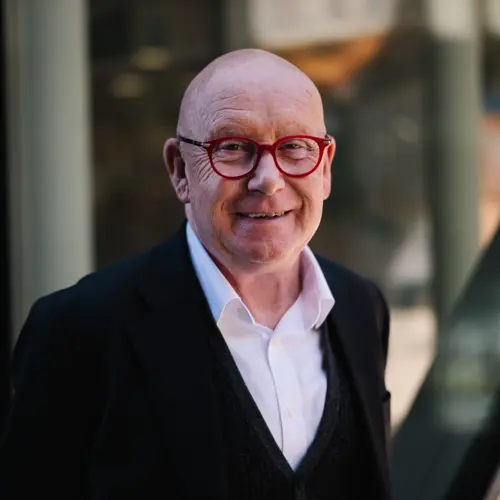
Peter Moore is the former CEO of Liverpool Football club. He began his career as a PE teacher, and went on to work as a director at some of the world’s biggest sportswear companies. His first big career change led him to work in tech - as an executive at SEGA, followed by Microsoft and EA sports.
Then came the offer of a lifetime: to return to his hometown and lead the club he’d loved since childhood — Liverpool FC.
Hosts Peter Jackson and Lizzie Jones hear how a lad from Liverpool launched an extraordinary global career. They discuss the legacy that Peter Moore wants to leave behind, after a life changing experience of heart surgery; the challenges of leadership, the emotional weight of his role, and the 3:00am conversations that have shaped his life.