Transcript
Peter Jackson (00:02):
When was the last time you woke up at 3:00 AM and thought, what am I going to do about this? I'm Peter Jackson and as the former CEO of international law firm, Hill Dickinson, I've been there too. 3:00 AM Conversations is a podcast that examines those moments in the cold light of day, and that's useful because once you realise that we all go through this, it helps you get closer to your solutions. You'll hear from high achievers who can tell you about their 3:00 AM conversations, and so you can apply their insights to your own life.
(00:41):
In this episode, you're going to meet Brian Quinn. Now, Brian is one of our own here at Hill Dickinson. He joined the team some years ago as a construction lawyer, a consultant, and his role is to help clients avoid, manage, and resolve legal disputes. But Brian's own journey has been far from easy. You'll hear how he's navigated investigations from the police, overcome disputes with shareholders, and most recently learned to live with a diagnosis of Parkinson's disease. So as you can imagine, Brian's had his own fair share of 3:00 AM conversations.
Brian Quinn (01:19):
His consultant told me after you, second door on the right. Let you walk ahead. Sit down. I think I have Parkinson's.
Peter Jackson (01:28):
That's all coming up. But first, let me introduce you to my co-host for this episode, Joanne Raisbeck. Joe is the head of Hill Dickinson's family team and also takes a lead on the gender diversity issue within the firm. Jo, welcome to 3:00 AM Conversations.
Joanne Raisbeck (01:44):
Hi, Peter. Delighted to be here, and thank you very much for asking me to take part.
Peter Jackson (01:48):
No, no. My pleasure. Now, tell me about your role and what a typical day is like for you at Hill Dickinson.
Joanne Raisbeck (01:54):
Well, being a family lawyer, actually, Peter, means that no two days are ever the same. One day I can be drafting a prenup or a financial settlement, and the next I can be with clients or in the high court with leading council. But I think actually currently what I enjoy most is the opportunity and responsibility I have for developing the juniors in my team. And that's something that I'm really passionate about, and I think dovetails really well with my gender diversity role within the firm as well.
Peter Jackson (02:27):
Excellent. How did you get into law in the first place?
Joanne Raisbeck (02:30):
My mom and dad always encouraged my sister and I to be very open at the dinner table and to engage in healthy debates on topical issues. And I found quite early on that I really enjoyed those debates and actually was really good at them. I like to win. I still like to win now today. And I think that's what makes me a really good family lawyer.
Peter Jackson (02:52):
I love a winner. So what are you most looking forward to hearing about from Brian?
Joanne Raisbeck (02:57):
I think I'm really looking forward to hearing about his personal experience with Parkinson's and how that has impacted him and his family, as you know, Peter. My mom suffers with a neurological condition, not Parkinson's, but something very similar in terms of the impact that it has on the family more widely. And that's something I'm really looking forward to hearing from Brian as to how he navigates that.
Peter Jackson (03:23):
Wow, thanks, Jo. Okay. Let's get to the interview. Welcome to 3:00 AM Conversations. Thanks for coming in.
Brian Quinn (03:35):
Nice to be here.
Peter Jackson (03:36):
You've given us three very interesting conversations to discuss, and we'll get to them as quickly as we can. But let's put it in context first and do a bit of the potted history of the life and times of Brian Quinn. So born in Liverpool?
Brian Quinn (03:51):
Yeah. Born in Liverpool in Evanston ever since. I had to escape by the time I was four.
Peter Jackson (03:56):
Well done.
Brian Quinn (03:57):
Went to another screen then. Happy days. So after that, went to Liverpool Poly, as it was, John Moores University now. Did a quantity surveying degree, first of all. I think that was more dictated by my mom and dad's friends who were quantity surveyors and I seemed to have a good life. So I was going to be a quantity surveyor. The alternative was a lorry driver, which my dad was. But we also succeeded in that. And when I was 14, I could back a lorry in, rope it up and pull it down the road. So his job was done. Always have something to fall back on some. Yeah, so became a quantity surveyor. Enjoyed that. Loved the construction industry. And eventually saw the dark side and thought that law's all right. So I became, as you would say, Peter, construction lawyer. What the hell is that?
Peter Jackson (04:44):
Well, we're going to come to a construction lawyer business in a minute. Yeah. Yeah. And you went through three or four businesses during the course of your career, didn't you?
Brian Quinn (04:52):
Yeah. I was fortunate enough to join different companies in different stages of development. So the first one was a construction company. And it's right time, right place. I've been lucky right throughout my life. They needed a commercial director. So when I was 26, they said, "Come and be our commercial director." So that was great. Took them as far as they could go for some of the reasons. Then went to work for a construction consultancy. By that time I'd done my lower degree, decided to go to the bar, pass the bar exams and joined construction consultancy. Did okay with them. And bit of a Kevin Keegan moment. Good advocate who was making my manager.
Peter Jackson (05:34):
Right.
Brian Quinn (05:34):
So good footballers and not always good managers.
Peter Jackson (05:38):
Not always, no.
Brian Quinn (05:39):
But I ended up CEO of that organisation. And we sold that. Did okay. And started my own firm. Don't know whether you can say it here, but sort of had an idea of pre-selling. So had someone in the background that I was going to pre-sell it to once the law changed. Did that, stayed with them for a while and found my home in HD.
Peter Jackson (05:59):
Excellent. Well, it was great to have you. you touched on it a minute ago there because you moved from being quantity surveyor into the law. What is a construction lawyer?
Brian Quinn (06:09):
Well, for me, a construction lawyer is a lawyer who has a construction background and a construction qualification. They're the only people I think in my small tight definition that can be construction lawyers. I enjoyed it. It was my sector. When I went on to a site as a lawyer, they respected you because you knew what was going on. When I walked into a construction business, I knew how to analyse their sales, where they were on that before you gave them any advice. No good advising at the moment, no money to sue anyone. So you'd have a good look at the company. You knew your way around the accounts, you knew your way around the construction industry. And that always helped.
Peter Jackson (06:50):
So give us a flavour of who your clients... No names, obviously, but what sort of organisations you'd act for?
Brian Quinn (06:56):
Big contractors, usually. Big infrastructure developers. Some clients, but less so on the client side, because I was a contentious lawyer. Still am, still highly contentious coding to some of my clients.
Peter Jackson (07:10):
It has been not.
Brian Quinn (07:13):
And that's the bit I enjoy. I enjoyed being the problem solver. I enjoyed being the one that, when you walk past their office, they said, "You've helped us out in the past. Come and look at this one. You just walked away from a site in Barbados. Can you sort it out for us?" So you've walked away from a site where you had the contract, binding contract, left the government paying for your blood. "Yeah, I'll go out there and sort that out." So that was the type of thing you got. And I was lucky enough to do big international work, which is fantastic.
Peter Jackson (07:45):
And obviously, boy, you're in good stead for when you became an international sportsman later in life, but we'll come back to that in a moment. Shall we move on to your first conversation then that you gave to us? You did yourself down a bit because you described it in your first line of what you sent to us as it doesn't sound very interesting really, but it does, and I'll let you describe it. But the question really was, what do you do when your career is completely thrown off track and the company of which you are a director ceases trading almost immediately? So tell us the tale.
Brian Quinn (08:17):
When you come out of uni, QS degree, branch banking new, I got the best job that everyone wanted. Went to work for a private client organisation. Thought this is great. Went in, played loads of football because they had a great county combination team. And six months in, I thought, I hate this, not for me. So I did the unforgivable. I left the best job that anyone's ever had. I went to work for a rag and bone contractor, real [inaudible 00:08:50] bullets firm. Fantastic. It was absolutely tremendous. Loved it. We were doing okay. It was six years, seven years I was there, became a director. And it was one of those regional firms that does too well. So people say, "Why are they doing so well? Must be something going on." And because people like to talk, don't they? Why'd you win all your work? Well, because A, we do a good job.
(09:17):
Second, we're cheapest probably. And we do repeat business all the time with people we like. We like our clients, they like us. That doesn't sell headlines, doesn't feed people's appetite for title tattle. It was the time of... Might want to think about naming them, but politicians being in the limelight in local government. Margaret Thatcher was in power, so there was a grinding of ideologies there. And I arrived one morning in May 1987. I had all the trappings of my success, my XR3i and order on order to find half the workforce outside the building, five to eight.
(10:07):
Not a hard taskmaster, but I said, "What's wrong with you lot? Let's go." They said, "Oh, the police are inside." Right. So I thought something must have had burglary, banged on the door. And I always remember this vision of a smart lady in a Marks & Spencer's business who's opening the door to me. And she said, "Ah, you'll be Mr. Quinn, will you?" I said, "Who are you?" She said, "Oh, I'm detective sergeant so-and-so." Dear, not good when the police know your name and they're waiting for you. So that was a fairly shocking experience.
(10:49):
Most of the directors are being arrested for on suspicion of fraud and corruption along with lots of politicians, lots of city council and board of council architects and officers. I think there's about 22 people arrested one morning. So news spread like wildfire. They've brought over waiting for me when I come out, when I went home, things like that. People were local celebrities with a bag over his head. I didn't know what to do at that stage because 29, I think it was then, 28, 29. First thing you do is run the company. So we secured everything because the bank won All their loans back because it's the old umbrella thing, isn't it? Lending an umbrella until it rains and then they want it back. So bank wanted to foreclose on all the loans. No one wanted to advance your credits. Your clients didn't want to overpay you, so they underpaid you on valuations, things like that. So cash becomes starved. So pretty quickly the company was in dire straits and we had to call the receivers in.
Peter Jackson (11:58):
Right. Right. So that moment when you opened the door and you see the Marks & Spencer suited lady and she knows your name, what flashes through your mind at that point? Did you have any inkling this could have happened, for example?
Brian Quinn (12:13):
I don't know. None at all.
Peter Jackson (12:14):
No?
Brian Quinn (12:15):
Absolutely none at all. That was the thing. Totally shocked. I had a briefcase as you do, talking about '87, we all had briefcases then. And she looked at the briefcase as I walked in to see detective inspector, chief inspector X, and he looked at the briefcase and I said, "Can I see a warrant, by the way?" Just out of interest. And he said, "What do you want to see a warrant for? I've got a right to be here." And I said, "Well, just going to see a warrant." Because I was interested because I'd done my first year law degree. Police and criminal evidence act was in play for the first time in any real anger. And I said, "Oh, okay, thanks." He said, "But did you get out of that then?" I said, "Well, it's just like you can't search anything in my possession, including my briefcase."
(13:09):
And he looked at me and he said, "I'm going to have to now, aren't I?" I said, "Well, it's inadmissible. It's a wrongful search and I'll be bringing that to whosever attention I have to." Talk about how to make friends and influence people.
Peter Jackson (13:22):
Yeah, yeah, that went down well, I'm sure.
Brian Quinn (13:25):
He took me briefcase off me and it was Police and Criminal Evidence Act was in there with the codes of practise because I'd been doing it the night before. So we all laughed then and it sort of broke the ice. So I got on okay with them after that because we just told the truth. No one was convicted, but 550 odd people lost their jobs. So that was a tough, tough, tough three months, four months. I don't know whether it was tougher to go home and tell my wife that we'd likely lose our income stream and things like that, or to tell my dad that I might have to go to the police station and be questioned on the caution.
Joanne Raisbeck (14:09):
So that must have been such a worrying time. What were the fears that woke you up, Brian, at three o'clock and what hit you the hardest at that time, do you think?
Brian Quinn (14:17):
Reputational damage and finances more than anything else. Anything else you can handle, you think, but we didn't have kids at that stage. We'd been married eight years, so you mortgaged up to the hill, leveraged off everything, riding high. So you should now, in retrospect, you look back and say, I should have expected a fall to come around the corner somewhere, but it's always up the road, isn't it, that fall?
(14:45):
So financial more than anything else. The guy next door brought me down to earth when I went home probably six o'clock, seven o'clock, because I'd called all the office staff to the local pub and told them that, look, everyone's being arrested. There's only me. Last man standing. I'm going to run the company as hard as I can, but no guarantee. So turning tomorrow, business as usual. As I got out my car, got me a briefcase with the pace in there, the guy next door was cutting his grass. And he said, "Evening, Brian, a bit late, not being arrested yet." Oh, I said, "Not yet, Phil. Plenty of time."
Peter Jackson (15:28):
But presumably he was out in the public domain by that state.
Brian Quinn (15:30):
Within the liberal echo, getting all the reports, all those things. So fame, but not as you wish you.
Peter Jackson (15:38):
Indeed. But that was the first, wasn't it, of one or two seminal moments because you changed career a bit at that stage, didn't you?
Brian Quinn (15:44):
Yeah. Well, I think in retrospect, you look back and it's only this process has been interesting actually because you look back and think there's a pattern there because what I did, I probably found myself, as your question, Jo, what were your feelings? Let down probably by others around you because you're the team and then you're not. Then you're on your own. You've got to fend for yourself. You're a relatively young lad with big bills to pay. No one helps you. So a bit let down. I probably went, and this is all second guessing now, but I probably went through a moment of saying, I'm going to make sure I don't rely on people as much as that now. So hence going to the bar, choosing advocacy, pretty possible stuff, pretty possible wherever I went. I could just trade me.
Peter Jackson (16:40):
You became self-reliant, didn't you, in that sense?
Brian Quinn (16:43):
And I gathered the usual... I was talking about before we come in today about gathering, mostly you gather things, wealth, qualifications. So I gathered qualifications at that stage. Became a chartered arbitrator, chartered mediator, eventually a DTJ.
Peter Jackson (17:02):
Deputy judge.
Brian Quinn (17:03):
Yeah. Yeah. Just things that you think I can gather those to myself. No one can take them away from you. Solicitor eventually when I changed from a barrister. So it was probably that feeling of being let down by others that made me think, right, I've got to protect myself. Now that's second guessing. At the time, I just thought I better get a job because I got bills to pay.
Peter Jackson (17:30):
Drives it home, doesn't it?
Brian Quinn (17:31):
Yeah.
Peter Jackson (17:32):
Yeah.
Joanne Raisbeck (17:33):
And do you still think about that time or have you moved on from that now because such a monumental impact that that must have had on your life, it's never something that I imagine would leave you?
Brian Quinn (17:45):
It's interesting, Jo, I think. Either are a character that looks back or not, and I don't. So as soon as I passed, it had passed and I got on with it. And that was the only way I could rationalise it to myself, really, was that was one phase of my life that's over. I can't resurrect. I tried to buy the firm, tried to raise a million quid with three eyes at the time it was, but reputation was tainted, brand was tainted. So I don't really look back on it. And it's only processes like this, don't you think? Actually, there was a lot in there that I forgot. I forgot how much I earned, for one. You think back now I think that was a lot then. Yeah. Taking around the year bonus when you... 1987.
Peter Jackson (18:41):
It's a lot of money.
Brian Quinn (18:41):
A lot of money.
Peter Jackson (18:42):
Awful lot of money.
Brian Quinn (18:43):
And you look back now and think, those steps I did take were probably prompted by that feeling of, "I'll never let this happen to me again," he says, until it does.
Joanne Raisbeck (18:57):
It shapes you as an individual, I suppose, in some ways.
Brian Quinn (19:00):
Absolutely. Yeah. And I learned so much because I made myself redundant from that firm. I collected all the cash and debtors that were out there and went some percentage. So what you kill, good training later on in life. And it does make you more resilient.
Joanne Raisbeck (19:18):
Yeah.
Brian Quinn (19:19):
Yeah. You get to knock and stand up and get on with it and you feel better at the end of the day.
Peter Jackson (19:25):
You used the word resilience. You're taking it right out of my mouth on my next question. Did you recognise then that was resilience? Do you think that was the first sort of example of you being able to look at an obstacle and say, "Right, I'm going through that and getting on with life."
Brian Quinn (19:41):
Probably without others help. I mean, there was times when you're at school or something like that, you just don't know which way to go and you ask for help and others give you it and you get through it. But that was one where I knew it was down to me that was for me to solve. And I didn't really think, "Can I solve it?" I just thought I need to solve it. There's no doubt. And you look back now and think, "How confident must you have been then?" And it was just one of those things.
Peter Jackson (20:16):
Yeah. Well, let's move on to the second conversation and there's another bolt out of the blue for you. And a question you sort of posed as the headline for this was you had a choice in this particular example because you were the CEO of a public company at the time and your chairman decided to take a step from nowhere and you had a dilemma. Do you follow him or do you look after yourself and you look for another opportunity? So tell us about that.
Brian Quinn (20:49):
Yeah, that was, as I say, my Kevin Keegan promotion.
Peter Jackson (20:52):
Yes, indeed.
Brian Quinn (20:53):
So enjoying advocacy. Loved it. I loved the challenge of it, deeply draining of your family life and things like that. I used to go to bed with notebooks by the side of my bed, wake up at three o'clock for our conversation with myself and think, "I'll ask him now. I'll ask her that. I'll do that. I'll do that." So I could go back to sleep then. And I did big trials. First case was against Dave Chin.
Peter Jackson (21:19):
Mr. Chin of Hill Dickinson as then was. Yes, indeed.
Brian Quinn (21:22):
And his good pal, who was now at KC.
Peter Jackson (21:25):
David Allen?
Brian Quinn (21:26):
Yeah.
Peter Jackson (21:26):
One of mates of mine.
Brian Quinn (21:27):
Yeah. No, we had a good laugh. I won.
Peter Jackson (21:30):
I'd remind of that next time I see him.
Brian Quinn (21:34):
So I enjoyed the advocacy. Really did. And then the opportunity came up in this organisation to manage the Liverpool office. I said to him, "I hear you need a new manager for Liverpool." And I throw my hat in the ring. He said, "That's the only hat at the moment. So at the moment, it's yours." So it was a default promotion, took over from the manager in charge there, did okay, and then eventually became MD of the UK and then CEO of the company. And there was some difficult moments, difficult times. But when we got through all that, he said to me, he was very impressed by how I handled it. So I took that as a compliment from him, so I was pleased on that outcome.
Joanne Raisbeck (22:24):
But it led that time to another, I suppose, unexpected career upheaval for you. And was that decision to set up your own firm born out of ambition, or was it fear of never, ever again, letting your career be dictated by somebody else?
Brian Quinn (22:40):
Probably a bit of both, Jo, to be honest, because I'd been talking to PE, private equity, I got some encouragement to do it, so I knew I could successfully do it. And once you've lit the blue touchpaper of ambition and that sort of thing, you think, "I think I want to do this on my own now." And I was quite happy to do it on my own. What I didn't expect to happen, which happened, was a fairly large team from the old firm came and joined me. So that's when I realised as well that I was actually okay at building teams.
Peter Jackson (23:23):
Well, let's move on to the final conversation then, because this could take a while. And I'll introduce it very, very simply. Brian, over the last four or five years, you've had a few health challenges yourself, your family's had health challenges. Tell us all about it.
Brian Quinn (23:42):
Yeah. I suppose it started with my wife suffering a rare breast cancer incident. She had a mastectomy, got through that. And as families do, you say, "Right, let's put aside some time. We've got to spend some time in quality time, go around with the kids, spend as much time as we can with each other." Well, I was lucky that she agreed to that. And then about 18 months after that, a year after that, it was interesting because we were travelling and she was saying, "Why are you taking your time? Hurry up. Keep up." And I was a bit slower and I thought, "You just walk too fast. You rationalise it." Then I started having dexterity problems, literally getting credit cards back into my wallet. So I thought, "What the hell is this same wallet I've always had? Something's going on here. You don't immediately link it with anything traumatic or critical." And then I started to get slight tremors in my hand and it was actually Alan Pugh.
Peter Jackson (24:55):
Partner at Hill Dickinson.
Brian Quinn (24:56):
Yeah. "You're shaking there, Bri." Yeah. And I said, "I know it's..." And we had a conversation about it. It sounds a bit naive, but I still thought that's nothing. It'll just be something easily solved. A pal of mine works for Walton Centre in the pain management side. He's a psychologist and he said, "I think," dead straight, "I think you got Parkinson's. I think you should go and get it checked." So I went and got it checked. And as I was walking down the corridor, they let you walk ahead. Interestingly enough, the consultant told me after you, second door on the right, that you walk ahead, sit down, "I think got Parkinson's."
Peter Jackson (25:45):
Just from following you down there? Yeah.
Brian Quinn (25:49):
Left shoulder slouch, arm not swinging, bit of a shuffle, things like that now. He saw it immediately, did some tests. They do a spirograph test where you go anti-clockwise and clockwise with different hands, things like that. Notice you're writing, getting smaller, how's your vocal range? Has it got tighter? All those things. Yeah, a bit of that. Bitter there. Sense of smell had gone four years, five years before, completely. And then he gave me a diagnosis in November, just an initial diagnosis, and then said, "We need to do some further tests, so I'll see you in March sometime." "What you say?" "March." "What was that other thing you mentioned it might be, by the way? MND." "What's that?" That wasn't so much in the press at that time, but I knew it was significant.
Peter Jackson (26:49):
About the neuron disease.
Brian Quinn (26:50):
Yeah. Yeah. Because that's what they test you for as well. So Parkinson's and mostly neuron disease have the first inklings of the same or can do the same symptoms. So that wasn't a great time. That was a time when you're thinking, flip your neck, better get me rosary beads out and need someone else's help now. Your reaction's not great to it, but I was eventually diagnosed with Parkinson's and I've been four years now with her. It has got a bit worse, but there's certain things I've been doing to try and constrain her, try and slow that down.
Peter Jackson (27:30):
Well, we're going to talk about that. But Jo, you've had family experience, something similar, haven't you?
Joanne Raisbeck (27:38):
I have. You won't know this, Brian, but I've got a parent who's got a chronic neurological condition. And one of the most challenging things that my mom has found over the years is the never ending 3:00 AM conversation she has with herself about how her illness is currently and may in the future impact the wider family. Does that chime with you and how would you deal with that yourself?
Brian Quinn (28:00):
Yeah, it's definitely on your mind, Jo, and you can't help but have that in your mind. I think in real terms, my family have reacted to that themselves as well because I think my daughter and her husband had a child a year ago. I don't think they would have if I was in better health and on my son and his partner are talking about the same thing. And again, I think those decisions have been pushed forward a bit. So very real impacts on their lives because they want their dad to be a granddad while he's capable of looking after the kids and things like that.
(28:44):
You race ahead in your mind and think 10 years on, I won't be able to walk because mine is a progressive disease as your mom's is different, but progressive. We're all unique. So we all progress at different stages, different rates, and some don't progress beyond certain points. So in my cup off full days, I'm not going to get any worse than this, so I don't have to worry I'm all right on it. And those days when you're not so full of it, you worry about where you're going to go, where your care is going to be provided by, how you're going to provide for that care, the impact it has on my wife who's devoted, looks after everything that I need, but do I want that? I don't want her to be looking after me when I'm in certain conditions. So it all plays on your mind, but I suppose going back to that first question of what do you do?
(29:51):
I think I control the controllables now. That's all I can do. I can't control the uncontrolled bits. I can't say how How fast this will progress or not. I can do things that will help you now. And that can be get your finances in order, which I've done. It can be put LPAs in order, which have done powers of attorney. I would never have done that. So practically, I've got the spreadsheets of all spreadsheets with where everything is, as we all have. Tell the kids every time we go on a plane, you know where it is, don't you know where the password is. Got my insurance and sorted out. So practical things like that, strangely enough, aren't depressing because they're just practicalities when you've had life-threatening incidents in your life piece.
Peter Jackson (30:43):
All of these chimes. All these chimes.
Brian Quinn (30:45):
They're practical things you can do.
Peter Jackson (30:47):
Yeah.
Brian Quinn (30:47):
But I never think it'll happen to me. I'll be all right. I'm still thinking that. Even though you have mornings when... I wrote some words down and it was... I wake with an A, or is it a shake? Or is it a shaking gait? An aching day is what follows. Because every day you wake up, my sister said to me recently, which was instructive in how little I'd talked to her about it, she said, "Do you think of Parkinson's much by the way, Brian, because you just get on with it?" And I said, "Every second of every minute, of every hour of every day, because even when I'm still inside, I'm resonating doing that." So it's not something you can forget. So you do make accommodation for it. You worry about those things all the time, but I still think it won't happen. I've convinced myself it's not going to happen. It happens to other people.
Peter Jackson (31:53):
You talked about consulting Dr. Google in the early stages and I consulted Dr. Google in readiness for today. And one of the many things that I learned, sometimes they would describe a stages and there seems to be five stages at which the illness might progress through. Do you know what stage you're at?
Brian Quinn (32:14):
Early stage, they say.
Peter Jackson (32:15):
Right.
Brian Quinn (32:16):
But people who were diagnosed with me, and I was stage two or whatever it is, when you get your dyskinesia and all these check charts. They've gone further on. I don't have dyskinesia anymore. So I'm back at tremor only. I don't have brachydacia, the stiffness, and I don't have freezing. I had the start of certain things. And I like to think if you work hard on other things, you can help with that. Mainly fitness and exercises and vocal exercises and facial exercises and things like that. Others that don't, I've seen slide towards those different stages piece. So they do move on. And it is so important to get people early and get them into an exercise ratio if they can. And that doesn't mean running marathons. It doesn't mean lifting weights. It means doing what you can. Do something more than you're doing now because we're not all athletes. I am now the fittest I've been since I was in my 30s.
Peter Jackson (33:32):
Yeah.
Brian Quinn (33:32):
I lost stone and a half. I'm running and boxing and doing football. All those things now. I do something every day.
Peter Jackson (33:41):
Yeah. Yeah.
Brian Quinn (33:42):
And it works.
Peter Jackson (33:45):
Were you doing that as a regime before you were diagnosed?
Brian Quinn (33:49):
No. No. If I went to gym, it'd be to sit in a sauna.
Peter Jackson (33:53):
Yeah.
Brian Quinn (33:55):
Do two lengths and convince myself that that's got my aerobic.
Peter Jackson (33:59):
Go for a pie.
Brian Quinn (33:59):
Exercise.
Joanne Raisbeck (34:01):
It sounds like my source of gym session.
Brian Quinn (34:06):
But diet wise, I've stopped eating as much red meat. I have a great diet. Thanks to my wife, not me. I'm a pine chips man if you leave it to me, but you just got to look after those type of things as well. But the exercise is tremendous and fundamental. It's cornerstone to everything.
Peter Jackson (34:30):
Were you advised to do that? Or was this the Brian Quinn resilience shining through and saying, "Right, I'm not giving in here, so I'll start exercising"?
Brian Quinn (34:41):
You don't want to beg yourself up, but-
Peter Jackson (34:43):
No.
Brian Quinn (34:43):
But You are left on your own.
Peter Jackson (34:45):
Exactly.
Brian Quinn (34:46):
You're all left to your own devices. And the number of people that you see that are deteriorating quickly is unbelievable. It really is. And I just thought, I'm not going to do that. I'm going to do something else. When Dr. Google produced a Mayo report and things like that, saying being a big study in the States, fairly specific exercise regime, 80% of your maximum heart rate for 25 minutes, three times a week, does have some impact on the disease. So if you increase that to five times, does it have more impact on it? If you can do it, great. So that's generally been my mantra and what I've done. And I've got to say, such hood, it seems okay.
Peter Jackson (35:39):
Yeah.
Brian Quinn (35:41):
Anecdotally, my wife and kids say I'm the same as I was four years ago. I know I'm now because you lose control of certain things, shaking. I never spilled a pint in my life. My mates were horrified when I spilled a pint about six months ago saying, "It's got worse." And that's a very marked thing, cups of tea, having tea in the saucer when you look at family members, it's things like that. But it's just one of those things, you've got to help yourself.
Peter Jackson (36:20):
What's your mom say about this?
Brian Quinn (36:23):
My mom's 88, lives on her own as blood cancer and is just expectant of, "That's what I thought you'd do, son." Absolutely. Very supportive. Yeah. I thought you'd crack under it all because that's her way. If I look for inspiration, it's probably her. I call her Mrs. Doubtfire in a nice way because she is that type of person. "Come on children, get on." Real sweeps everyone along with her. She still goes to art class, so does her stuff at 88. So her expectation of me was, "Oh, that's sad, but what are you going to do about it? What's your plan?" As she always says. Bad things happen to everyone. It's how you react to them, I think. I've been lucky in that I've been felt as if I've got the ability to react well to these things.
Peter Jackson (37:26):
When we were discussing earlier, you also mentioned that she thinks you're a much nicer person now that you've had this.
Brian Quinn (37:31):
Yeah. A strange conversation I had with her. She knew it was a sticky subject because she says, "Don't take this the wrong way, but since you've had Parkinson's, you're much happier. You smile a lot more and nicer to be around this better social company." I hate to say people, it also coincided with me cutting me days down at Hill Dickinson.
Peter Jackson (37:56):
Does it signify anything else seriously?
Brian Quinn (37:58):
I think it does. I think it's an altering of perception.
Joanne Raisbeck (38:02):
Yeah, absolutely. Changes your whole outlook on life, I would imagine.
Brian Quinn (38:06):
Yeah. What was important to me then isn't important to me now. I have no ego at all. I've got lots of time for people. I was talking before about a receptionist in the hotel that I checked into. I had a 20-minute conversation about her partner who has Parkinson's and what she can do and where she should go for help and things like that. Now, I probably would have got annoyed previously at that and such said, "I've just got to nip somewhere. I'll come and have a chat here and I wouldn't have had much time. I'd talk to anyone now." Hence, this podcast.
Peter Jackson (38:45):
I mentioned earlier that you'd become an international sportsman and that's all about walking football, which is probably something you never envisaged you were going to do either. So please tell us all about that.
Brian Quinn (38:58):
Walking football was... I've fallen into my Peter K. I think of garlic bread. There are two things that shouldn't go together. Aren't they walking football? It's just walking football. And I was looking for classes. When I was first diagnosed, went to gym, went running, did all of those things. And you have to know yourself. I'm good at going to the gym. I go there at seven o'clock in the morning if I had to be there, but I'm not good at motivating myself once I'm there. But I am good at going to a class. So if someone's up there saying, "Come and hit this bike, come and do this, come and do these, shuttle the runs, do this," I'm good at that. I conform to that. So one of the guys who was at an exercise class would say that I'd go to everything in the community, the blue word, the game piece.
Peter Jackson (39:55):
We have to put up with it these days, Brian.
Brian Quinn (39:58):
And I've got to say, they were tremendous. They had neurological impacted classes, so stroke victims, Parkinson's. They had woken football with two or three guys that were really top coaches. And I went along. So not to keep on this, I'm sure. I'll go and have a little go. Loved it. Just absolutely fell in love with it. Working football for the uninitiated means obviously no running. So it's a different game. You have to play to feat. You have to hit the ball to each other rather than into spaces and no chase after it. So once you get that, and if you played a bit in the past, it's okay. So I went there and a couple of guys came and were watching and said, "Come and have another game with a team called Northern Lights, which is run out of the Brunny, which is Jamie Carragher's old club, which he supports."
(41:01):
And Northern Lights is a support agency for support group, sorry, for Parkinson's disease people. And I said, "Yeah, when is it?" "Friday." "Okay, I'll go and do that." Went there, "This is a better standard again." Then one of them said, "Come and have a trial up at marine for England." Taking the Mickey and I'm 64 years of age at that stage. Don't be daft. And I went along and they said, "Yeah, we won't just come down to St. George's Park." The England Centre trained with them and it was a real pinchy moment. So cutting the long story short, I ended up captaining a tour in America earlier this year. We'd just come back from [inaudible 00:41:54], the World Nations Cup, which was 82 nations, I think. So 22 or 32 nations. Able-bodied working football that was. So we were the exhibition match. We were brought on as, would you play some of the able-bodied teams?
Peter Jackson (42:12):
Right.
Brian Quinn (42:12):
And our little message that we want to pass is, don't write yourself off with Parkinson's. You can still do lots of things. You still have a full life. So we played a couple of teams, and I'll name him [inaudible 00:42:27]. Played Canada.
Peter Jackson (42:28):
Able-bodied Canada.
Brian Quinn (42:29):
Able-bodied Canada. We were doing okay. And they said, "A little bit patronising. Be good to see you guys. We'll give you a game. We'll take it easy on each other." So after 10 minutes we would tune it up, they were calling the fellas from the stand and forget the three touch rule. We're not going to do that. And we beat them four nil.
Peter Jackson (42:53):
Well done. Well done.
Brian Quinn (42:54):
And we had lots of different exhibition games, but that was a good example of the reaction you get because another local team played us and I was shaking because it was cold. And he said, "Do you want a jacket, mate? You're cold. Put a jacket around you. Stop shaking." I put my arm around him and said, "If it's only so simple, Paul." And he said, "Why is that?" I said, "Well, we're a Parkinson's team." "Joe, these have all got Parkinson's, just batted us." That was his concern. Not that I was a Parkinson's suffering, but it was great. I still pinch myself piece. It's a real honour to represent your country. It's a pretty low selection pool, I think, of people to play with Parkinson's, but...
Peter Jackson (43:45):
Well, ain't going. I mean, there's hundreds of thousands of people in the country that suffer with it, aren't they?
Brian Quinn (43:50):
Yeah. And Aidy Boothroyd has just come out recently, if that's the right word, to come out in Parkinson's and Aidy plays with us.
Peter Jackson (43:58):
And he's the agent, isn't he?
Brian Quinn (44:01):
No, he's the former manager of under 21 England.
Peter Jackson (44:04):
That's it, sorry.
Brian Quinn (44:06):
I think he managed Greece or someone recently. I can't remember who it was. But we're playing with ex pros and things like that. And I've done a bit of coaching as well now, which is interesting. Nice. Went over to Italy and coached some of the Parkinson's sufferers there. And what the message is again, get out and do exercise and make you feel mentally better. Socially, it's good, but this exercise does regress things in some instances. We had four ex players there and we did four sessions. First two sessions went down very well.
(44:49):
These guys were walking, stooped, shuffling. So we worked with them and the third day they didn't come out. We said, "What's up?" He said, "Oh, the physiotherapist said it's too windy and we might get blown over and we're frail so we can't come out." I said, "Forget that. Come out." Wouldn't come out anyway. So I went for a run, come back after me run. They said, "Where have you been?" I said, "We've just been for the 10K run up there running in the wind." So they came out. We had a great game. It was absolutely magnificent. At the end of that week, they were walking taller. Their families were saying," They're changing these guys. It's really good. "And that's something I would never have got. But for Parkinson's, I would never have had that gift because there is a gift that you're influencing people's lives for the better. It's really good. Love it.
Peter Jackson (45:48):
Yeah.
Brian Quinn (45:49):
I always say there's a silver line into Parkinson's because I wouldn't have done any of this if I didn't have Parkinson's. I would've been doing something else.
Peter Jackson (45:57):
Yeah.
Brian Quinn (45:57):
Not beneficial to anyone, not helping others.
Peter Jackson (46:00):
Yeah. So if anyone's listening who wants to get involved, hasn't previously, where can they go? Where do they start? You've mentioned everything in the community. Clearly have a fantastic opportunity there.
Brian Quinn (46:12):
I mean, locally here, Northern Lights.
Peter Jackson (46:14):
Northern Lights. Okay.
Brian Quinn (46:15):
Bigger organisations. But a competition I just played in Glasgow, which we won. There were 15 teams there. All Parkinson's teams, all Parkinson's associations and across the country, Scotland, England, Wales. Look at Parkinson's UK. They have a list of local centres, but if anyone is listening out there and call me, contact me. I'll point you in the right direction. Always happy to have a chat with people because it is important. Don't go in that corner, that dark corner and be on your own. Look for support. If it's not with me, there'll be others around you.
Peter Jackson (46:55):
Yeah. We'll make sure we put that in the show notes. I think the professionals put it, don't they? Make sure that anyone listening can.
Brian Quinn (47:02):
You'd know far better than I, Peter.
Peter Jackson (47:06):
I'm not sure about that. I'm not sure about that. I am going to ask you the question I used to ask as the last one, because you've had such a diverse career and now you're branching off into being an international sportsman. So who's going to play you in Brian Quinn, the movie?
Brian Quinn (47:19):
David Beckham.
Peter Jackson (47:22):
David Beckham. Oh, dear. We got delusions of grandeur.
Joanne Raisbeck (47:31):
Where was the year go? You said it disappeared, Brian.
Peter Jackson (47:31):
Would that be David Beckham's rife for? David Beckham's there for it. Yeah. Okay. All right. David Beckham. Right. Excellent. We'll see what we can do for you. See what we can do. We're going to have to call it a day there. Brian, thank you so much for coming.
Brian Quinn (47:42):
Lovely to see you.
Peter Jackson (47:43):
Great to see you.
Brian Quinn (47:43):
Nice talking to you.
Peter Jackson (47:45):
Thanks for your honesty and your openness. I hope people listening take something from that, I am sure they will. And it's nearly Christmas, so up to you and the family. Have a good one.
Brian Quinn (47:56):
Yeah, and to you. Merry Christmas.
Joanne Raisbeck (47:56):
Thanks, Brian.
Brian Quinn (47:56):
Cheers.
Peter Jackson (48:07):
Okay, Jo. So we've just finished with Brian. What were your immediate impressions?
Joanne Raisbeck (48:14):
What I love about Brian is his clear zest for life, his ability to adapt, to reinvent himself, and just do that with such passion. And an element of kindness sitting behind that is actually quite remarkable and a lesson which I think many of us could take away and take forward in life generally.
Peter Jackson (48:38):
Yeah, totally agree with all of that. And for me, it was the resilience that he showed actually in a number of occasions where he had career threatening and ultimately then life-threatening incidents. And yet he just cracked on and is doing so now.
Joanne Raisbeck (48:56):
And that positive outlook at life is just something that you can't buy in life. What's important changes as you move through life? And Brian is the most shining example of how to look positively in the face of adversity, I think.
Peter Jackson (49:12):
Yeah. I mean, we'd spoken previously on this podcast about my challenges with health, but a lot of what Brian said chimed with the advice that I and others were given about not being frightened to get on with life. One of the physio nurses in Broadgreen said to me, those, and excuse my language, those who recover best are those who get off their ass. And Brian's gone off his ass and really got stuck into things he'd never done previously. Never boxed.
Joanne Raisbeck (49:44):
Absolutely.
Peter Jackson (49:44):
Never played football, walking football.
Joanne Raisbeck (49:46):
Absolutely.
Peter Jackson (49:47):
Incredible.
Joanne Raisbeck (49:47):
And so much of what he said charmed with me personally.
Peter Jackson (49:50):
Of course.
Joanne Raisbeck (49:51):
My own family's experience with my mom's illness really resonated with the things that Brian was talking about today. And it just makes you feel that you're not alone. There are other families out there that are having the same experience and are taking positives from that in order to change their approach to life.
Peter Jackson (50:07):
Yeah. Yeah. No, I think that's right. I think there were a couple of operational issues, if I can put them that way, that he brought up, which are relevant to us as a business. First of all, now with our sort of relationship with the Everton Stadium, it really is great to hear that Evan in the community can provide assistance in that sort of situation. Brian's situation, which I hadn't appreciated for the city to have that opportunity is fantastic, isn't it?
Joanne Raisbeck (50:34):
Brian was talking about the sense of responsibility he had and felt for people within his business. As a longstanding leader of HD, how did that chime with you? What are your thoughts?
Peter Jackson (50:45):
Yeah, he's absolutely right. I think the CEO, the leader, whatever capacity that leader might be in. His first duty is to the people. And we've heard it from other leaders on this podcast, haven't we? Daniel Gidney, for example, when he came into Lancashire County Cricket Club talked about, and they were in financial difficulties at the time, he was very open about that. His first responsibility actually was to make payroll, was to look after his people, make sure his people were paid and could continue to put food on the table for their families. And I think that is paramount importance for a leader. You'll have heard Jonathan our chair talk about the responsibility that each of us as partners in our firm have for Christmas presents. And if you have 1,200 people in your business, you're responsible on average for about 1,800 Christmas presents every year.
(51:40):
And it all sounds very twee and, but he's right. You are responsible for the livelihoods of those people that work for you. You're responsible for their wellbeing. You have duty of care technically for them. I think Brian was spot on. What struck me about it was that Brian described being 28 or something, 29 at the time to have got that level of responsibility that early in his career was frightening. I'm sure it was frightening for him, but also what I thought was great was that he had recognised that so early in his career as well and all credit to him for that.
Joanne Raisbeck (52:14):
Yeah. And that's probably what's made him so successful and has developed him to the point he's at today.
Peter Jackson (52:22):
I think you're probably right.
(52:22):
Well, Jo, thanks for being on this episode with me. How did you find it?
Joanne Raisbeck (52:30):
I found it fascinating, Peter, to hear about Brian's journey, both in law and in life more generally. And I really thank you for giving me the opportunity to do the podcast with you and to get to know Brian better.
Peter Jackson (52:43):
No, my pleasure. And thanks to you for listening to this episode of 3:00 AM Conversations. You'll hear from us again in about a month's time. Please rate, review, and follow the podcast, and that way you'll be able to spread the word. And if you'd like to find out more about how Hill Dickinson can help you, then head to hilldickinson.com.
“Bad things happen to everyone. It’s how you react to them that matters.”
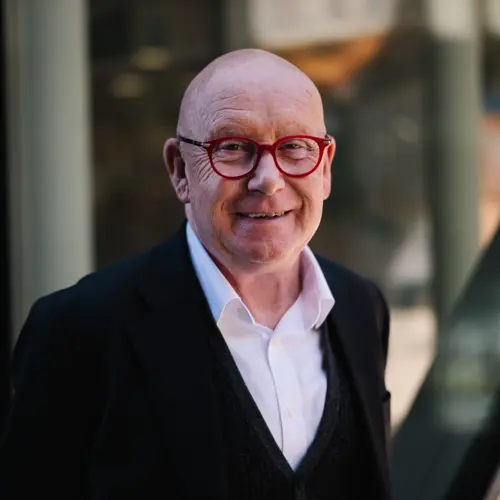
Peter Jackson and Joanne Raisbeck sit down with their colleague Brian Quinn, who shares his 3AM Conversations, an extraordinary journey of reinvention, resilience and hope.
From his early days in Liverpool and a successful career in construction law to navigating corporate crises and ultimately facing a life-changing Parkinson’s diagnosis, Brian’s story is one of courage and adaptability.
Brian tells Peter and Joanne about the impact his Parkinson’s diagnosis has had on his family, and how he maintains his resilience through fitness and sports, including playing walking football on the international stage.
Their discussions highlight the importance of resilience, adaptability, and maintaining a positive outlook in the face of adversity.