Transcript
Peter Jackson (00:02): Have you ever had a 3:00 AM conversation? I’m talking about those times when you just can’t settle because your mind’s racing through the night.
(00:13): I’m Peter Jackson, and as the former CEO of international law firm Hill Dickinson, I’ve had a fair few of those moments myself. And as a coach, I’ve guided many people through them. In this podcast, you are going to hear from high achievers about how they got through their own 3:00 AM conversations, so you can take inspiration from them.
(00:38): Now, in this episode, you’ll hear from someone whose resilience is an inspiration to us all. Dame Jasvinder Sanghera is a leading authority on forced marriage and honour-based abuse. Dame Jasvinder herself is a survivor of forced marriages. She ran away from home age 16 to escape having to marry a stranger, as she put it. She later founded Karma Nirvana, a national award-winning charity that supports people affected by these crimes. And her memoir Shame became a Times Top 10 Bestseller. Jasvinder’s been instrumental in driving systemic change, and that’s not something she’s going to stop doing anytime soon.
Dame Jasvinder Sanghera (01:23): What drives me is injustice. I want to be part of making sure that we live in a society where you hear the people that actually don’t get a platform, the more vulnerable in society.
Peter Jackson (01:37): Now, there’s so much to talk to Dame Jasvinder Sanghera about, but first, let me reintroduce you to my co-host for this episode, Anjon Mallik. Anjon, hi.
Anjon Mallik (01:48): Hi, Peter. How are you doing?
Peter Jackson (01:49): Not so bad at all. Thank you. Now, Anjon, this is the second time you’ve joined me on 3:00 AM Conversations, and since we last spoke, of course you’ve got up in the world. You’ve had a promotion. Do you want to tell us all about that?
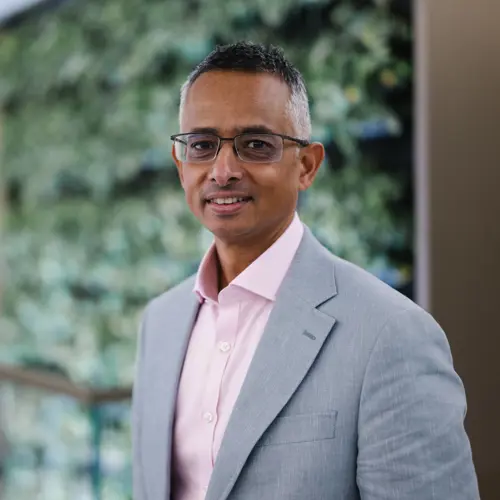
Anjon Mallik (02:02): That’s very kind of you to mention it, Peter. Yes, from the beginning of May, I’ve become the national head of our construction and engineering team. Really proud to be taking on that role. Being at Hill Dickinson’s just over two and a half years now, it’s not a role I was expecting but I think it’s a reflection of maybe how well I’ve settled into the business. So yeah, looking forward to the new challenges. And then in addition to that, I’m also now leading the multicultural group within the business, which I think given today’s talk is going to be extra special for me, really.
Peter Jackson (02:38): Thanks, Anjon, and congratulations again. I’m sure you’re going to smash it, but now let’s move on and hear from Jasvinder. Dame Jasvinder Sanghera, welcome to 3:00 AM Conversations. Thank you for coming in.
Dame Jasvinder Sanghera (02:55): Thank you for inviting me.
Peter Jackson (02:56): Normally, we ask our guests for three specific instances of what we’ve termed a 3:00 AM conversation, something that’s kept you awake into the night. But looking at all that you’ve been through, we thought that might just be a little too difficult because you’ve struggled and you’ve fought authority and all that’s gone with it for many years now. So we thought we’d try and look at three particular segments of your life and what was going on around those times. So if we start with your childhood and you run away from home when you were 16 faced with the possibility of an arranged and forced marriage, tell us a little bit about what led up to that and your early childhood years.
Dame Jasvinder Sanghera (03:43): Yeah. So my parents are Indian, Sikh, and my father came to the UK in the ’50s, like many migrants in search of work, and he settled in Derby. Mom joined him later on and we were born in Britain. So I’m one of seven sisters and I have one brother. And I quickly realised when we were a very, very young age, I would say around the age of six, that being a young girl, it was a very different life compared to my brother. First of all, he was waited on. Even at that age, we were serving him food. And we had chores, he didn’t.
(04:23): Then as we got to the age of eight, nine, I saw my first sister go off to India to marry this man in a photograph. And I remember her showing us this photograph, and off she went and disappeared and came back after almost, I don’t know, it felt like a year. She was almost like a mother to us, the elder sister. And she came back and she was now married. And then it happened to another sister, but this time it was a sister who was in school with me. So then she was taken out of school. And then another sister. And I could see these sisters of mine at very young ages being taken out of the classroom, taken to India to marry men in photographs, and then come back.
(05:12): And after Robina, it was my turn because I could see we were being married in order of age. And I came home from school one day and my mother sat me down and she presented me with a photograph of the man that I was to learn at that point I was promised at the age of eight. And I remember looking at this photograph and thinking, “He’s shorter than me. He’s older than me. I don’t want to marry a stranger. I just want to go to school.” And I dared to voice what I was thinking, bearing in mind I’d never seen any of my sisters ever challenge my mother. None of them said no is what I’m saying.
(05:48): So it was as if we’re almost conditioned and groomed in a way just to go through with it. But I witnessed my sister’s marriages, very unhappy, and I thought, you get married off, you go, you get beaten up, and then they just leave you. That was my impression of marriage. And I said no. My mother was very clear, “You will not dishonour this family by saying no. You will marry him.” And the photograph was put on the mantelpiece. The next day I went to school as normal. And you never dared tell anyone in school because from a very young age, we were taught to be silent. We understood that speaking outside the family was hugely shameful so you would never risk telling anybody what was happening. So I wasn’t going to tell a teacher or anyone. And then my parents could see that I became more obstructive saying no, challenging them when I was 15 and a half. So they took me out of education and I was held a prisoner in the room, the padlock was on the outside of the door, until I agreed to the marriage.
Anjon Mallik (06:56): So as you saw your sisters being married, was there ever any family discussion?
Dame Jasvinder Sanghera (07:00): I don’t ever remember a family discussion other than the fact that you basically were told, “This is who you’re marrying.” And we were never allowed to look at a boy, let alone talk to a boy. And the concept of marriage and being allowed to think about a man in this way, I could see my sisters being quite excited about that. And it was strange. So no, there was never a discussion other than what you would wear and where you’re going and the arrangements. You’d never be told the date you were flying to India. And that was it, really.
Anjon Mallik (07:35): You were just watching it as an observer, as you were growing, knowing that one day, this question was going to fall on you.
Dame Jasvinder Sanghera (07:43): Mm-hmm. But I have one sister younger than me, so it was somewhere in the distance so I didn’t think I have sisters above me.
Peter Jackson (07:50): Would it have been possible for you to say no, to refuse the arranged marriage and stay at home and live with the family?
Dame Jasvinder Sanghera (08:00): Absolutely not, because I did say no. And the consequences were that I was taken out of education at the age of 15 and a half. I never completed my GCSEs. I didn’t read a book until I was 28 years old. In the end, I said yes purely to buy back my freedom to plan my escape. But even then, it was like having a bird’s eye view, looking down on all these preparations taking place over a wedding that happened to be mine almost felt like an out of body experience actually. When I ran away from home, I ran away to make the point that I don’t want to marry. So I remember ringing home, because I wanted to go back home and my mother was very clear I could go home, but I would have to marry who they say.
Peter Jackson (08:46): You have to, exactly.
Dame Jasvinder Sanghera (08:49): Otherwise, I was dead in their eyes. So the choice was there was no choice. I couldn’t go but I wanted to go back home. I thought this will teach them a lesson. They’ll say, “Okay, look.” But no, it was, “You are dead from this day forward,” because of the shame. And my younger sister was forced to marry him because that’s the only way they could reclaim the shame.
Peter Jackson (09:11): Right.
Dame Jasvinder Sanghera (09:12): The promise of a marriage is a huge thing in the family. And how are they going to hold their head up by not honouring this marriage? Well, they did it by forcing my sister to marry him.
Anjon Mallik (09:24): And how did you wrestle with all the emotions you must have been going through?
Dame Jasvinder Sanghera (09:27): Well, when I was locked in the room, I attempted to take my life by overdose, because I just wanted them to hear and see me. I don’t want this. I couldn’t be any clearer. But they wouldn’t allow me to have any medical attention. So I was just ploughed with coffee and walked up and down, because obviously at that point my family’s probably thinking, “She’s going to tell somebody at the hospital.”
(09:50): In terms of wrestling with the emotions, the biggest thing for me when I was at home and even when I left home was I always felt that I was doing this to my family and I was the perpetrator. I always felt like I am shaming them. I’ve dishonoured them. I’m horrible. I’m this awful daughter who is treating her parents like that because they make you feel really guilty. So there was so much emotional blackmail. “Dad will die of a heart attack. It’ll be your fault.” There’s all this stuff. And I felt that I was the bad guy, and I carried that right up until the age of 24.
(10:27): And when I left home at 16, the absence of family and missing them was immense. I always described my life from the age of 16 to 19 when I had my first child as living a life with the curtains drawn, the depression. I became claustrophobic. I had agoraphobia. It was all sorts of things going on, the way my body was responding to the trauma of missing the family.
Anjon Mallik (10:55): So even though you’d become physically free, emotionally free, not at all, really?
Dame Jasvinder Sanghera (10:59): No. And I suppose even today, I’m still disowned by my family. I’m 60 in September this year. My family haven’t spoken to me for over 43 years. So they’ve not only disowned me, they’ve disowned my children and my grandchildren. And so at significant times in my life like the birth of my grandson, I still have family. My parents are no longer alive. If I go to my hometown and my family see me, they will physically cross the road and ignore me.
(11:29): So I’ve learned to deal with that in my life, being disowned. You cannot force somebody to love you as you would want them to, even if they’re family. And I think sometimes as human beings, we make excuses for family because it’s family. They can treat us less than we deserve. Well, actually no. So I’ve learned to remove all expectations of my family. But there are some times when you feel that absence, some significant times. And my daughter’s wedding was one. Natasha, she had the big fat Indian wedding and 300 guests. We had no… Not one member of my family was there. You feel that because those are the times you share with family.
Peter Jackson (12:10): So we talk a lot on this podcast about 3:00 AM conversations. And thinking back now to when you realised you could not go ahead with the arranged, the forced marriage, was there one moment where that really became clear to you?
Dame Jasvinder Sanghera (12:26): Yeah. For me, it was when I wasn’t allowed to go to school. So I became a risk in the family dynamic. The risk was this marriage wasn’t going to happen. So the way to deal with me was to take me out of education and lock me in a room. And I mean, food was brought to the door. It was like you were a prisoner. In anybody else’s terms, it would be false imprisonment. So then I knew it was real and there’s nothing I can do. That was it. And it was only by agreeing to the marriage, I became the centre of attention. And I was like a wonderful child then, and I could have whatever I wanted to.
Peter Jackson (13:11): And that was a ruse, really, to buy time and buy opportunity.
Dame Jasvinder Sanghera (13:14): Absolutely. That’s when I-
Peter Jackson (13:16): You’ve talked about the years between 16 and 19, but how did you live? Because you were very young and you made a life for yourself, but how did that work in practise?
Dame Jasvinder Sanghera (13:29): Well, the thing about my childhood is that you were taught to be dependent, never independent. Independence is a threat. So as a young female, your sexuality is controlled. You are controlled how you think, how you feel. I’ve never went to my hometown on my own. You’d be taken to school, brought back. You never had any freedom. But neither did you have freedom of thought, albeit nobody can imprison your mind. But the point is, when I left home, I was like a child in a sweet shop for the first time, all this independence and not having to look at my watch or think, what’s mom going to think? I’ve got to get home. It was a very vulnerable place when you think about it in terms of no experience of life.
(14:16): But I ran away from home with my best friend’s brother who helped me to run away from home, and he was six years older than me. And thankfully for me, he didn’t take advantage of my vulnerability and helped me at that time. But to start with, we were sleeping on park benches. We were sleeping in the car. We were homeless, but I never expected to be with him. It wasn’t Romeo and Juliet running away from home. I wanted to go back home, but when I had no choice, I thought, well, this is a bed that I’ve made. I have to lie in it now.
Peter Jackson (14:53): This is life.
Dame Jasvinder Sanghera (14:54): So I did. This is life. And so I ended up staying with him.
Peter Jackson (14:58): Yeah. Should we move on to the second segment there?
Dame Jasvinder Sanghera (15:06): Yeah, sure.
Peter Jackson (15:07): And that’s the work you’ve done around forced marriage.
Dame Jasvinder Sanghera (15:10): Yeah.
Peter Jackson (15:11): And you were instrumental, I think, in two changes to law, which we’ll talk about. But what really gave you the impetus to start with that work? Where did it start? What was in your mind?
Dame Jasvinder Sanghera (15:23): Well, for me, the impetus was absolutely my sister Robina, without a doubt.
Peter Jackson (15:30): Tell us about Robina, please.
Dame Jasvinder Sanghera (15:30): Yeah. So Robina was a year and a half older than me and we went to school together. And she went missing from education or taken out of school to marry a stranger in a photograph when she was 15. She missed almost a year of her education. And when she came back, she was put back into my year at school even though we had a huge age gap, and she was different. For a start, she was now somebody’s wife. She had a wedding ring on her finger. She wasn’t allowed to wear western dress, but nobody ever asked where she’d been. Nobody questioned where she’d be.
Peter Jackson (16:01): Was her husband back in the UK at that point?
Dame Jasvinder Sanghera (16:03): No, they were always in India. And then the process of the family is you would sponsor that person into the UK. That was the process. And anyway, she disappeared to then become his wife because he couldn’t get to England and went to Germany, and she had a horrendous marriage. And in the end, she left him with a six-week-old baby boy, and my parents allowed her to go back home and they accepted that she could be at home. But then later on in her life, she married for love. Now, I say married for love because we don’t marry for love in our culture, the way I was raised. And I’ll say even in an arranged marriage, you’re meant to grow to love somebody, the suitabilities or all the tics and whatever, and then they marry you.
Peter Jackson (16:52): The timeline changes, doesn’t it?
Dame Jasvinder Sanghera (16:54): Yeah. But she married for love and he was Indian and same caste and standing, the whole thing. So my parents allowed the marriage, but they said, “If anything goes wrong in that marriage, you have to stay with him.” So it was harder then to make your choice. The family, they’d treat you in a different way. But Robina always spoke to me in secret, and that was a wonderful thing because I had a sister as a disowned person that used to talk to me in secret.
(17:21): So I would visit her in secret in Leicester, and I noticed around her house there were holes in the walls. You could see cracks in mirrors and things. And it turned out that he was beating her up. And I spoke to her about this one day. I hugged her. She couldn’t hug me back because she was so bruised around her ribs. And I said, “Look, come with me. I’ll protect you. Come and stay with me.” She said, “It’s easy for you to say because you don’t have to think about is that,” which translates as honour. “You don’t have to think about what people think. You don’t have to think about mom and dad.
(17:58): And she was absolutely right because when I left home, I left all that behind me. I’m now a free person that doesn’t put that concept before my own life, before my own decision-making. But she does. So she wouldn’t leave because she was thinking, “I can’t do this mom and dad and shame them,” and plus it’s a love marriage. So I begged her and begged her and go and talk to my parents, and she did. And they basically called the community leader to talk to her. Community leaders have huge influence in the community. They can be religious, they can be political leaders. This person was a political counsellor, and he basically said to her, “You need to go back and make your marriage work. Otherwise, it will kill your family.” He means kill the reputation of the family.
(18:48): And in my experience, I’d already witnessed this pattern of behaviour where my sisters would be beaten up by men. Mom would go and tell them why they had to stay there. She always had the same way. Think of a husband as a pan of milk. A pan of milk boils to the surface. Your role as a wife is to blow it on it and cool it down. That was her analogy that she would always give it. I remember it from very young. So Robina went back home. I was a market trader in Leeds at the time, and this woman came to my stall and said, “You need to ring home because something has happened to your sister.” She wouldn’t tell me what it was.
(19:24): I rang home, and bear in mind, I’ve not spoken to my mom for all those years. And my mother answered the phone and I said, “What’s happened?” She said, “It’s Robina.” I said, “What about Robina?” “She’s died. She’s dead.” And I said, “What do you mean dead? What do you mean? I’d seen her just a week ago just came out. We went to school together. What do you mean dead?” She said she set herself on fire and she committed suicide. And I said to my mom, “I’m coming to the house now.” And my mother said, “No, this changes nothing. You don’t come to the house, but I know you and you’ll come. So if you must come, you come when it’s dark when nobody can see your face.”
(20:15): I remember thinking quite naively that for my mother to lose a daughter in such a horrific way, she’s still treating me like this leper that is not allowed anywhere, not even to grieve. And it was in that moment that I finally owned the fact that you must not put your life on hold anymore waiting for these people to love you and to accept you. And I finally owned being a victim and not a perpetrator because my sister’s gone and you are still behaving in the way you are.
(20:53): And it was through Robina’s experience, we were sworn to secrecy. And I did go to the funeral. And it was hearing people say that it was better for my sister to take her life than for her to dishonour her family and leave an abusive man, and it was that that made me think I have to talk about this and speak about this. Sorry, I’m getting upset.
(21:20): So I decided to speak out, and it was my experience. I started speaking out about Robina, but I didn’t start speaking publicly until my parents passed away. There was something within me that felt, I can’t do this to my mom and dad that I don’t want them to be portrayed as these horrible human beings because this happens, because they were doing what they thought was best. I have a huge empathy for my parents today. I forgive them completely, but it wouldn’t happen without them thinking they needed that acceptance from the family, from the community. It gets bigger and bigger. These people didn’t give them permission to think differently is what I’m saying.
(22:07): So yeah, so Karma Nirvana was born out of Robina’s experience and mine in 1993.
Peter Jackson (22:14): Right. Can I just ask you about the death of your mom and dad?
Dame Jasvinder Sanghera (22:18): Yeah.
Peter Jackson (22:18): Because reading your book, I got the impression, and there were two examples you give in the book. Your mother says as she’s dying, “Robina, I’m coming to you.”
Dame Jasvinder Sanghera (22:28): Yeah.
Peter Jackson (22:29): And your father puts your graduation certificate on the wall. Had they relented in any way openly by that stage?
Dame Jasvinder Sanghera (22:37): My parents never showed me any sort of remorse or regrets of any kind, but I do believe they did it silently. I saw them in secret again on their terms, and that was enough for me. I was seeing them, but they could never see me in full view of the family because the family would’ve stopped talking to them. But that’s okay.
(23:04): But like you say, when my father passed away, I was the only daughter to graduate university. So I invited him to graduation but he couldn’t do that. And then when he died, he made me an executor of his will, not even his son. So he spoke a thousand words in his death that he couldn’t do publicly to put me in charge and then for me to have the keys to the house I grew up in actually and to walk through his house. And then in the corner of the bedroom in a frame was my graduation picture. But he couldn’t say that publicly because he would’ve been shunned.
Anjon Mallik (23:44): You get a sense that it’s almost the power that they were all up against and the power that constrained them. But making you the executor was almost the closest he could get to breaking, making his own freedom really from… It must’ve been so hard for them as well to be trapped and to have to disown their daughter in that way. But maybe there was something there. All those things combined led you to set up the charity.
Peter Jackson (24:17): Yeah. And set up you did in your front room to start with. So how did it get traction? How did you manage to build it into the institution, dare I say, it is now?
Dame Jasvinder Sanghera (24:28): Bloody mindedness, I would say, not taking no for an answer. In fact, people’s views, and I say people, I’m talking about everywhere I knocked on doors, it would be the police, it would be the local authority, it would be councillors everywhere, government and them all saying to me, “This isn’t happening in the UK. Show us the statistics, Jasvinder.” And I would say, “I am a statistic, so is my sister Robina.” And then I’d tell the story and tell the story and slowly I learnt to not walk into doors but walk around them because I realised, this was also about people’s awareness. This whole experience of forced marriage, child marriage, honour abuse, was cloaked in people’s misunderstanding that it was a culture. It was part of people’s tradition. It was part of their religion. So I had to dismantle that to get people to see the human side of this. Look, I was born in Britain. I wanted to go to school like anybody else. When I went missing, nobody asked where I was. Why?
Anjon Mallik (25:32): Did it start off, Jasvinder, as an awareness campaign almost?
Dame Jasvinder Sanghera (25:35): Yeah.
Anjon Mallik (25:36): You weren’t thinking you’re going to change the law in next year.
Dame Jasvinder Sanghera (25:37): No, I wasn’t. No.
Anjon Mallik (25:39): What were you thinking though? What was your initial, “Right, I’m going to set this up and I’m going to do…”
Dame Jasvinder Sanghera (25:44): My initial thinking really was I wanted people to know this happened to my sister, Robina. I wanted people to know that she existed and her death mustn’t be in vain. And I wanted people to know that there were more people out there just like her, just like me. I always believed there were, so I did things like I trained myself to be a Keep Fit instructor so that I could go and teach Keep Fit in the Indian Community Centre, the Pakistani Community Centre, which I did. And slowly over time, I used to get so many women, up to 50 women, coming all from that community. And at the end I’d say, “I’ve set up a health project for women.” I’d never said what it was.
(26:24): And then slowly I’d say things like, “We’re here to talk about PMT, breast cancer awareness and whatever.” So when they started to come slowly to the groups, then I started to tell them about my story and Robina’s. Then they slowly started to open up about domestic abuse and it evolved. The very first women’s health there I did in Derby was in 1998. We had around 200 women there. But behind it, that was almost my disguise in order to talk about the real issues affecting the lives of these women from the South Asian community.
Peter Jackson (26:57): Wow, you say bloody-mindedness.
Dame Jasvinder Sanghera (27:02): Yeah. Yes.
Peter Jackson (27:03): There must have been times when you thought, “I can’t do this. This is too great a mountain to climb.” How did you cope with that feeling?
Dame Jasvinder Sanghera (27:12): Well, absolutely. Always. I remember the first seven years, there was no funding.
Peter Jackson (27:17): No?
Dame Jasvinder Sanghera (27:18): And I have my children and I’m a single parent and I’m raising them as well, and I’m being in-
Peter Jackson (27:22): And you’re at university at the time as well.
Dame Jasvinder Sanghera (27:23): … university in my final year pregnant. Yeah, the sense of giving up is always something that is with you but it wasn’t enough. It felt like I… It’s almost missionary. It’s like I felt impassioned to anybody that would listen. People got to the point saying that, “You’ve been jazzed,” when I talk about this. I come to life and just talk about it. But you’re right, there are those days.
(27:51): However, the charity was enabled by like-minded people, volunteers that fought like me that wanted to help. And I’d grabbed them, just grabbed them and, yes, please. One volunteer, two volunteers. And slowly it spreads like wildflowers. You basically get people to feel this. People have to be moved. It was never about funding. I never talked about the money. The money would find you. But if you could move somebody with what you were feeling, then you could move them into action as well. And slowly I started to do more and more and getting louder in my voice and stronger, praying for platforms. I remember saying there was an event, if two people came, I was deeply grateful. And then slowly you’ve gone from two and then 10 people would come. You think, wow, 10 people. And then you’d keep on doing it and now thousands come.
Anjon Mallik (28:50): And would you draw strength from listening to other people’s stories?
Dame Jasvinder Sanghera (28:54): I never met a person that was a survivor of a forced marriage, ever, like me. It’s only I remember when I set up the helpline in my front room in 1993, it never rang because the helpline was only going to ring if you raise awareness about its existence. And in ‘96, we’d probably get about three calls a month. And I had a couple of volunteers and they would say, “But Jasvin, the phone never rings.” And I said, “If you don’t believe its ring and they’re not out there, you’re in the wrong place. They are out there. They just don’t know we’re here, so we’ve got to do more work for it.”
(29:29): Anyway, it was only over time that the awareness grew. Then I started to meet women like me who were survivors. And that was just amazing because it’s that beginning of ‘93 thinking, I have to do this because I know there are people out there just like me. Then when you meet one and then you meet another, it validates your experience. It reminds you that you haven’t done anything to your family. This is wrong. You have the right to survive without being abused by your family.
(30:07): And now, so many of them speak now publicly, which is I developed a Survivor Ambassador programme, got more and more people to speak. And now we get thousands, don’t we, speaking, which is amazing because it’s really important that victims out there hear people like me and others. They’ve got to believe because if you are disowned by everything you’ve ever known, how on earth do you start your life?
(30:32): I say I was orphaned at 16. That’s how I see it. I read on Facebook at Christmas that our brother had passed away. I’m not told of deaths or births. This is the reality of estrangement. This is something. But then I look at my children and they have independence, freedom, the right to choose because of the decision their mother made when she was 16. And I always feel very strongly about that message because I wasn’t thinking that at 16. I can look now at them and know they’re free because of what choices I made. And this is what we have to get people to get these young people to see.
Peter Jackson (31:15): In terms of awareness, in 2007, I think it was, you brought out your first book, Shame, which must have caused you some sleepless nights, some uneasy 3:00 AM conversations.
Dame Jasvinder Sanghera (31:27): Absolutely, because one of the things about the book is it’s a memoir. It’s my story, and I was very honest. I tried to be as honest as I could in that book. So it’s almost like washing your dirty linen in public. It’s all out there. Even to the point where when I was 21, I didn’t deny the fact that here I was. I never had an alcoholic drink until I was about 22. And then I didn’t have the experience of life in the world, and I got thrown into staying with the guy and I married him, whatever, and I had an affair. And I was very honest in the book about that because I wanted people to understand what vulnerability does, how you can attract behaviours. The addiction of taking tablets and whatever I did, I wanted to be really honest but I didn’t know how people would take that.
(32:22): But equally, I want people to recognise that vulnerability is a gift in the hands of a person you choose to trust. But equally with vulnerability, things can happen in your life that are not great, but that’s because of it’s where you are. So from my perspective, it was I don’t have people going to receive this. It was that feeling of… And everybody has that feeling. Is anybody going to read it?
Peter Jackson (32:51): Yeah.
Dame Jasvinder Sanghera (32:51): So yeah, there’s a mixture of emotions. And I never named my children. I always was careful about their feelings, but I did talk about past relationships and things. So yeah, I suppose it was a sense of anxiety of how it’s going to be received, if it would be received well or if it’s going to make things worse. Members of my family are still alive. All those things were going through my head. And thankfully it was received well, not by my family. It wasn’t received well at all.
Peter Jackson (33:26): So the anxiety that the prospect of bringing the book caused you, how did you deal with that?
Dame Jasvinder Sanghera (33:31): Well, the first thing the way I dealt with this was before you publish it, you have a manuscript, you have a draught, and I shared it with the people I absolutely trust. So friends have become my family in my life, and there’s two people I would trust with my life. And so that helped me. And then also to frame it back in that space of look, you have become this person that is speaking out against these things. This is part of that. So you have to validate yourself and remind yourself of why you’re doing it. This is going to make the campaign even stronger. So you take yourself back to coming back to that place as well. And that’s what you remind yourself of.
(34:15): What I’d never expected was for it to do so well, and also death threats. I had death threats from that very community. And that’s when I had to really learn how to take risks seriously in terms of that sort of thing. I know how to look for bombs under my car. I was taught to do that because a bomb threat. So yeah. And then the more people read the book, the more I became less of a threat because more people were talking about it, if that makes sense. So that always made me feel safer.
Peter Jackson (34:49): It’s not just you anymore, is it?
Dame Jasvinder Sanghera (34:49): Exactly.
Peter Jackson (34:52): It’s a community.
Dame Jasvinder Sanghera (34:53): And it made me feel so much safer. I remember my editor calling me and saying, “How does it feel, Ms. Bestseller?” And I went, “What?” He said, “Yeah, you’re number five in the bestsellers list.” And the first thing I said was, “Wow, imagine how many people are reading about this issue and how that’s going to impact on the reporting.” And he went, “Well, just stop a minute. Can you just hear what I said and just own that for a minute?” And I went, “Oh no. Forget that.” I said, “Can you imagine what’s going to happen now?”
Peter Jackson (35:28): Let’s move on then to the future, because you walked away from Karma Nirvana in 2018. You’ve hardly sat on your hands because over the last five or six years, you’ve taken on the Church of England, you were on the Independence Advisory Board. You’ve taken on Harrods or you’re taking on Harrods at the moment-
Dame Jasvinder Sanghera (35:48): I am, yeah.
Peter Jackson (35:49): … and the victims of Mohammed Al Fayed. You are now campaigning for grandparents and grandchildren where there are separation issues.
Dame Jasvinder Sanghera (36:00): Yeah, exactly.
Peter Jackson (36:02): Why?
Dame Jasvinder Sanghera (36:03): Well, I’m driven by injustice. It’s as simple as that for me. And very often, injustices, people find me and people move me. I’m here. My mother used to say to me, “You’re the only one born in the hospital. You’re the only one born upside down.” I was different from birth and difficult from birth, should I say? What drives me is injustice. I want to be part of making sure that we live in a society where you hear the people that actually don’t get a platform, the more vulnerable in society.
(36:43): And also very often, it’s when you have a personal experience of something, grandparents being one, when you feel something and it’s been an injustice to you, I start searching for others like me. And then that took me into that space of when I was estranged from my own grandson, one of them, meeting all these other grandparents in the same space. And I’m thinking, we need to do something about this. I know what I know. And the fact that I believe that when you are recognised even publicly, or recently I was knighted, I have a greater responsibility to use that to raise the profile of these causes that we are not hearing about, because that’s what they’re there for.
(37:31): So for me, it’s just that sense of I believe that I can make a contribution and I’m going to use what I know and the people and the links and the platforms to help those causes that don’t get a light shone on them. The thing is, I suppose what drives me is I’m not here to be liked. I will raise my head above the parapet. I’m not afraid to do that. And I’ve learned from, I suppose, my own self in terms of resilience, I’ve learned that you have to be true to yourself. And even if it means taking a risk. And I can hone in on those skills of being that 16-year-old, being homeless and coming out of that.
(38:23): Now, if I can do that, I can do this. I don’t care if you’re the prime minister. You’ve got a job to do. So one day when the Labour Party didn’t criminalise forced marriage, I went to the opposition. That’s what I did with David Cameron. “If you are the PM, will you make it from the fence?” “Yes, I will, Jasvinder. I was there with all these survivors.” “Can you say that publicly?” “Yes, Jasvinder.” He did. Then as soon as waiting number 10, I was looking on that door. “You said,” and I’m not embarrassed to publicly-
Peter Jackson (38:56): Because you went back in 2022 and saw the then incumbent, didn’t you? Mr. Sunak.
Dame Jasvinder Sanghera (39:00): Indeed.
Peter Jackson (39:02): From grandparents?
Dame Jasvinder Sanghera (39:02): Well, absolutely. I did, yeah. And the grandparents campaign is still going ahead and it’s important that… It’s horrendous.
Peter Jackson (39:11): Can you just explain that, what the campaign was driving to there?
Dame Jasvinder Sanghera (39:16): Yeah, sure. So there are over 2.4 million grandparents in the UK whose children have stopped them from seeing their grandchildren. Just like that. And these are safe, loving relationships. But as we know in families, you can have disagreements. And what the parents have done is use the children as a weapon to say, “You’re not going to see your grandchildren anymore.” So 2.4 million. And I will say that I was one of them and I started to the pain of that loss. It’s not a loss I don’t know because I’m disowned by my family, but when it’s your own children’s children.
(40:02): And legacy is so important to me. I don’t want my children or grandchildren to inherit a legacy of abuse. So I made it my business to look at the law. What does the law say on this? Where do we stand if you’ve got a daughter who’s not willing to engage with you on this? The law’s not great on this, actually. And so then I started to look for grandparents’ support groups, and there’s so many out there. And in my time of doing this, which is what for the last five years, I have been aware of the suicide of five grandparents. It is horrendous what they go through, the missing, the going through a long court process.
(40:46): So what we need is we need a law like France. They recognise grandparents as having the right to see their grandchildren as long as they’re loving, safe relationships. We don’t have that here in the UK. Look, grownups fall out, but children should not have to suffer is what we’re saying. So from my perspective, I’ve really pushed it. Yeah, I’ve met with Rishi Sunak. I’ve done a grandparents report. I’ve met with Sir Andrew McFarland to have a conversation, the president of the family court. But again, that goes back to who I am and what I have in my gift of campaigning, the links I’ve made, which these grandparents are deeply grateful for. And then you need people to shine a light on it. These great big charities you have that’ve got loads of money and then you’ve got people on the ground that’ve got hardly anything and their campaign isn’t as important, they’re the ones that we need to hear.
Peter Jackson (41:42): The voice for the voiceless as you.
Dame Jasvinder Sanghera (41:45): Well, yeah. And that’s what I want to do. So that’s grandparents campaign.
Anjon Mallik (41:49): When you look back at 16-year-old Jasvinder, are you at peace now? Do you feel just loads of pride? Are you only just beginning? Is it a combination of all three? How do you feel now about-
Peter Jackson (42:01): I’m going to tag on a final point to Anjon because on your website, there’s a gallery page, of course as you know, with photographs and what have you.
Dame Jasvinder Sanghera (42:10): Oh, yeah. that-
Peter Jackson (42:10): On the last photograph, if you click on it, the epigram underneath is, “The best is yet to come.” So go on.
Dame Jasvinder Sanghera (42:18): Well, I’ll answer your question first about the peace. I feel absolute peace when it comes to my family now. I have learnt to live a life without a family that disowned me and my children and my grandchildren. And I’ll be quite frank with you. In my will, I’ve made it quite clear that they’re not to come to my funeral because if they couldn’t love me and my children when I was alive, I am taking control back and not giving them the opportunity to show their face for saying that they showed their face, because I’ve been raised within a family dynamic where you have to live for other people, what other people think and show your face. You are not doing that to me or my children.
(43:00): So I’ve put that down. I’ve got that peace. I feel proud of the fact that I have made a contribution to a space that nobody was talking about back in 1993. Self-pride is a very difficult one because I sometimes feel that I can still hear my mother’s voice and it’s difficult to receive the achievements. Maybe that’s just me. I’m just being honest. Natasha would say, “Well, drop the humility. Just own this for now.” In terms of the best is yet to come, well, I’m just… I’ve got grandchildren. I get to see another generation that is not going to be the way it was with me and my family. I still want to make a contribution. I want to make changes and create laws. That’s where I am.
Peter Jackson (43:58): One last question I ask all my guests, and that is, if there’s ever a budget large enough to make a film that would encompass all of your life, and there are very many things that you have done, who would play you?
Dame Jasvinder Sanghera (44:14): Gosh, that is a really big question. And I’m actually exploring a film.
Peter Jackson (44:20): Okay.
Dame Jasvinder Sanghera (44:21): I’m writing my fourth book at the moment, but I’m exploring a film. Do you know I’d love my daughter to play me?
Peter Jackson (44:30): Excellent answer.
Dame Jasvinder Sanghera (44:31): You do get a double take when you see us together as well, so…
Peter Jackson (44:35): Right, okay. Well, when you do that, you come back and tell us all about it. Dame Jasvinder, thank you so much for coming in today, for your honesty, for the way you’ve put across the fantastic things that you’ve done against a backdrop that quite frankly is horrific, isn’t it, at the start of your life and for the lives of many other people still. But to hear you talk about it really is inspiring. So thank you so, so much.
Dame Jasvinder Sanghera (45:01): Thank you.
Peter Jackson (45:05): So Anjon, it’s about a week or so now since we spoke to Dame Jasvinder, and we’ve both been reflecting. What are your views now on the conversation we had?
Anjon Mallik (45:20): Well, Peter, it was a really intense discussion, wasn’t it? She spoke about so many parts of her life where things have happened and has really driven her going forwards. And a week on it still, I can hear her voice still in my head, really.
Peter Jackson (45:37): Yeah. Well, what struck me was the fearlessness and the fact that from such an early age, it was 15 or so when she was planning to leave home. There appears to have been no such thing as an insurmountable obstacle. There may have been something she would have to deal with, but it was, as I say, something to deal with, not to give up because of. She was just so determined and forthright, and speaking truth to power didn’t phase her at all.
Anjon Mallik (46:13): And that I think is the point that has completely blown me over, really, in having that discussion with her. We all have our moments where we feel we’ve got challenges, we come across difficulties, and we deal with them in our own way. What she’s done is that, and then times it by 100. She’s not been prepared to accept any situation that she found herself in, and now she wants to go ahead and change the world. And that’s really quite incredible. And in some ways a real difference from, I guess, how I’m used to dealing with things and how in our world, in business, how we normally tackle things going forwards.
Peter Jackson (47:01): She’d make a wonderful lawyer, wouldn’t she? Because we’re trained to solve problems. And if she can solve some of the problems, the issues that she’s had to encounter over her life, she’d storm it. She really would.
(47:13): Of course, the thing about this one, Anjon, is it is slightly different from what we’ve had in the past because in previous episodes, we’ve talked about management issues, we’ve talked about psychological issues, and we’ve been able to relate to those issues and refer them back to incidents in our own careers, in our own management experiences, and indeed in the broader experiences we’ve encountered in our business. But of course, Jasvinder’s conversation is all about resilience. It’s all about identifying obstacles or encountering obstacles and how she goes about knocking those down. And it’s very, very personal to her and the resilience she’s had to show and the strength and courage she’s had to show to actually run her life and to get over the obstacles she’s encountered.
Anjon Mallik (48:05): I guess the nearest thing we come, Peter, is maybe the work we’re doing with our multicultural group. That’s where I’ve really been reflecting on a difference between the way Jasvinder has approached issues compared to how we do in the corporate world.
(48:21): I see our role really at Hill Dickinson really to empower people when they’re in a room where they might look or feel different to everyone else, to feel pride and not for it to be a defensive or ashamed of who people are. But Jasvinder wouldn’t just take that. She wants to change what’s in the room. She wants to change people’s attitudes and she’s going to do something about it. That is a big difference, I think, between the world we are in and how we try and empower people in context to bring people on board, to make people in the room think in a diverse way, whereas she will just, she’ll see an injustice and she will just go and challenge it and she’ll knock the wall down until the sound’s there.
Peter Jackson (49:10): I think that’s absolutely right, Anjon. And I suppose we’ve always said in our business that we want to enable our people to be the best versions of themselves, that how far individuals can go will differ, but we want to be able to ensure that each person goes as far as they possibly can. And I suppose in a way, Jasvinder’s attitude would go that little bit further, wouldn’t it? And say, “I want you to be the best person, best version of yourself as you possibly can. And if there is any obstacle in the way, I’ll batter it down for you.”
Anjon Mallik (49:45): That’s exactly right.
Peter Jackson (49:46): ”And I’ll take whoever it is on who says you can’t be what you want to be because I just won’t have it,” as I think I put it.
Anjon Mallik (49:55): I think that’s right, Peter. I think where me and the group, where we try and do is we try and change the dynamic within the people’s thought process, within the group with positive thinking by showing how good we are. And that’s the way we’ve approached change. She’ll do that much, but then she’ll not accept someone not changing their ways, changing the laws, changing the rules so that it completely is an even and level playing field. Like she said, she’s driven by injustice and that’s driving her now.
Peter Jackson (50:33): I suppose really, if you look on the one hand as what we do in business, and it’s to find solutions, is to find a way that our clients can do business. And on the other hand, Jasvinder and perhaps what you might call the real world, putting injustices in their place, solving abuse. You need both, don’t you? Because the real world clearly does exist, but we live in a global society now where business is paramount and has to be driven forward. And the methodologies of pursuing lives in both scenarios will differ, but we have to have both.
Anjon Mallik (51:15): That’s right. And not everyone’s got Jasvinder’s drive, and obviously very few people will have had the level of fear and isolation that she’s had to live through, which is causing her drive now. So for those of us who’ve maybe been on the floor but not to that level, we respond in a different way. And I do think it does all add to a really positive way forwards, when even with your own experiences, is you take those and you can help the next generation, for us, the next generation of lawyers, so that they really do feel empowered. And it doesn’t mean that everyone has had to go through what Jasvinder’s gone through, and maybe we won’t want to change the world like she has, but we can still do something in a way that moves the dial forwards in the way that we want.
Peter Jackson (52:06): Thanks for that, Anjon, and thank you for listening to this episode of 3:00 AM Conversations. And you’ll hear from us again in about a month’s time. And remember, please rate, review, and follow the podcast, and that way you’ll be able to spread the word. And if you’d like to find out more about how Hill Dickinson might be able to help you, then head to hilldickinson.com.
In this powerful episode of 3:00AM Conversations, we hear from Dame Jasvinder Sanghera, an extraordinary human rights campaigner, speaker, and author. Her story is one of resilience, activism, and transformation, as she recounts escaping a forced marriage at the age of 16 and the life that followed. As one of Britain’s leading voices against forced marriage and honour-based abuse, this episode touches on human rights, offering a raw and deeply moving look into the impact of tradition, trauma, and personal courage.
Key topics discussed
Childhood and cultural expectations: Jasvinder describes growing up in a Sikh household in Derby, where she and her sisters were expected to enter arranged marriages, often with men they had never met.
Running away at 16: In a harrowing act of defiance, Jasvinder escaped her family to avoid a forced marriage, facing homelessness and estrangement as a result.
Intergenerational trauma: Jasvinder shares how the emotional burden of disownment and isolation affected her for decades - a poignant example of the kind of struggles explored in an intergenerational trauma podcast.
Founding Karma Nirvana: Fuelled by the tragic suicide of her sister Robina, who was also forced into marriage, Jasvinder established Karma Nirvana, a charity supporting victims of honour-based abuse.
Changing the law: She reflects on her efforts to drive two key changes in UK law surrounding forced marriage and the rights of survivors.
Campaigning and legacy: From challenging the Church of England to advocating for estranged grandparents, Jasvinder continues to take on causes others often ignore.
Key learnings
Silence is not protection: One of the most powerful lessons from this conversation is how damaging secrecy and shame can be. Jasvinder explains how cultural expectations silenced her and her sisters, and how speaking out eventually became her lifeline.
Empowerment through vulnerability: This episode shows how personal pain can fuel social change. By sharing her story, Jasvinder has helped countless others escape similar abuse.
The power of storytelling: Whether through her best-selling memoir Shame or in courtrooms and conferences, her voice has shaped public opinion and policy. This is more than just an arranged marriage discussion - it’s a call to action.
Resilience in the face of rejection: Despite being disowned for over 40 years by her family, Jasvinder has built a new life grounded in advocacy, justice, and compassion.
Activism beyond one cause: Her work now includes supporting estranged grandparents and advocating for better family law protection - proving that fighting for human dignity has no boundaries.
Conclusion
This deeply emotional and inspiring episode with Jasvinder is a must-listen for anyone seeking insight into honour-based abuse, the human rights issues around arranged marriage, and the long-term psychological effects of cultural estrangement. It’s an incredibly timely podcast on human rights that explores both systemic injustice and personal triumph. Her continued fight for visibility and change is nothing short of extraordinary.
Discover more
To hear more empowering stories from leaders, activists, and change-makers, subscribe to the 3:00AM Conversations podcast. If you were moved by this episode, consider reading Jasvinder’s book Shame, or supporting the organisations working to end honour-based violence.