Transcript
Peter Jackson (00:02):
Have you ever woken up in the early hours and thought, what am I going to do about this? Well, if that's the case, you've had a 3:00 AM Conversation. I'm Peter Jackson as the former CEO of international law firm, Hill Dickinson. I've been there too. This is the podcast that examines the tough calls, those quiet doubts and the pressures that come with responsibility. And I think that's a useful task because once you understand that we all go through this, you can take inspiration from how others get through it. In this episode, you're going to hear from Dr. Sacha Howell, who is one of the UK's leading breast cancer researchers.
(00:45):
Sacha was the consultant to Sarah Harding of Girls Aloud, and he's currently leading groundbreaking research, which has been part funded by the Sarah Harding Appeal. And this research is seeking to find earlier ways to detect breast cancer and save lives.
Sacha Howell (01:01):
How are we going to put all the pieces of the puzzle that is going to then make a difference to the mortality?
Peter Jackson (01:10):
More on that coming up. But first, let me introduce you to my co-host for this episode, Michael Wright. Tell me all about your role at Hill Dickinson.
Michael Wright (01:19):
I'm a partner at Hill Dickinson. I've been with Hill Dickinson since 2013 and I head up the health employment team, so we provide workforce support and training to NHS trusts and also private health providers.
Peter Jackson (01:36):
Excellent. How did you get into the law in the first place?
Michael Wright (01:40):
That's an interesting question. So, I was always interested in the law and I studied law at the University of Liverpool. But when I was studying, I found it all a bit dry, so I wasn't sure. And a friend dragged me along to one of these Camp America type deals and that didn't seem to interest me either, given they were paying about two pound 50 a week to look after a American kid. So, the next speaker was talking about a scheme of Japan. So, I went off to Japan for a year not knowing really what I'd wanted to do with my life and I was teaching English and coaching football. I always wanted to work in London. So, then I came back to London and worked for Channel 4 for a year.
(02:21):
By that time, myself, friends had qualified into law or trainees in the law in different law firms. And they told me that the job in reality is much more interesting than actually studying it at university. And that turned my head back towards the law and that's when I reapplied and did my training contract and qualified in 2005.
Peter Jackson (02:43):
You're not alone in that. I nearly walked out of law school and became a police officer. That would've been an interesting career shift, wouldn't it? Now, Sacha who's coming up shortly has the kind of job where you're balancing ethics all the time, a very weighted responsibility. What were you most interested in hearing about from him? Was it that ethics balance or what was it?
Michael Wright (03:07):
I think obviously I was really interested to hear about his research and the important work he was doing because it doesn't just affect people in the UK. It's a global research that can affect and support women around the world. But given the topic of the podcast and the importance of the work that he does, I was very interested to hear how he dealt with that. Is that something that kept him awake at night, the weight that was on his shoulders of carrying out that research, or was it mundane things that we all suffer from finances and paying your mortgage and things like that?
Peter Jackson (03:38):
Well, let's hear, shall we? Let's hear from Sacha. Sacha. Hello and welcome and thank you very much for coming in to join us on 3:00 AM Conversations. Before we say anything else, I believe this is a family business, this cancer business. Tell us about that.
Sacha Howell (04:01):
Yeah, absolutely. So, my father, Tony Howell was one of the first medical oncologists in the country. He came up to the Christie in the early '70s I believe, and really helped to set up breast oncology in Manchester. He was an absolute driving force in clinical trials in breast cancer therapy. And then he went and changed in around about 2000. He didn't just change, he didn't metamorphosize, but he focused then on the family history of breast cancer and set up the first family history clinic and it's certainly still the largest family history clinic in the country, Wythenshawe Hospital. And I have now taken that on. He's retired. I now run that and also run prevention and detection research in breast cancer myself.
Peter Jackson (04:54):
Does he interfere still, although he is retired?
Sacha Howell (04:56):
He tries. We try not to let him too much. You humour him a little bit, but he only retires when he was 81.
Peter Jackson (05:07):
Oh, well youngster.
Sacha Howell (05:10):
He's now 83. Yeah, it's very recent that he's gone and we still meet up every couple of weeks for a pint of non-alcoholic and give him an update. So, yeah, he's still very interested.
Peter Jackson (05:20):
Oh, good. We mentioned the Christie, obviously, which is one of your bases. I know Christie, very close to our heart at Hill Dickinson. We've worked with you for many years. Indeed, it's our office charity this year. And Mike, you've done some fundraising, haven't you?
Michael Wright (05:36):
Yeah, last September, me and a group of colleagues walked the late district 10 Peaks in aid of the Christie Charity and raised about 7,000 pounds for the charity.
Sacha Howell (05:46):
Absolutely fantastic. Thank you so much for that. Everything really helps along those lines and I thought three peaks was a big challenge, but...
Michael Wright (05:56):
It was certainly a full day of walking, put it that way.
Sacha Howell (05:59):
Yeah, brilliant. Thank you.
Peter Jackson (06:00):
Working out how to do the PayPal was enough for me, but there we are. But more seriously talking about the Christie, could you just give us a feel for the significance of the hospital and the work that it does both in research and detection and cure hopefully?
Sacha Howell (06:17):
Well, absolutely delighted to do that. It's an incredible institution. It's a great place to work. There's just so much cancer. That's what we're going to talk about within this podcast because my focus is in prevention of breast cancer in research, but there is so much out there. One in two people will suffer from cancer in their lifetime. And the Christie there is I think a regional beacon, if not a national beacon for great treatment, but also great research into ways to try and reduce the burden of the disease. So, it's a phenomenal institution.
Peter Jackson (06:52):
And you wear several hats across greater Manchester generally, don't you? Do you want to tell us a bit more about your involvement?
Sacha Howell (06:58):
Yeah, so my number one employer is the University of Manchester, so I'm a senior lecturer at the university. I am an honorary consultant at Manchester University NHS Foundation Trust. I work at Wythenshawe Hospital, but I also coordinate the North Manchester Family History Clinic as well. And I still am an honorary consultant and do a treatment clinic at the Christie on a Friday morning where I've just been.
Peter Jackson (07:25):
And we're not going to talk about it today specifically, but you were Sarah Harding's consultant some years ago. Sadly she passed away, but one of her legacies through her trust was part funding a piece of research you are doing into awareness and detection in young women. Is it BCAN-RAY?
Sacha Howell (07:45):
Yeah, absolutely. BCAN-RAY, which stands for breast Cancer Risk Prediction in Young Women. That study, we've just literally two weeks ago completed recruitment to the control participants and by the end of the year, we'll have completed the case recruitments. And that is trying to do a couple of things. One is to try and refine the risk prediction for young women to try and identify who is at increased risk, but then also to test how women accept. Is it acceptable to start telling women in their 30s that they're at increased risk of breast cancer and that we want to start to screen them earlier?
(08:19):
We already have some preliminary results that suggest that it is entirely acceptable and that this is something that we should be thinking of rolling out. And when we've got the final results of this study, we'll be presenting those early next year.
Peter Jackson (08:31):
Excellent. And you gave us three fascinating conversations to talk about. But when we were discussing and preparing for this, Mike, you came up with fourth that we were surprised that wasn't on our list.
Michael Wright (08:45):
Yeah. So, my team works with healthcare organisations doing employment litigation and providing employment advice. And when things are tough, often I'll say, "Well, come on, it's not life or death, we can resolve this." But I wondered looking at the topic of this podcast, given that you are working in that world where your research is critical and it can save lives going forward, what does keep you awake at night? Is it that, or is it the normal day-to-day stuff that keeps the rest of us awake at night?
Sacha Howell (09:16):
The stuff that keeps me awake at night more is how are we going to put all the pieces of the puzzle that is going to then make a difference to the mortality? Mortality is a jargon word. People dying from breast cancer, young women dying from breast cancer, that is the problem. It's the biggest cause of death of anything, not just cancer in women from the age of 35 to 64. There's obviously screening for women from 50 and above, but not for women in their 30s and 40s. So, how do we put all of the pieces of the puzzle together that's going to get things through effectively to the NHS, the government so that we change the policy and that we have something for these women who are unfortunately developing breast cancer and dying from it?
Michael Wright (10:08):
Yeah, I can see that from some of the work I do. There's great ideas out there, but actually getting them implemented within the NHS can be quite a struggle.
Sacha Howell (10:16):
Yeah, absolutely. We know we've got some great buy-in. There are some really good advocates. We have recently, I think I probably can't mention who it's with, but we've had some really good interaction with a member of the House of Lords, questions will be asked. And this is just setting the ball rolling and trying to put those policy directives in place at the same time that we're getting the results coming through from the trial, so that it's all starting to stack up and hopefully we'll be able to make a difference.
Michael Wright (10:50):
Yeah, given the importance of what you do, you'd hope it would have that backing.
Sacha Howell (10:54):
I think that if you know what the most common cause of death is, it should get traction trying to reduce it.
Peter Jackson (11:04):
Well, you gave us three specific examples of those 3:00 AM Conversations that keep you awake at night. The first one you framed in this way and it flows from the research work, and it was a question that you were posing yourself. I think you touched on it earlier. So, what are the ethics around telling ostensibly healthy women that they have a higher risk of breast cancer even when there's no family history perhaps, and there's no symptoms that are being manifested? And how do you grapple with that?
Sacha Howell (11:37):
I mean I think that for the majority of women that we're dealing with and talking about risk, the important thing is how it is framed. It's about the language that we use. High risk, as soon as you say you are at high risk or you are at very high risk that is going to cause some alarm. And what we're really talking about certainly within the BCAN-RAY study is identifying women who are at increased risk and then what we do is provide them with some detailed information about what that represents. And the women that I speak to who are at increased risk through the BCAN-RAY study, they say they quite often open the letter and feel a little bit shocked and surprised, and I never thought I was going to be at increased risk.
(12:27):
But once they then read through the information that's provided, they feel more relaxed about it because they can see that even though their risk is higher than the background population, it is still more likely that they're not going to develop breast cancer. And so, those kind of framing conversations and framing literature are really important when it comes to this risk communication. The other issue though that I do have a lie awake at 3 A.M. is this idea that we're not all the same and that what works for one group of people won't work for another group.
(13:05):
And that group might be a smaller minority, but how do we try to get across to everybody that risk prediction is not a bad thing to do to understand that you're going to be offered some additional screening perhaps. But I think we also have to accept that there are some people who just don't want to know and then we shouldn't keep bashing away at that. The struggle that I've got at the moment, you can tell because I can't get my words out. The struggle is how do we first identify which camp people are in to know how then to approach them the best way for them? And I don't think we're there. So, I think it's still at the moment, a one-size-fits-all. You either do or don't want to go into the programme.
(13:51):
And I would really like to see, and I will be trying to lead this on as well with some experts in the field that we work with to say, let's first do an assessment of what your wishes are for taking in information, and then we can give you what we think would be the best way of receiving the information that we want to impart.
Peter Jackson (14:15):
So, in terms of still being at the stage, where it's one-size-fits-all, is that a data issue? Is it a society issue? Is it a medical issue?
Sacha Howell (14:25):
The one-size-fits-all is a practical issue. We've got a way of looking at a questionnaire. We can look at the density of the breasts, we can look at the genetics, then we have to feed that information back to individuals. And at the moment within the clinical trial, there is an ethically approved letter that goes out. We can't change that format. Everybody got the same and everybody gets the same information coming back from the risk algorithm. So, why is that the right approach? I don't think it is.
Michael Wright (15:02):
Well, I do quite a lot of work with the NHS on equality and diversity and breaking down barriers and just the language you use can have different impacts in different communities. So, I can see where you're coming from on that often, it can't be a one-size-fits-all. You have to communicate sensitively because people might be coming at this from different angles, be it religious, ethical or whatever it may be. So, I can see the point there. Yeah.
Sacha Howell (15:25):
Yeah, very good points there and it is complex. We are trying to address some of those, not necessarily all of them. And I think in the future, we probably will be in a better place where we can deliver more understandable medical literature to, I'll call them patients, but to people about their risk.
Michael Wright (15:47):
I imagine the more engagement you get from different areas of society, the better your research will ultimately be.
Sacha Howell (15:54):
I still come back to this idea that I believe in what I'm doing. I can't force it and I don't want to force it on anybody, but I believe it is the right approach. Therefore, the more people that take that up, I think the better. And so, yes, if we can get more people accepting that this is good for them, it's also good for the NHS. This kind of risk prediction ends up being cost-saving in the end. So, it's all moving the right way as far as I'm concerned. And so, if we can communicate that in a way that makes people agree, then I think that we are winning.
Peter Jackson (16:31):
So, if you identify a woman who is at increased risk, what would that woman have available to that? An ordinary member of the public, I'll put it that way, wouldn't given the age issue that you talked about earlier, no mammograms till 50 and that type of issue?
Sacha Howell (16:48):
So, what we're doing is offering those women mammograms every year up to the age of 50, and they start those mammograms because these women could been recruited into the study between the ages of 30 and 39. So, that's quite a broad range. They are being offered those mammograms when their breast cancer risk hits a certain percentage value and that percentage value is 3% chance of developing breast cancer over the next 10 years. And the reason we've chosen that is because that's about the risk of the average 50-year-old, which is when screening starts normally. It's quite logical and the women then have the option to have those mammograms or not.
(17:34):
And so far, all 89 that I've had a discussion with have said, yes. There are some risks with mammography. It does have a small dose of radiation. So, for every young woman in this age range that we're talking to, there is a risk of about if you did 10 annual mammograms for 3000 women, one would develop breast cancer because of the radiation. So, we have that conversation. So, they have that offer of mammograms. And then when they start the mammograms, they also then have the offer of risk-reducing medication with tamoxifen. And so, Tamoxifen reduces the risk of breast cancer by 30% to 40%, so just over a third. And that therefore is very much part of the NHS cancer plan. Let's prevent rather than just trying to treat cancers.
Peter Jackson (18:24):
And are you still looking for volunteers of this research?
Sacha Howell (18:31):
No.
Peter Jackson (18:31):
No, no. All right. Tell us why.
Sacha Howell (18:31):
Well, so for that study, so for the BCAN-RAY study, we had a fantastic team of researchers, research practitioners, PhD students, yeah, laboratory staff and project managers who just worked tirelessly and they got 750 controls into the study on time and in budget. So, was very, very good from that perspective. And as I said, we hit that just a couple of weeks ago. So, very, very, very pleased with that progress. We do still need some women who have had breast cancer. Yeah, that's because this is what's called a case control study. So, to try and work out the strength of some of the risk factors, we need to have 250 cases, 750 controls.
(19:20):
And then we can match them as closely as possible and then identify what the cases had that the controls didn't and therefore, what are the risk factors and how strong they are. We're now up to about 155 cases into the study. And so, we've opened actually around all of the units in Greater Manchester, plus Clatterbridge, plus Lancaster. So, if anybody were listening, they've had a breast cancer within the last five years when they were 30 to 39 without a strong family history, then it's highly likely you'll be eligible for the study and we'd very much love you to come forward.
Peter Jackson (19:57):
Right, okay. We'll do what we can. Can we move on to the second conversation? Because it does flow really and you touched on it there Sascha. Talk a bit more about the barriers that you found to getting people to join the study. What opposition, I'll put it as strongly as that you might've had to get the right level of volunteering from that age range?
Sacha Howell (20:23):
Yeah, I wouldn't call it opposition in it really, just uptake. The way the study was done was a simple invitation letter from the GP. So, the GPs that were participating sent everybody on their books age 30 to 39, female, no prior diagnosis of cancer and no known strong family history, a letter that just said, do you want to get involved in this study?
Peter Jackson (20:51):
And you had something like 20 GPs, was it across Greater Manchester?
Sacha Howell (20:55):
Yeah.
Peter Jackson (20:55):
Yeah, yeah.
Sacha Howell (20:57):
Letter went out, QR code on it. They would read the information sheet, consent to the study online and start by putting in the questionnaire questions. And then we'd pick them up from there and do the genetics and the low dose mammogram for breast density. So, in terms of uptake, the general uptake across most of the GP surgeries was around about 10% to 15% of women said yes. And that's not bad. We were very happy with that uptake. It's a cold call out of the blue in a very busy population. So, 10% to 15% wasn't bad at all. But then in the areas that were predominantly ethnic minority, so black and south Asian in particular, the uptake in one GP practise in particular was under 3%.
(21:47):
And there was also an association with those from poorer backgrounds. So, lower SES socioeconomic backgrounds, again, less likely to participate. This didn't surprise us that the rates were lower, but it did surprise me just how low they were. And so, what we wanted to do is to try to do something about that and try to understand why it was and whether we could do anything different. And it just so happened at that time that we were in discussions with a company called Micromer who have developed a really interesting way of assessing the breast density without x-rays, so using radiofrequency. And they've got some very nice results very recently from a study in Leeds that shows that it's very accurate in doing that.
(22:45):
And so, what we did, even before we knew those results from Leeds, we said, "Well, we want to do an acceptability study and we want to take that into the black community in particular," and just see whether or not we can get better uptake by getting ourselves out there into the community rather than just sending a letter and asking the women to come to us. And so far, that's gone extremely well. That study was funded by GM Cancer, so extremely grateful to them. I'm feeding back to the senior leadership team on Monday to tell them the results, which we're about two-thirds of the way through the study. And so far, the uptake has been excellent and we've got great buy-in.
(23:27):
And we're trying to do the breast density assessment in the community. So, we've been out to the churches and we've been out to the community centres and that seems really acceptable approach to doing this. And I think that'll open the doors to the way that we do breast cancer risk assessment in the future. It's coming, but it's still a work in progress. And it is one of those things that I struggle with because I don't know how we should do it best. And I also really struggle with it because of the language around dealing with ethnicity and ethnic minorities and some of the phrases that we've used in the past, like a hard to reach population or difficult to reach populations and you realise actually they're not.
(24:15):
You've just got to go out there. And I've been welcomed, really welcomed in the community centres and the churches. And actually, it's been an eye-opener for me, a real eye-opener, and I think we should be doing more of this.
Peter Jackson (24:29):
You mentioned churches there a couple of times. Did you find any faith-based difficulties on uptake?
Sacha Howell (24:36):
I think there is a sense, and this is well-documented in the literature. Nihilism is a very strong word, and I don't think he's necessarily the right one, but it's a sense that what will be. What God wants to give me, he will give me. And therefore, why should I go for screening? Why should I learn about my risk? My risk is preordained by God. And therefore, again, as we were saying earlier, if we present the data and people don't want to come forward for their own personal beliefs, I think we should respect that. But I think we should make it as clear as we can if you like the scientific facts about the benefits of risk prediction and screening are.
Peter Jackson (25:21):
Mm-hmm. That leads me on a bit to the next difficulty we foresaw might be an issue for you and that would be conspiracy theories, misinformation. There are certain podcasts that may have been accused of trying to give medical advice. Did you encounter that type of issue?
Sacha Howell (25:39):
I've encountered it, some of it in my mates.
Peter Jackson (25:45):
Dr. Google, then yes.
Sacha Howell (25:46):
but I haven't actually encountered it yet through these two trials, no.
Peter Jackson (25:52):
Right, okay.
Sacha Howell (25:53):
I suppose that I wouldn't have, would I? Because those people wouldn't have come forward if they were particularly worried about this being a conspiracy that we were trying to create, effectively create more ill health, medicalize healthy people for big pharma, all of those sorts of things that you hear. But I've not heard it directly from any kind of potential participant or organisation.
Michael Wright (26:21):
I was interested in just in the wider medical world. I'm quite an avid listener of podcasts in general and quite a lot of the big ones seem to have morphed from maybe like a business-related podcast into almost being solely health with every week, there's a different health expert talking about how to live to a hundred or how he should be eating on the green food, et cetera, et cetera. And clearly, there's a massive interest because that's why they've tapped into where the public's interested, which seems to be in health related domain. Do you think that's been generally helpful for you and other doctors and people more engaged with medicine, or do you think it's led to a lot of misinformation being out there?
Sacha Howell (27:04):
I think there is a lot of misinformation. I think there's also information overload. You're right that there is something out there. It's not just every day. It's every minute of every day, there is something and it's something new. I think. I don't go on to TikTok and social media, but my children do 21 and 23. And they come to me and say, "What about this one? What about that one?" And to be honest, most of it's utter rubbish and there's no evidence behind it. And that's the thing that drives me mad. And particularly if we go from my Monday to Thursday job to my Friday job, when we are dealing with patients with cancer, there are charlatans and sharks out there who are trying to sell them stuff that has no evidence behind it.
(27:52):
But understandably, these are desperate people and they are giving their money to people who are just reaping in having a great time. Okay, so some of those people might be doing it for the right reasons, they might really believe in what they're talking about. But unfortunately, I think there are a lot of charlatans out there who are just trying to make a fast buck.
Peter Jackson (28:11):
And is that a regulatory problem? Because presumably, there is regulation behind all of this pharma or methodology that purports to treat patients.
Sacha Howell (28:25):
So, yes, there is. They have to be very careful about the claims that they're making. If they say that, take this and your cancer will disappear and you'll be cured and you don't need western medicine, then they'll be in trouble. But places like TikTok are largely unregulated for soft cells on stuff that this is going to really help your immune system. And then people have heard that the immune system is important in cancer and then it's very easy to two and two and make five and part with your money.
Michael Wright (29:01):
But I guess there's no regulation if somebody is on TikTok or other social media saying, "I cured my cancer by only eating fruit." That's not the same as recommending a medical cure. So, I guess the same medical regulations wouldn't prevent them from saying those things.
Sacha Howell (29:17):
No, and of course if you were somebody with an academic mind or a decent dose of common sense, you would try and check out a bit more about what actually happened. And if you have the ability to ask some questions and post questions and try and dig a bit deeper, you might find that actually yes, while I was only eating fruit for the two weeks in between my chemotherapy treatments or my radiation treatment, and this is commonly the situation, you don't get the whole story.
Peter Jackson (29:45):
But as you say, those patients can be desperate and will clutch it any straws that are available to them.
Sacha Howell (29:50):
Yeah.
Peter Jackson (29:50):
Yeah, yeah. That probably moves us onto our third conversation and how we framed that when we were talking earlier was that how do you make sure that you get the impact through the media, through communication, the impact that you actually want. Given what you say about misinformation out there every second, another piece of genuine information is available to the public. How do you hone down your communication to make sure that impact is maximised?
Sacha Howell (30:22):
The thing I'm struggling with a little bit at the moment is overload in terms of I'm asked to do quite a few television appearances or radio appearances. And if there hasn't been any significant advance in the research that we're doing, it feels a little bit like trot him out just to get a little bit more up there. maybe for the Christie, maybe for Wythenshawe or for one of the funding bodies. And I think that then that can be a real negative. I think it's important that we try and communicate important findings, but not that we just go out there all of the time looking for just a little bit of extra money to keep this funding stream going, or that funding stream going because there are so many.
(31:16):
And so, if there's a good reason to get out there and say, "Right, this is really positive, what we need now is it's almost like a crowdfunding approach. What we need now is either lots of people into trials, or we need more funding to really get this next one off the ground." Then that targeted approach I think is really valuable. But I think that we do have to be a little bit careful not to just continually trot out the same message, because people will get bored of it. I think it's much more important to go back to where we started, which is let's make sure we've got the research right, then influence policy and keep important bits of new information as the things that we try to communicate to the population.
Peter Jackson (32:05):
So, yeah, I understand that. So, if you morph into or morph away from communication through the media into policy, you talked earlier about interaction with politicians, some description. What else do you do in that respect as policy influences?
Sacha Howell (32:23):
So, national strategy is really important from a family history and young women's risk prediction perspective. We had a roundtable a few weeks ago with breast cancer now in NHS England. Of course, NHS England have developed and are continuing to develop the cancer plan. And that is really important part of how we do the next stage of this. So, talking to the right people within the policy teams, both charity and government are very important. There's also, for example, the national screening committee. So, if we want to make any big changes to the screening service, it has to go through them and they have to have the evidence that they need. And so, we have to do the right trials.
Peter Jackson (33:06):
So, you don't get autonomy on those types of things locally?
Sacha Howell (33:09):
No. Absolutely not. And that wouldn't be right for one person to say, "Right now we're going to just do this." It's a little bit like the pharmaceutical companies need to talk to the FDA in America, the European Mental Association over here to say, "Well, what trial am I going to need to do in order to then convince you that this is going to be a drug that's good enough to get into the general circulation?" Same thing with screening. What trial do we need to do? What is the evidence level that we need to get to in order to get a change in the screening service? And those are the things that we're doing at the moment.
Peter Jackson (33:47):
We're coming to the end of our time. I know you've got to be away, but thank you for coming in and thank you for the work that you're doing. It really is appreciated, but you have got to get away because you've got a very important date this afternoon. I understand. Do you want to tell us about that?
Sacha Howell (34:04):
Well, having said that, I don't want to get my face on camera. One of our colleagues, [inaudible 00:34:12] at the Christie does a lot of work for charity, including charity in Africa. And so, they were approached his family by the organisers of this world because they are trying to also raise breast cancer awareness. And so, I'm being trotted out to meet Miss World.
Peter Jackson (34:36):
Oh, dear.
Sacha Howell (34:37):
And Peter, as I said, she's no more beautiful than you.
Peter Jackson (34:39):
Well, that's very kind of you say so darling. Yes, no. And what will that be, a tour of the hospital?
Sacha Howell (34:47):
Yep. So, it's a tour of the facilities. So, she's going over to Wythenshawe Hospital to the Nightingale Centre to see them and see prevent breast cancer, great charity over at Wythenshawe. And then she's seen the new Patterson building, the research building at the Christie and the Christie itself. So, it should be a good couple of hours. Yeah.
Peter Jackson (35:10):
But all joking aside, that's a very targeted opportunity to raise profile in an area of the world that might otherwise be difficult to get to as we talked about earlier.
Sacha Howell (35:21):
So, I think raising profile, absolutely and trying to convince other governments the importance of cancer. So, most African countries don't have cancer registries even. And then the importance of early detection of adequate treatment and if we can in the future risk prediction and prevention as well. But all of those stages really are lacking at the moment in many African countries and other continents as well. So, if we can raise more awareness, if we can start to really push to develop those services for those less fortunate than ourselves. Brilliant.
Peter Jackson (36:05):
Good luck. And once again, thank you very much for your time and for everything you do.
Sacha Howell (36:09):
It's been a pleasure. Thank you.
Peter Jackson (36:16):
Okay, Michael, so we just finished with Sacha. What are your immediate impressions from that conversation?
Michael Wright (36:22):
Well, he's clearly very passionate about his research and it just comes across that the work he does is so important just for society in terms of detection of breast cancer really can make such a difference to people's lives. And not just the people who diagnose, but also the people around them, their families. It's so important and you just hope that it's carried through and it succeeds in detecting breast cancer cancer really than it would otherwise be.
Peter Jackson (36:50):
Yeah, there's a quote on the Sarah Harding website from her before she died, where she really goes to town on extolling the virtues of research. And she says, "This is going to be too late for me, but it's all about future generations and guarding against that." He also brushed aside your question on life and death, didn't he? He just takes it for granted. That's where he plays. It's his field.
Michael Wright (37:16):
Yeah, I don't know. I mean, clearly maybe it's only a world that you go into. It's so important the work he does, and so much rests on his shoulders to push it through. But also, he's obviously a practising oncologist as well, and he has to make life or death decisions every day. So, I do wonder, is that a thick skin you build up over time or are you only attracted to that area if you've got the resilience to deal with it anyway? Because I'm not sure that everybody could deal with the same weight on their shoulders as he's carrying.
Peter Jackson (37:48):
No, I think you're right. Having said that, and obviously a lot of what we do in a law firm is important. It's commercially important. It can be domestically important. It's rarely a matter of life and death, but like any business, death touches us. And indeed, cancer has touched us in terms of our own people suffering from it and in certain cases, dying from it. And I always say to our budding leaders and future leaders, they don't teach you at law school how to write and deliver a eulogy, but I've delivered about five as the leader, and it's your job to do so it touches every business in a way.
(38:32):
There's one or two areas, aren't there, in our health work where actually it is a matter of life and death in the sense that we're advising on things. You'd be more aware than that than I am.
Michael Wright (38:43):
Yeah, well definitely. I mean, we deal with all sorts of health matters from dealing with inquests into why somebody died and get into the truth of that. But also there may be situations where there's a life or death decision about whether to keep somebody alive or not, and that ends up in legal proceedings and we represent them there too. But one of the big pieces of work that my team deals with in the health employment field is working with the NHS in general and the organisation that sits above the NHS to make sure that, for example, certain projects that will save lives are risk assessed and make sure their equality impact assessed. But that's only a small part of the COG, but it takes it all to get it through to push it out.
(39:27):
And just as Sacha was saying, bringing this all together and get it out and implemented, so many people play a part in that. Obviously you've got a massive part that Sacha's playing, but everybody plays their part in getting that through and then out into the NHS to the benefit of the UK really.
Peter Jackson (39:45):
Yeah. And congratulations on the 10 Peaks.
Michael Wright (39:49):
Thank you.
Peter Jackson (39:49):
You did very well. I mean, the Christie is our chosen charity this year, and what we do, of course in every office is we choose a charity and for match funds, what is raised by our own people. What else have we got planned this year for fundraising for the Christie, for example,
Michael Wright (40:07):
We've had the Christie as the Manchester Office's annual charity from, I think it was about this time last year. So, we've already carried out a number of the walk, which I did. We've had bake sales, we've had generally events raising money, and we've raised thousands of pounds for the charity. So, it's really been a great thing to be part of and looking forward to do more sponsored runs and that sort of thing as well. We've just had the Manchester, I think it was Manchester Hearth recently, where we're raising funds for that as well. So, again, it's all the small COGS playing the part for bigger effect?
Peter Jackson (40:40):
Absolutely. It all adds up at the end, doesn't it?
Michael Wright (40:42):
Yeah, indeed. So, Peter, in your role as the CEO of Hill Dickinson, how involved were you in the charity side of things?
Peter Jackson (40:52):
I think leadership's got to come from the top. But in my experience, the most effective way of raising funds is to encourage your people to get engaged, either as I say, in fundraising or indeed in giving their time, which is sometimes more valuable to help out in voluntary types of events or what have you.
Michael Wright (41:18):
So, when we discussed with Sascha, he talked a lot about misinformation in the medical world. Have you seen any sort of dangers or effects that has in the legal world that are comparable?
Peter Jackson (41:30):
Oh yes. I mean, it's not life and death. The worrying thing about Sacha's examples is it can be, and patients listening to the fruit diet advice and not listening to the fact that it was between the chemotherapy sessions can be fatal, can't it? I don't think we see that in the legal world, but quite frankly, you can Google any legal problem you want and you'll find somebody who will give you that advice. And I will bet you my mortgage, that the giver of that advice isn't a qualified lawyer. Now, I'm not being precious in saying you have to be a qualified lawyer to understand the law. No, you don't.
(42:09):
But it is very, very dangerous for anybody to rely on advice like that because there's no guarantee that the giver of the advice being educated, there's no guarantee that the giver of advice has had anything other than a bad experience, which they want to relate. There's no regulation about that type of advice that's given us indeed, we talked about with Sacha in another context. So, yeah, it's out there and you can Google pretty much any legal problem you want and you'll find the answer you want. And that's dangerous as well, because as you know, part of as the trick of being a competent and efficient legal advisor is telling your clients something they don't want to hear and managing that for them.
(42:55):
So, yeah, there are similarities. There are parallels there in the legal space. Right. Well, I think that's us, Michael, thank you very much for coming in today. You were great help to me. Your in-depth knowledge of the health sector proved invaluable there. Did you enjoy it?
Michael Wright (43:12):
Yeah, I did. It was very enjoyable and it was great to listen to Sacha. It's not every day you get to listen to us of world-renowned expert on breast cancer.
Peter Jackson (43:19):
No, he was phenomenal. Thank you very much indeed. And thanks to you for listening to this episode of 3:00 AM Conversations, and you'll hear from us again in a month's time. Don't forget, please to rate, review, and follow the podcast. That way, you'll be able to spread the word. And if you'd like to find out more about how Hill Dickinson can help you, then head to Hilldickinson.com. See you soon.
Overview of the podcast
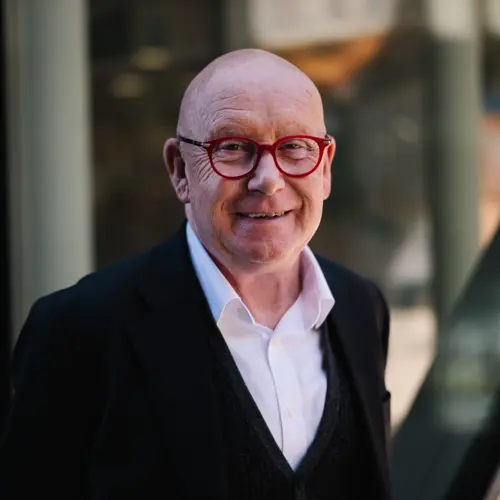
In this episode of 3:00 AM Conversations - our flagship podcast exploring the human side of complex healthcare issues. Host Peter Jackson speaks with Dr Sacha Howell, senior lecturer at the University of Manchester and honorary consultant oncologist at The Christie.
Dr Howell leads prevention and early-detection research in breast oncology, including BCAN-RAY (Breast Cancer Risk Prediction in Young Women), a landmark study part-funded via the Sarah Harding Trust. Together with Hill Dickinson’s Michael Wright, the discussion spans targeted screening for younger women, real-world research adoption in the NHS, and the growing challenge of cancer misinformation online.
Key topics discussed
Why risk-based screening for younger women matters
Breast cancer is the leading cause of death for women aged 35–64. Current population screening typically starts at 50, leaving a gap for women in their 30s and 40s.
BCAN-RAY combines questionnaire data, breast density and genomics to identify women at increased (carefully framed, not “high”) risk and offers annual mammography up to age 50—aligning risk with the average 50-year-old threshold.
Eligible participants are also offered tamoxifen as a risk-reducing medicine (c.30–40% risk reduction), positioning prevention alongside detection - core aims of today’s cancer research podcast debates.
Language, ethics and personalised communication
Dr Howell stresses that how we communicate risk is as important as the risk itself. Clear, empathetic letters and conversations reduce anxiety and improve understanding that “increased” risk is not determinism.
One size doesn’t fit all: preferences for receiving health information vary across communities. The team is exploring pre-assessment and tailored materials so people get information in the way that works for them.
Reaching under-served communities
Initial GP mail-outs produced 10–15% uptake overall but <3% in some practices with predominantly Black or South Asian populations and lower socioeconomic status.
Taking screening conversations into the community works. Partnering with churches and community centres and piloting non-ionising radio-frequency breast-density assessments improved engagement—offering a practical route to equitable prevention.
Tackling cancer misinformation without losing trust
The episode tackles cancer misinformation head-on—from miracle diets to unproven “immune-boosters.” While outright false medical claims can be policed, softer content on social platforms often evades regulation and can mislead desperate patients.
The antidote is evidence, transparency and timing: communicate meaningful research updates (not noise), explain benefits and limits clearly, and keep the clinician–patient partnership central.
From evidence to policy (and why adoption is hard)
Moving from promising pilots to NHS-wide change requires the right trials, clear economic cases and engagement with national bodies (e.g., NHS England, National Screening Committee).
Active policy work is under way—parliamentary engagement, roundtables with charities such as Breast Cancer Now, and careful alignment with the NHS cancer plan—to translate research into sustainable service models.
Key learnings
Risk isn’t fate—context is everything. Framing “increased risk” appropriately reduces fear and supports informed choices.
Equity needs different routes, not lower standards. Community-based outreach and acceptable tools (including non-x-ray density measures) can lift participation where letters alone fail.
Prevention plus detection beats either alone. Annual mammograms for at-risk younger women, alongside options such as tamoxifen, reflect a modern, layered approach to breast-cancer prevention.
Fight misinformation with clarity, not clutter. Targeted updates tied to robust results build trust more effectively than constant media presence.
Policy change is a team sport. Clinicians, charities, policymakers and legal advisers must align evidence, equality impact, ethics and economics to scale what works.
Conclusion
This conversation with Dr Sacha Howell shows how a podcast can do more than inspire: it can guide action. By combining rigorous science, sensitive communication and community partnership, risk-based screening for younger women can save lives while respecting choice. Cutting through cancer misinformation demands the same discipline: evidence first, empathy always.