Transcript
Peter Jackson (00:02): If you’ve ever woken up in the early hours and thought, “What am I going to do about this?” Then you’ve had a 3:00 AM Conversation. I’m Peter Jackson as the former CEO of international law firm, Hill Dickinson, I’ve been there too. This is the podcast that examines those moments in the cold light of day, and I think that’s useful because once you realise that we all go through this from time to time, it can really help us put things into perspective. Now in this episode, you’re going to hear from Henry Coutinho-Mason. Henry is a futurist and he helps companies understand what their customers might want and where opportunities might lie, all based on how the world might look tomorrow. And Henry’s been looking into how AI is going to impact the world of healthcare, the world of work, and what life’s going to look like for you and for your kids, and all of this for his latest book, The Future Normal.
Henry Coutinho-Mason (01:04): We’re heading into a world where all the things that we grew up thinking we can’t make a career in, artists, poet will probably be the things that actually will become valuable.
Peter Jackson (01:14): That’s all coming up, but first, let’s hear from my co-host for this episode, Jamie Foster. Jamie, welcome to 3:00 AM Conversations.
Jamie Foster (01:24): Great to be here, Peter.
Peter Jackson (01:26): Tell me what it is that you do and what a typical day is like for you at Hill Dickinson.
Jamie Foster (01:31): Well, I’m a lawyer advising clients in the healthcare and life sciences sectors. So, everybody from large NHS organisations to listed biotechs to tiny health tech start-ups with nothing more than a great idea.
Peter Jackson (01:44): Right. So, this subject is of particular interest to you then, and you’ll go on in depth with Henry a bit later on what you think are the most fascinating aspects of this whole debate, won’t you?
Jamie Foster (01:56): I certainly will. I’m interested in innovation, so I can’t think of anyone better to talk to about the future of innovation in healthcare than Henry. Some of the fascinating things I’m keen to discuss with Henry are how we get great ideas adopted and rolled out, because it’s not the innovation that’s the problem, it’s the adoption. I’m interested in how healthcare innovation links to things like how we act as consumers. So, for example using wearables in everyday life to receiving healthcare treatment through those wearables and also the future of work. So, how will a better experience for healthcare staff make for a better experience for patients? And it’d be great to hear what Henry has to say about that.
Peter Jackson (02:39): Thanks, Jamie. Well, let’s get to it then.
(02:47): Henry, you gave us three fantastic 3:00 AM Conversations and I want to get to them as quickly as we can. But before we get there, a little bit about you and a little bit of context. So, author, your magnum opus, The Future Normal, presenter, keynote speaker, futurist, but you describe yourself as a reluctant futurist, so that begs two questions. First of all, describe what a futurist is for us and then why reluctant?
Henry Coutinho-Mason (03:19): It’s an interesting one because I always joke when I’m on stage to business audiences, I say, “Look, if I could predict the future, I probably wouldn’t be standing here talking in some, hopefully not a windowless conference, but I wouldn’t be talking to you about it. I’d be lying on a hammock in my desert island having traded Bitcoin for the last 15 years.” But the more serious answer is because I don’t believe the future is foreseeable. And actually there’s kind of a two parts follow-ons to that is number one, the future is on some level unknowable because it’s unpredictable because we’re people and we do strange stuff and geopolitics or technology. We have leaps forward.
(04:01): But more practically, I think for people, the other reason why I kind of reject this futurist mantra or label, typically what futurists do is they come into an organisation or maybe they’re employed by an organisation, but the risk is they’re the people who think about the future, “Let’s outsource it and either bring someone in for an hour or a year or whatever it is. Or we’ve got some guy or girl over there who sits and they’re our futures person and it’s their responsibility to think about the future.” And I think that’s really dangerous. And again, the old cliche, the world’s moving faster than ever and everything’s changing. And there’s an element of truth to that. But what that means for leaders, the people who are listening to this conversation is you need to be thinking about the future every day.
(04:50): Thinking about the future is a contact sport if you like, everyone in the… And not just the leaders, actually everyone in the organisation needs to be doing it on a daily basis because you need to be thinking about not just the future as a kind of abstract concept, but something you can engage with. Because if you’re running a business, the future is ultimately about opportunities. It’s ultimately about what are you going to do to either respond to what’s happening today and ultimately create your own future. And there’s also another part of this. So, in the book we talk about being reluctant futurists, but preferring the term nowists.
(05:26): And again, this is where it gets really practical. It’s not what I do every day. I mean, I do think about the future, but how I actually do that, and really the book is a collection of stories about things that are happening today. But what I’m really interested and what I do on a daily basis and what I think leaders and people in business should be doing as well on a day-to-today basis, obviously I do it more because it’s my job, but looking at what’s happening today. Maybe it’s new innovations from existing companies or new startups or things you see on your social media feed. You open the newspaper… Not that anyone opens a physical newspaper anymore, but metaphorically. Thinking about the things that you’re reading about today, often in other sectors, in other parts of the world, what’s happening in Asia or Latin America or the US or the other things aimed at different demographics to the ones that you serve, maybe you’re serving whatever it is, a more middle-aged demographic. What a… See a cliche, what are young people doing today that will become normal behaviour in the future?
(06:30): And again, we talk a lot about expectations and understanding where people’s expectations are going is ultimately what you’re going to have to respond to in the future. So, I’ve thrown a lot of ideas at you there, but the future is unknowable on some senses, but also everyone needs to be thinking about the opportunities, how you are going to create your own future. And I think the best way to do that is by looking at what’s happening today. And so, the intersection of those three ideas is I think a slightly different way of thinking about this futurist label. And the other thing is it starts conversations.
Peter Jackson (07:09): Indeed. Right. Well, let’s pause there then and look at the 3:00 AM Conversations themselves. I sort of broke them down into three areas. So, the first one was very much about the fear of the future. And the way you put it when we spoke in advance was this is about the fear of the future, navigating through uncertainty and in particular the future of work. So, put that into context for us. What does that fear, that night terror look like?
Henry Coutinho-Mason (07:41): Well, if you think about the popular narrative at the moment, there is real fear about jobs and what humans will do. And on some level, I really do understand that. And I think people are scared because they see this technology improving rapidly. And again, some of the people in charge of these AI companies, they really don’t help themselves. You might have seen those ads coming from viral on not just the London Tube, but subway stations around the world, Artisan, stop hiring humans because AI’s are going to do your job. And I understand why they’ve taken that because we’re talking about it right now, but it’s not helpful, is it? And I think there is a valid fear when looking at the people who are creating some of these technologies of how much interest do they have in people? But I do think there’s a different conversation to be had around this.
(08:43): Look, I’d caveat this by saying if we get artificial super intelligence, then all bets are off. I don’t think any of us know what that looks like in that world, but I suspect we’ve got a long way to go before we get there if we ever get there. Gallup, the market research agency, they do a study every year of employee engagement, global employee engagement. This year the percent of global employees that are engaged with their job, it’s 23%. And so, I would kind of make the point that people don’t exactly love their jobs at the moment. I mean, of course we’re scared of it. Humans, again, our reptilian lizard brain from caveman times were hardwired to fear uncertainty because uncertainty could have meant the red berry that was poisonous and kill us.
(09:32): So, I completely get the fear of the unknown is scary, but if you look back, whether it’s farming, one of my favourite things, 98% of the population used to be employed in agriculture. And now in advanced Western societies it’s less than 5%. If you’d gone back 200, 300 years and asked people, hardly anyone will be farmers anymore, they wouldn’t have believed, right? So, again, Aaron Levie, who’s the CEO of Box, the online file storage company, he had a great observation. He’s like, “We are very hardwired to think about the jobs or even break it down more granular, the tasks that will be done by AI or any new technology.” It’s not just AI. It’s so much harder to see the new things that we will do when those are done.
(10:23): So, I get it, we’re hardwired to it. There was a great article in The Wall Street Journal talking about the spreadsheet apocalypse and what happened to the finance function when spreadsheets came in because think about it, the point we ask is we’ve kind of been here before. Spreadsheets came along and they basically automated the job of a bookkeeper to a large extent. And if you look at the US employment data on some level, the fears were right. Basically within a couple of years of spreadsheets coming out, a number of bookkeepers in the US starts to fall and fall steadily through the 1980s and 1990s. And now there are a lot less bookkeepers employed than there were at the end of the 70s before spreadsheets came along because spreadsheets do in seconds what it would take a human bookkeeper a week to do. I mean, it’s literally the same conversation that we’re having with AI.
(11:12): What happens is actually the finance function, the world of finance expands and it expands dramatically and we move to doing new things. The US government, they have employment censuses every year about the number of people employed in various professions. Financial analyst was not a job in that census before spreadsheets came along. We didn’t do it, but companies spent the money they could afford, their economic capacity for finance went on bookkeepers and basically just getting the numbers in the books was all you could do. And now of course what happens is how many people listening to this podcast work in a company with zero people in your finance function? No one. We do different tasks. We do different things in the finance function. Actually we do a lot more of it. It’s the Jevons paradox, it’s called. As we make something cheaper and more accessible, we do more of this, and I’m sure we’ll talk about this in the healthcare part of the conversation as well.
(12:14): So, I get it. I get the fear. Often people are not doing jobs that they’re particularly engaged with… One of my favourite things to talk about is David Graeber, the book David Graeber called Bullshit Jobs. And this was long before AI, but he wrote this 10, 15 years ago now. But he spoke about many people in white collar professional services type jobs are doing jobs that are fundamentally Bullshit. They’re fairly meaningless. They’re pushing paper and information from one system to another or from one organisation to another. And they’re not actually doing the interesting stuff, which is having conversations with people, creating things. And this crisis of meaning, we have a crisis of mental health, we have a crisis of meaning. All of the macro trends that we are aware of, there is a very valid fear that AI will exacerbate that.
(13:08): Look at what happened with social media. And again, we spoke about the fear of uncertainty. I think the experience with social media has been profoundly well, useful in terms of it’s made us a lot more sceptical of techno-utopianism, but also profoundly unhelpful because it’s really coloured. I think the conversation, you’ll think back 15 years ago, the Arab Spring social media was meant to connect us all and it was going to save the world and blossoming of democracy. And of course it’s turned out to be anything but. So, I think they’re very valid fears, but I think we can’t let that fear guide us. And I’m veering into the third conversation.
Jamie Foster (13:48): Yeah.
Peter Jackson (13:49): Before you do because very properly there, you’re talking about fear of what work looks like and how jobs that we do now may disappear, may change. What about fear of “the machines” because we’ve seen in the legal space significant issues actually over what’s termed hallucinations? So, research tools that invent the output of their research. And there was a case only two weeks ago, it was a trial of an issue in front of a judge obviously, and the authorities purporting to support the argument of one side were hallucinations. They’d been made up.
(14:35): And for the first time that I’m aware of, and I think it’s the first time the judge in that case said, “Well, you have misled the court here. The fact that it’s been produced by AI is no defence. This is you Mr. Lawyer, you’ve stood up and you’ve told me black is white. Well, it isn’t. That’s your problem not AI’s, and actually it’s contempt of court and I could send you to prison for this. I’m not going to because it’s the first time this has ever happened in my court, et cetera, et cetera. But I could.” And he’s right. It is contempt of court, it’s a criminal offence. And that’s about the machine and how the human interacts with the machine.
Henry Coutinho-Mason (15:13): Yeah, I think you’re entirely right. What personal and institutional guardrails do we set around that? As you say, ultimately it’s an accountability issue.
Peter Jackson (15:25): Yeah.
Henry Coutinho-Mason (15:26): No different to if you had a junior member of staff who made stuff up and you don’t check their work.
Peter Jackson (15:31): Yeah, exactly.
Henry Coutinho-Mason (15:33): So, I think there’s a real risk with technology when it gets nearly good enough. The technical term or the term they use in one of the famous academic papers almost is falling asleep at the wheel. If it’s good. If your autopilot is good enough, 99.99% of the time, it’s very hard, isn’t it? To build in the checks and balances because we get lazy. We spoke of us being human at the beginning. With humans, we have an expectation that maybe they will not perform consistently because they’re human. I mean, literally we are human. We say that all the time. AI or generative AI, let’s be specific about what we’re talking about. Generative AI is good at the things that we don’t expect computers to be good at and bad at the things that we do expect it to be good at.
(16:19): We’ve spent the last 50 years being conditioned to think of computers as precise calculation machines, we’re just talking about spreadsheets. They’re completely consistent. You put in X and you get Y and you put in 10X and you get 10Y, whatever it is. Gen AI is the opposite of that. And actually there’s a bigger piece. One of the things that I’m talking a lot about and the thing that I’m actually building my career at the moment around is urging people to look for use cases of generative AI where that unpredictability and those hallucinations are a feature and not a bug. And I actually think we should be thinking much more about how we use generative AI to unlock the creativity and imagination of people rather than trying to force it into this kind of square peg of efficiency and automation. And I actually think there’s another conversation around automation is in my sense, one of the least interesting parts of the AI conversation, partly because of the risk.
(17:14): We need to be looking to use generative AI for things where there’s no wrong answer to expand our horizons, to sense check, to help us, as I said, be more creative and imaginative.
Peter Jackson (17:32): So, that brings us nicely to our second 3:00 AM Conversation and that’s about healthcare and the health sector.
Jamie Foster (17:39): Yeah. Healthcare is clearly a fascinating sector. Innovation is everywhere. I think what we see is it’s not the innovation and the exciting developments that is a problem. There’s enough of that out there. It’s the adoption that is the problem. And there are some quite technical things around that, around the money to pay for this stuff, how it gets rolled out, particularly in public health systems like the NHS. But also perhaps more interestingly things like trust and ethics. So, you touched on this before, but at the moment in the healthcare sector, if a human looks at a scan and is 90% accurate and an AI looks at it and is 99% accurate, for most people that’s not enough. They still want the human. And similarly, the ethics around data is clearly a big part of AI, but healthcare data is a special category of data that makes people very nervous. So, it would be really good to get your views on how we move beyond these trust and ethics issues, what safeguards we need so that these things can become normalised?
Henry Coutinho-Mason (18:48): Yeah, I mean it is a huge conversation as you said with some very valid fears. We’re seeing a lot of innovation in the consumer healthcare space and consumer wellness space. And I think there are parallels in what happened in the mobile industry with where the corporate IT and enterprise almost lagged consumer adoption for quite a long time. And then the iPhone moment, people often talk about that. And it goes back to this idea of expectations. And this is where I think looking at innovations today is such a powerful tool to project out where people’s expectations are going. It’s the Uber experience when you first have that Uber experience and it’s a kind of digitally transparent and very seamless experience. And when you walk into other categories as a human, it doesn’t stay marked in a little box marked transportation. You walk into a restaurant or you walk into a store or you walk into a hospital and again you wonder why consciously or subconsciously.
(19:54): So, I think on some level the gap will start to close when there’s pressure and people are aware that this technology can bring benefits, I think it’s for all the very valid reasons that you’ve laid out, it’s unrealistic and to expect public health care systems to be driving innovation, they don’t want to be at the forefront of innovation because they shouldn’t be the risks. People are not there yet. There are some magical technologies coming and eventually the pressure will build and not just for people because financial expectations as well, we’re all in constrained public finances. And when the economic case becomes clear… I was reading the other day about the NHS piloting a programme to essentially put smart monitors in people’s homes to detect falls and essentially intervene much earlier. And the financial implications of that are quite profound in terms of number of days in hospital, et cetera.
(21:01): And I often say when it comes to privacy, of course, again there are very valid concerns and depending on what… And these can vary between cultures, but I think on a very macro level, I won’t be overly broad and say people don’t care about privacy. They care about privacy when the value proposition is not clear to them. Again, if you went back 20 years, think about that Will Smith movie kind of Enemy of the State that was almost like sci-fi in its ability to the government to zoom in and track people from the sky. And it was very dystopian as these movies always are. If you told people that we would all carry a device that can track us at all time, it would’ve been very hard I think a generation ago to imagine that. But ultimately the benefits that we get from that, we’ve all made that trade-off basically. We’re comfortable carrying these devices that essentially track everything we do because they give us more than may take in return.
(22:00): And so, I think the same value calculation needs to be applied to healthcare and that’s not easy. And inevitably we will overstep the mark and there will be scandals and data will be misused. And I don’t mean to… Again, if you’re an individual involved in that, just like if you’re a bookkeeper, 50-year-old bookkeeper as spreadsheets come out and you’re at risk of losing your job, there are very, very valid individual questions about that. But we also have to think about what are the benefits of that.
Jamie Foster (22:31): Yeah. And I think as you said before, it’s still very much about the people and where technology is being adopted, it’s in partnership with doctors and clinicians and nurses and medical professionals. A lot of success at the moment in terms of helping hospitals deal with demand is about yes, technology but also sending people out into the community to help treat people. And the more we can recognise that it’s in partnership, that’s the way you build the trust.
Henry Coutinho-Mason (22:59): Yeah. And this is why I look at the future of work so much because I think it does cut across categories and it’s very human-centric. And one of the startups that I wrote about a couple of years ago, and I just saw earlier this week or last week that they’ve just raised over $300 million, multi-billion-dollar valuation is a company called Abridge. And essentially it’s like a meeting Copilot that we… Otter and Fireflies and all of these ones that people use on Zoom, but for clinicians and it’s regulatory approved, but their value props, when I first writing about them, they have all of this data about how much time they save clinicians. And basically what it is it sits there, they get the patient consent, it records the consultation and their kind of marketing spiel is that they turn a ten-minute follow-up of putting the consultations for health records into anywhere between a 10 and 90-second job.
(23:54): But going back to your point about fabrications and hallucinations, it’s not fully automated. It presents the clinician with a summary that they have to review and approve. So, they have always data about how much time may save the clinician, but one of the most powerful statements they had on the website was from a hospital administrator saying, “One of the clinicians in our system said, ‘This has saved my marriage and potentially my life because I was spending four to six hours a day after my clinics doing my bureaucracy and I was completely burnt out.’” And I think narratives like that around how can we use this technology to really help people do the things that focus on the bits of the job that they really want to do, which is people are doctors because they want to help people. They don’t want to be filling out forms.
(24:43): The other nuance of that service that I thought was really interesting is they say patients also prefer it because they then get, the doctor will write up the notes in a jargon laden, write up notes for the context that they need it, which is the healthcare record. The patient can of course then get a layperson’s… One of the things we know AI is very good at is translation. And so, the patient can get a layperson’s description and they can chat to the notes and say, “Well, I didn’t quite understand when the doctor said that. What does that mean?” And then they can go into more detail. So, it’s that triple bottom lines often used in the environmental sense of win-win-win. But I think that is the kind of solution that we need to be looking for and I think that’s fascinating.
(25:24): It’s not about full automation of the diagnosis. I mean, that may happen in some contexts. And again, I often say if you are in rural India or rural Brazil and you have zero access to primary care, an AI chatbot doctor is great because you’re going from zero to something. But in the context of the more developed economies where we can hopefully get access to a doctor if we need to, improving the work experience, the lifestyle experience for that clinician and making their job easier and better is really profound, but it’s not going to replace them. When you go to a doctor and they’re breaking bad news, it’s not about the information. Maybe the AI will do a lot of that. It’s about someone looking at you in the eye and holding your hand and telling you it’s going to be okay and that is never going to be replaced.
Jamie Foster (26:16): That must be right. And we hear again and again from our clients in the healthcare sector that AI that makes staff life better is being adopted for all of the reasons you say. And a lot of the patient-focused stuff that is out there already, social prescribing or green prescribing as you call it, augmented reality, and there’s a big programme funded by Innovate UK around that. It’s all there. It’s all happening. This is not the far distant future. This is as you say, future normal. And the key is actually getting it rolled out so that everybody can benefit.
Henry Coutinho-Mason (26:51): Well, and the other thing to flag with this, I think this is the trajectory that things will go. A friend of mine wrote, I think an amazing article where he spoke about if you think we can look back to look forward, the Industrial Revolution came and automated a lot of physical work or changed the economic calculus around it. Before the Industrial Revolution, physical strength was an economic asset. We valued being strong and capable. If you were a minor or whatever, what happens as a society we kind of evolve and we almost look back with slight pity at the idea that society was structured around needing to be physically strong. For most people outside of being a professional athlete or a sports person, being physically fit is kind of a lifestyle choice and an aspiration. I mean, we don’t discard it, but it’s not essential to survival anymore.
(27:49): As I said, we almost look back with pity that it wasn’t so basic that you had to be strong to be successful. Will our kids look back at us with slight pity like wasn’t it quaint that mom and dad worried about being smart because obviously the machines are smarter than us and now we have evolved. We worry about do we make people feel seen and heard? We will do the things that only humans can do and we acknowledge people, we respect when we engage with them. And as I said, we will evolve is maybe the wrong word, it’s not physical evolution, but a cognitive evolution or an empathetic evolution of what the humans do. We will flow like water to the things that the machines can’t and we won’t worry about that. A bit like my dad thinks it’s kind of shameful, but I can’t read a map, but I don’t worry about it because I follow the GPS, right? It’s not a skill that I worry about atrophying.
(28:46): I think the skill we should… Again, there are very legitimate concerns about critical thinking and what do we lose if we outsource that part of our brain to the machines in the same way, but we don’t want to be couch potatoes and physically unfit. We have to make a conscious choice now to be fit. 50 years ago people were fit by default. They were healthy by default in some level. Maybe they smoked too much, but they did a lot of physical activity.
Peter Jackson (29:13): Well, let’s move on then to our third conversation. And that was about you raising the point that fear might actually stop us as society going as far as we might do, and there could be obstacles and blockers. And that set Jamie and I thinking about the book which you wrote in 2023. So, we’re only two years on and already we’re seeing normality with some of your futuristic references and examples in the book. And of course one that we have seen is sustainable buildings. And indeed I was in one yesterday because our Leeds office is the most sustainable building in Leeds. And what’s become more and more relevant certainly for professional service firms with net-zero ambitions is that their choice of buildings to move into when they do move office buildings is now far, far more limited than it was some time ago. But that was only one of several examples in the book of things that have moved on to the stage where they are becoming normal now.
(30:18): I mean, you touched there on the Green Bay Packers and Barcelona’s community ownership where the clubs are owned by the fans. [inaudible 00:30:7] we’re seeing here in the professional service firm space in the UK, employee ownership trusts were businesses themselves, a smaller community perhaps than a major football sporting institution say, are owned by the fans, the employees in the business. There was one reported on yesterday, an employment agency, RedLaw we know very well has just gone down that route. So, there’s some very good examples of normality now manifesting itself, but there’s also some that haven’t quite made it, isn’t there? And I think we were talking earlier about one or two that have failed altogether.
Henry Coutinho-Mason (31:04): Yeah. So, I think there’s a couple of questions in there. So, first confronting head on, but the awkward truth of making predictions about the future is you will inevitably be wrong about certain things. And in the book we highlight every chapter features a pioneer or an instigator that we called it, featured instigator that represents at the time of writing the cutting edge of that trend. And we’re asking a question, what would it look like if this scales? But I often say when we pick out that individual business, we’re not investors. We’re not saying this is going to be the next unicorn company. So, one example in the book was we wrote about VanMoof, the e-bike maker as a instigator in asking the question, people are trying to redesign cities. And I was looking at the big 15-minute city movement around, and the conventional wisdom of that was saying, “Well, let’s reconfigure the hardware,” if you like. “Let’s reconfigure the map of the city to push facilities into more localised areas.”
(32:10): And we flip that question on its head and said, “Well, actually, if you look at e-scooters and e-bikes and micro mobility, actually what’s really happening…” Our provocation was that people are moving further faster. And so actually you don’t need to reconfigure the city because actually you can enable people to access a wider range of services in the same amount of time. Now, they went bust after we wrote the book, they’ve actually since been bought out of… The brand has been bought. So, they may resurrect themselves, but I often say we are not pointing at an individual company as representative. We’re using that company or that product or whatever it is, that innovation as a vehicle to help you as the reader, you as an entrepreneur, you as a leader ask better questions about what does that do to people’s expectations. And so, it is a bit of a politician’s answer because we can never be wrong in some sense.
Peter Jackson (33:08): If we go back to the creativity point then, and the example we were talking about earlier, ABBA avatars, what have you. That’s clearly worked in the sense that it’s produced a show that has been watched by millions and millions of people around the world and still continuing three years after it was done. How do we square that with the fears that a younger generation of entertainers now have that we’ve got, for example, the 80-year-old Rod Stewart with the 78-year-old Lulu performing at Glastonbury, and they’ve been filmed, videoed, recorded for 60 years, both of them. So, every possible nuance of how they behave is on film and can be reproduced and therefore could in theory go on forever. And if we’ve got Rod Stewart, how do I as the young entertainer make my way because people would rather listen to Rod Stewart and Elton John and Freddie Mercury and so on? How do we square that?
Henry Coutinho-Mason (34:09): I remember reading a fascinating theory that economics… The reality is economics does shape culture. And they were talking about the rise of EDM and dance music has mapped the changing economics of the music industry. To your point, it’s very hard for eight or even 10-piece band who play instruments to break through now because they’re just more expensive to tour, to travel with those instruments. Whereas a DJ can get on an EasyJet flight with a USB stick and turn out. So, if you’re a promoter, someone throwing a party or a concert, it’s much more economic to book that one person who turns up, costs you basically nothing in comparison. There is always going to be some truth to that.
(34:57): Having said that, I think there’s also humans are hardwired to value on some level value scarcity or crave scarcity and reject abundance. And look, it will be, of course, if you’re a musician at the start of your career now you have very different economic constraints and you are operating in a very different landscape to when ABBA came in. And look, there will be a market for, as you said, the golden oldies and some of them will turn into holograms.
Peter Jackson (35:33): Careful, careful.
Henry Coutinho-Mason (35:36): On some level, I worry about next generation. I’ve got kids, on some level, I worry about it. On others, I just don’t because I kind of feel they’ll figure their way out. They’ll figure their way through. I mean, my dad, I remember when me and my wife was pregnant with our first son, I said, “Oh, climate change.” So, he’s like, “We were living under a threat of nuclear annihilation when you were born.” There’s always stuff you can worry about. And I think again, with trends, I often joke that when I was running… I used to run a trend firm for 10 years. So, you have an inbuilt half life as a trend watcher because the skills that make you good at it, pattern matching also sow the seeds of your demise because at some point you’ll match things to the wrong pattern. And so, to bring it back to world of entertainment, I think I’m extremely bullish on live business, live events, live experience, but in entertainment world, and we’ve seen this, again, it’s not a new trend, right?
(36:28): The experience economy. I mean, we’ve seen what’s happened over the last 20 years. Artists have shifted from selling CDs and that’s where they make their money to touring and merch. That’s where they all make their money, Taylor Swift. Again, I just can’t see a world where people won’t want to gather, in fact, the exact opposite. I think our kids will look back on us with complete amazement that we believed stuff we saw online because so much of it will be fake or synthetic. And I just think the market will flex and flux and there will be opportunities, but to people growing up in that world, you don’t mourn what you never knew in some senses. But I think when it comes to music and entertainment, we are hardwired to value humans.
Peter Jackson (37:17): So, the two can live side by side, do you think?
Henry Coutinho-Mason (37:20): I often say video didn’t kill the radio star, it morphed it into a podcast host like we’re doing now. And again, I use the analogy actually with trends, when I come into companies often they say, “What are the three trends that we must follow?” And I use the analogy of the music industry. I say, “There can be multiple trends.” The market is kind of so big and so chaotic and our lives, and I use the word chaotic in a kind of scientific sense of bouncing all over the place. Think about Spotify. You have Spotify, hundreds of millions of subscribers worldwide algorithmically, very much scandal at the moment where they’re putting AI artists into your playlists at the same time as Spotify growing massively and taking the music industry in that direction, in nearly every country in the world, vinyl sales are at a 30-year-high. And it’s an absolute global macro trend.
(38:14): And as I say that the key is to understand they’re doing different things, they’re doing different jobs for the consumer, the person and Spotify is about convenience and access and say often mindless consumption. Vinyl is about, you’ve got friends around and it’s Friday night. And the very inconvenience is the point, right? You want to show people, I spent £30, $50, whatever it is on this one vinyl and I’m going to get it out lovingly. And actually that is the job that it is doing for people is about status and identity. And again, music, there is a use case for music, but is convenience and just mindlessly distracting you. And there is a use case that it’s about community. When something becomes abundant, it loses its value, right?
(39:04): Think about BlackBerrys. When BlackBerry first came out, it was the status symbol like you were a Wall Street banker and you had the BlackBerry and you were constantly, you could get your emails on the street. That was a real status symbol. Fast-forward 20, 30 years, whatever it is, the ultimate status symbol is if you email someone and you get a month long out of office saying, “I’m hiking the Norwegian fjords, I’ll be back in September. See you then.” Right? That’s the power flip move because that shows you’re in control of your schedule. That’s the kind of ultimate… If you’re a billionaire, people have to dance to your tune. You’re not a slave to the algorithm, you’re not… Again, and I think people growing up in it will find their way. My kids are seven and four. I feel incredibly fortunate because I think by the time they get to world of work, we’ll have figured out what the new jobs are. I just don’t buy that we won’t have stuff to do. And we spoke about this, my slightly flippant answer, “If you had to be…”
Peter Jackson (40:01): [inaudible 00:40:01] man, what are you going to tell them to do?
Henry Coutinho-Mason (40:02): Well, I mainly say to my son, I actually say, can I say [inaudible 00:40:07]? So, I basically said, “Well, the number one thing I think just don’t be a dick.” And what I mean by… And you can maybe edit that out-
Peter Jackson (40:12): [inaudible 00:40:13] say that.
Henry Coutinho-Mason (40:13): I say, “The number one skill is just be likeable. Like if people want to hang out with you, if you can attract whatever technical skill is important in 10, 15, 20 years, I have no idea what it is. If people want to hang out with you and you enjoy being with you…” But being more serious, I think community builders will be, again, one of the number one in-demand people. But I was joking with a friend, I was having breakfast with a very technical AI guy who was speaking at another event that I was at, and he had a great language I’m going to steal, which is… It is funny. “We’re heading into a world where all the things that we grew up thinking you can’t make a career in, artists, poet will probably be the things that actually will become valuable.” And all the things that lawyers, accountants, doctors, again, I’m not sure about doctors because again, I think we’ll always need that human layer of accountability. But I think as we discussed earlier, what a doctor does will look radically different.
(41:06): And my flippant answer is, “If you want to do anything, probably party planner will be one of the last jobs to go.” Right? Because people will still want to gather and technology will do a lot of the actual, the act. But just gathering people and having fun, I think if…” Again, it’s slightly flippant, but all the things we thought we couldn’t make a career out of, I think will be the things that actually will end up being scarce and valuable.
Peter Jackson (41:32): So, I’m seeing my grandchildren at the weekend, I should be telling them stick with party planning. Henry, thank you so much for coming in. I mean, that was absolutely fascinating. You’ve started thought processes all over the place. We’re going to have to have you back just to compare and contrast and we play you this one and then the-
Henry Coutinho-Mason (41:53): Exactly. Greatest hits and kind of biggest misses, right?
Peter Jackson (41:54): Yeah. We’ll do that.
Henry Coutinho-Mason (41:55): We’ll see where do we go wrong?
Peter Jackson (41:56): Exactly. So, we’ll name the timescale, maybe 12 months, who knows? But seriously, thank you so much for coming in. You’ve been very generous with your time and fascinating conversation. Thank you.
Henry Coutinho-Mason (42:07): Thank you for having me. It’s been a pleasure.
Jamie Foster (42:09): Well, that was a fascinating conversation, Peter. What are your reflections?
Peter Jackson (42:19): What I was struck by and pleased by actually was the human approach to automation, the future innovation, et cetera. He was keeping the conversation really grounded around what all of this innovation, all of this change means for people. So, whether he was talking about work and how the change in the nature of work would impact upon society or whether he was talking the more exciting bits about creativity, it was all about the people. It was the old adage that all of this mechanical change is fantastic and we should embrace it, be cautious, but embrace it. But at the same time, don’t lose sight of the fact that it will be both good and bad for humans. And that has to be borne in mind all the way. So, I was really impressed with his attitude towards that.
Jamie Foster (43:19): And it felt very relevant to us as a business.
Peter Jackson (43:22): Yeah, I think that’s right. And I think you’re seeing now in the legal profession what’s probably the start of a more general acknowledgement that artificial intelligence in some form or another will really start to make some form of impact on how we do business and how we interact with clients. We’ve seen automation for years and the changes I’ve seen over my career are phenomenal, but I think we’re possibly moving to the next level now. And if you think it’s taken years and years to move from, and we referred to it when we chatted, didn’t we? 40-odd years ago, I as a newly qualified solicitor would’ve two designated secretaries just working for me. Now, no newly qualified solicitor would get near a typist and so to speak, and one executive assistant would manage the lives of a number of senior lawyers never mind newly qualified. But I suspect the next changes we will see will happen lot more quickly and possibly could be more impactful upon the demographics of the workforce.
(44:39): My own theory is that if clients expect services to be provided more cheaply, then I actually do think without any degree of cynicism of a veteran lawyer, I do think that that’s possibly a pipe dream because the immediate implication that I think we will see is on demographics of the workforce, and particularly the more junior end where automation will replace some of the research activity, the due diligence activity, the learning activity if you like, that traditionally is carried out by paralegals, trainees, junior lawyers. They are the cheapest level of the workforce, the demographic. What I think is going to increase is the need for solicitors to be ambidextrous in terms of having the same knowledge of the law that one would expect of you or I, but also knowledge of how to use the technology, not necessarily what the technology is or anything like that.
(45:46): That’s not for the lawyer, but asking the right questions, dragging out the right information, interpreting that information to a specific problem, I think is going to become something of a new skill set. And indeed, and you and I were talking about this earlier, Jamie, we’ve seen today in the press, Freshfields, one of the largest firms in the world, announced that it is sponsoring a legal tech degree. And that’s about upskilling the next generation of lawyers who, yes, they’re going to have to know the law or be able to handle the law, but they’re also going to have to be masters of technology because that’s how the early stages of a legal problem will be resolved.
(46:31): Thanks for listening to this episode of 3:00 AM Conversations, and you’ll hear from us again in a month’s time. Don’t forget to please rate, review and follow the podcast, and that way you’ll be able to spread the word. And if you’d like to find out more about how Hill Dickinson can help you, then head to hilldickinson.com. See you soon.
Exploring the Future of AI in Healthcare
In this episode of the 3:00 AM Conversations podcast, former Hill Dickinson CEO Peter Jackson is joined by legal expert Jamie Foster and futurist Henry Coutinho-Mason for a thought-provoking discussion on how artificial intelligence is transforming the world around us. From reshaping the future of work to introducing innovative AI solutions in healthcare, this episode offers practical insights into how AI might redefine our lives - and our professions.
Key topics discussed
Fear and the future of work: Henry addresses growing anxieties around automation and job displacement, suggesting that while certain roles may evolve or disappear, AI will also create new forms of meaningful employment - especially in areas requiring empathy, creativity and human connection.
AI in healthcare: The episode dives deep into the current state and future potential of AI solutions in healthcare, particularly where adoption is held back by issues of trust, ethics and systemic inertia. Jamie notes that the challenge is not innovation itself, but scaling new ideas within public systems like the NHS.
Hallucinations and trust in AI: Peter and Henry explore the legal and ethical implications of relying on generative AI tools - particularly in high-stakes professions like law - where accuracy and accountability are paramount.
The rise of hybrid AI-human partnerships: A compelling example is Abridge, a clinical AI tool that helps doctors spend less time on admin and more time with patients. By streamlining documentation while retaining human oversight, it illustrates how healthcare and AI can work hand-in-hand.
Key learnings
The future of AI in healthcare is human-led: AI is at its most effective when enhancing, not replacing, clinical decision-making. Trust, transparency and integration into care pathways are critical for broader adoption.
Creativity and empathy will become more valuable: As routine tasks are automated, future jobs may centre more on communication, interpretation and community-building - traits AI can’t replicate.
Ethical frameworks are essential: For sectors like healthcare and law, robust safeguards must be put in place to ensure AI tools are used responsibly, with clear lines of human accountability.
Conclusion
This podcast about AI doesn’t just speculate about the future - it challenges professionals to think critically about their roles in shaping it. Whether you’re navigating the evolution of legal services or helping to deploy AI in healthcare, this episode is a reminder that technology is only as transformative as the people who adopt it.

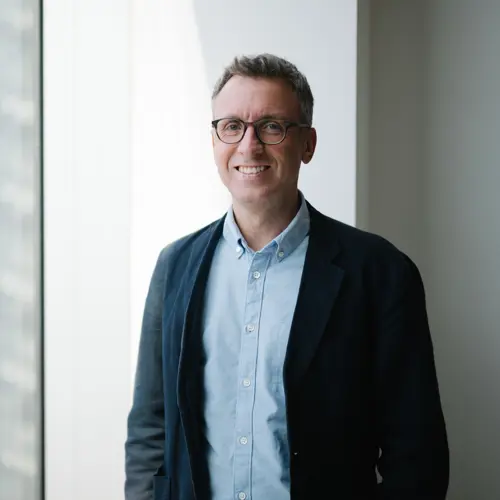

3:00 AM Conversations podcast series
For more expert insights from Hill Dickinson on the future of innovation, healthcare, and professional services, explore the rest of the 3:00 AM Conversations podcast series.
See all podcasts